8 Min Read
Spending time outdoors often brings small, unexpected encounters with nature. It might be while tending to plants in the garden, walking through a park, or relaxing outside on a sunny afternoon. In these everyday moments, running into insects is fairly common.
Among them, a bee sting is one of the experiences many people have at least once in their lives. For most individuals, the result is only brief discomfort followed by mild swelling that settles quickly. Still, not every reaction looks the same. The way the body responds to a bee sting can vary from person to person. Some people experience nothing more than a small irritated spot, while others may develop stronger reactions that require medical care.
This blog explains common reactions, possible risks, and appropriate care so you can respond calmly and safely if it happens.
Synopsis
Why Do Bee Stings Cause Reactions?
Bees generally sting as a defence mechanism rather than out of aggression. When they feel threatened or when their hive is disturbed, they may react to protect themselves or their colony. A person might get stung while accidentally stepping near a hive, swatting at a bee, or disturbing flowers where bees are feeding.
When a bee stings, it injects venom through its stinger into the skin. This venom contains proteins that affect skin cells and the immune system. As a result, the body reacts by releasing chemicals that cause inflammation. This reaction leads to the most common bee sting symptoms, including pain, redness, and swelling around the affected area. The severity of the reaction depends on factors such as individual sensitivity, the amount of venom injected, and whether the person has experienced stings before.
For most individuals, the body's immune system handles the venom without major complications. However, people who are sensitive to bee venom may develop a stronger immune response.
Common Bee Sting Symptoms
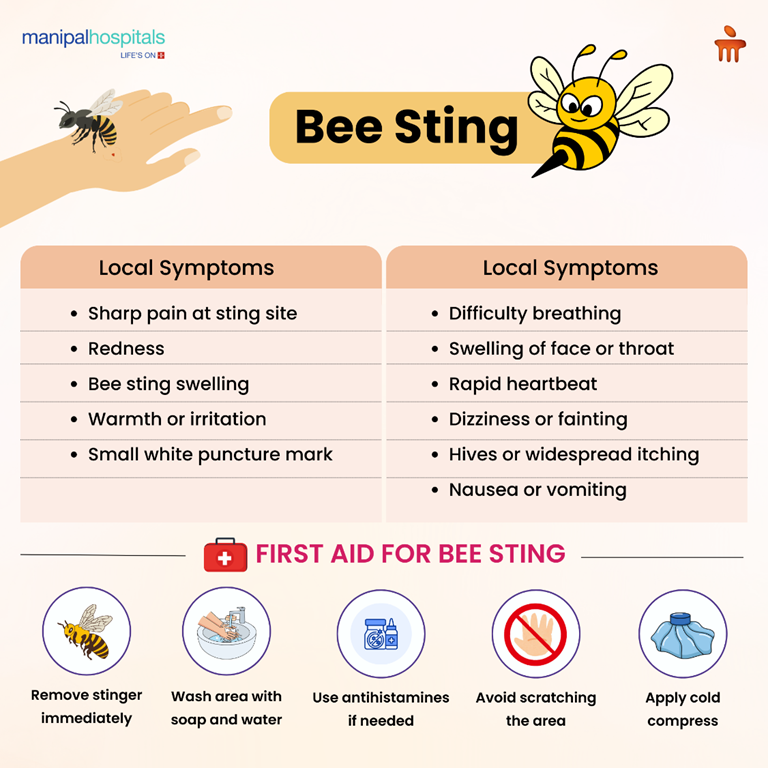
The majority of people experience mild to moderate reactions after a bee sting. These symptoms typically appear within minutes and gradually improve over the next few hours. Typical bee sting symptoms include:
-
Sudden sharp pain at the sting site
-
Redness around the affected area
-
Mild bee sting swelling
-
Warmth or irritation of the skin
-
A small white spot where the stinger entered
In most cases, these symptoms remain localised and resolve within a few hours or a day. The swelling may extend slightly around the sting area but usually improves with simple home care.
Some people may experience a larger local reaction where the swelling from a bee sting spreads to a wider area of the skin. While uncomfortable, these reactions are generally not dangerous and often improve within a couple of days.
Types of Reactions to a Bee Sting
Understanding the following differences helps people recognise whether a reaction is normal or something that needs medical care:
|
Reaction Type |
What Happens |
Typical Duration |
|
Mild local reaction |
Pain, redness, swelling at the sting site |
A few hours to 1 - 2 days |
|
Large local reaction |
Swelling spreads beyond the sting area |
2 - 3 days |
|
Mild allergic reaction |
Hives, itching in nearby areas |
Hours in a day |
Severe Allergic Reactions to Bee Stings
Although uncommon, some people develop a severe allergic reaction to bee sting venom. This life-threatening reaction, anaphylaxis, affects the whole body rather than just the local area. Warning signs include:
-
Swelling of the face, lips, or throat
-
Rapid heartbeat
-
Severe dizziness or fainting
-
Widespread hives or intense itching
-
Nausea, vomiting or abdominal cramps
Anyone showing signs of an allergic reaction to a bee sting needs immediate medical care. People known to have severe allergies are often advised to carry an epinephrine auto-injector and to get emergency help after any sting.
Immediate Bee Sting Treatment
Quick, simple steps right after a sting reduce pain and lower the chance of problems. Here’s a practical sequence to follow for bee sting treatment:
|
Remove the stinger |
Gently scrape it out with a credit card edge or fingernail. Avoid squeezing the stinger, which may push more venom into the skin. |
|
Clean the area |
Wash with soap and water to lessen infection risk. |
|
Apply a cold compress |
Ice wrapped in a cloth helps reduce bee sting swelling and soothes pain. Use intermittently for 10–15 minutes. |
|
Consider antihistamine |
Oral antihistamines can ease itching and mild allergic signs; follow dosing guidance. |
|
Don’t scratch |
Scratching increases irritation and the chance of infection. |
Most uncomplicated bee stings respond well to this care and improve within a day or two.
Possible Risks Associated with Bee Stings
While many stings are harmless, some situations increase the risk of complications:
-
Multiple bee stings at once (more venom enters the body)
-
A prior history of insect-sting allergy
-
Stings in sensitive places, such as inside the mouth, throat or near the eyes
-
Underlying medical conditions that change the immune response
Multiple stings can introduce a larger venom load, which may cause systemic symptoms such as nausea, dizziness or widespread swelling. Children, older adults, and people with weakened immune systems should be watched carefully and assessed by a clinician if symptoms seem disproportionate.
When to See a Doctor for a Bee Sting?
Most bee stings do not need medical treatment, but you should know when to see a doctor. In Jayanagar. Seek care if any of the following happen:
-
Severe or worsening pain and swelling that does not improve with home treatment
-
Signs of wound infection, such as spreading redness, increasing warmth, or pus formation
-
Symptoms suggesting an allergic reaction, difficulty breathing, throat tightness or fainting
-
Multiple stings at once
-
A sting inside the mouth or throat (risk of airway swelling)
Recognising helps prevent serious complications and ensures timely care for significant reactions.
Preventing Bee Stings
It’s not always possible to avoid bees, but a few precautions reduce the chances of being stung:
-
Avoid disturbing hives or nests; call pest professionals if needed.
-
Wear protective clothing when in areas where bees nest.
-
Avoid strong perfumes and floral scents that attract insects.
-
Keep food and sweet drinks covered outdoors.
-
Stay calm and move away slowly if a bee approaches; sudden swats often provoke stings.
Bees usually sting only when threatened. Remaining calm and avoiding abrupt movements lowers the risk of provoking them.
Conclusion
If you experience severe reactions like breathing difficulty, dizziness, or unusual swelling after a bee sting, don’t delay medical attention.
Consult specialists at Manipal Hospital, Jayanagar, for timely evaluation and advanced care across emergency medicine, allergy management, and critical care support.
Your safety starts with the right care at the right time.
FAQ's
Mild bee sting symptoms like pain, redness, and a small amount of swelling usually improve within a few hours to a day. If you have a larger local reaction, expect the swelling and soreness to take a few days to fully settle.
Yes, though it’s not common. Infection is more likely if the area is scratched excessively, not cleaned, or if you have other risk factors that impair healing. Signs of infection include spreading redness, increasing pain, pus, or fever.
They can be. Multiple stings introduce more venom into the body and can lead to stronger systemic symptoms (nausea, dizziness, muscle aches, and more widespread swelling). Medical assessment is recommended after many stings.
Yes. People who previously had only mild reactions can develop a more serious allergy later in life. If you notice an unusually large reaction or systemic symptoms after a sting, mention it to your healthcare provider.
Apply a cold compress right away, keep the affected area elevated if possible, and consider an over-the-counter antihistamine for itching and swelling. These steps together usually shorten swelling and relieve discomfort.
Share this article on: