6 Min Read
That change is exactly what to watch for because appendicitis can start as vague discomfort and move quickly to a surgical emergency. Knowing the early appendicitis symptoms, the red flags that mean you should seek care immediately, and how doctors decide between antibiotics and appendectomy can make the difference between a straightforward recovery and a complicated hospital stay.
Synopsis
What is Appendicitis?
Appendicitis is inflammation of the appendix, a small finger-like pouch attached to the large intestine. It usually happens when the appendix becomes blocked, and bacteria multiply, causing pain, swelling, and infection. Left untreated, the inflamed appendix can perforate (burst), spilling bacteria into the abdomen and causing a dangerous infection called peritonitis or a local abscess. That is why timely recognition matters.
Typical Appendicitis Symptoms
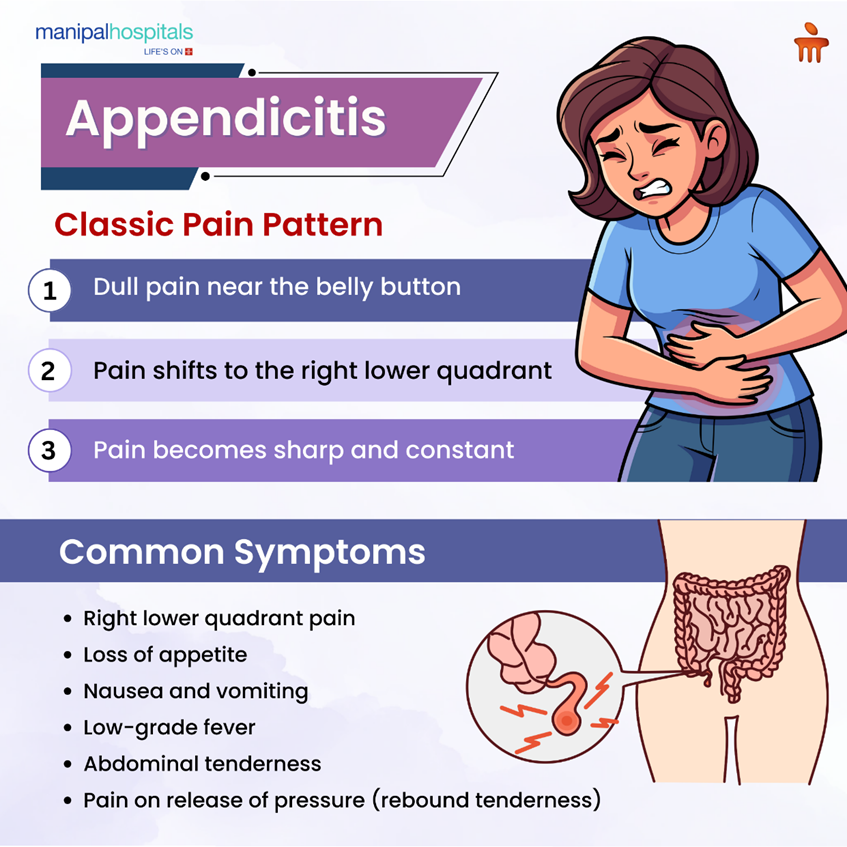
The classic sequence many clinicians look for is a dull pain near the belly button that gradually shifts to a sharper pain in the right lower quadrant (the lower-right side of the abdomen). Other common appendicitis symptoms include loss of appetite, nausea, vomiting, low-grade fever, and inability to pass gas. However, only about half of people have the classic pattern; children, older adults, and pregnant people often present atypically.
-
Pain migration from around the belly button to the right lower quadrant
-
Loss of appetite and nausea/vomiting early in the course
-
Low fever that can rise if the appendix perforates
-
Local signs: Tenderness over McBurney’s point (lower right abdomen) and rebound tenderness (pain when pressure on the abdomen is released)
Atypical Presentations You Mustn’t Ignore
Not every belly pain that becomes appendicitis looks classic. Watch for these tricky scenarios:
-
Children: May have diffuse abdominal pain and high perforation rates because young children can’t describe symptoms clearly. Seek care quickly for persistent belly pain or vomiting.
-
Older adults: May have muted symptoms or no fever despite severe disease; any new, unexplained abdominal pain in an older person needs assessment.
-
Pregnancy: The appendix sits higher as the uterus grows, so pain may appear under the ribs rather than in the lower right abdomen. Don’t dismiss abdominal pain in pregnancy.
Red Flags: Appendicitis Signs You Should Never Ignore
Some appendicitis symptoms mean you should seek emergency care right away because they suggest a ruptured appendix or widespread infection:
-
Sudden worsening of abdominal pain or severe, constant pain
-
High fever, chills, or shaking
-
Rapid heart rate, lightheadedness, or fainting
-
Worsening abdominal swelling or an inability to pass gas
-
Repeated vomiting and inability to keep fluids down
-
New mental confusion, especially in older adults
If you’re asking when to go to the emergency room for appendicitis, any of the above signs, or severe pain that is clearly different from ordinary stomach upset should prompt immediate evaluation. Perforation risk rises with time, so early assessment is safer.
How Doctors Decide: Exams, Scores, Labs, and Imaging
Doctors piece together the story with history, an exam, and a few tests. Clinical scoring systems such as the Alvarado score or Pediatric Appendicitis Score help estimate the probability of appendicitis, but they’re not perfect and are used along with clinical judgment.
Typical workup includes:
-
Focused abdominal exam (checking for rebound tenderness appendicitis, guarding, and point tenderness).
-
Blood tests: white blood cell count and inflammatory markers (CRP often rises with appendicitis).
-
Urine test to rule out urinary causes.
-
Imaging for appendicitis: CT ultrasound:
- In adults, a CT scan is commonly used because it’s highly accurate in confirming appendicitis and identifying complications like abscess or perforation.
- In children and pregnant people, ultrasound is preferred first to avoid radiation; MRI may be used if ultrasound is inconclusive.
When appendicitis is suspected, a focused set of tests helps confirm the diagnosis while ruling out other causes of abdominal pain:
|
Test |
Purpose |
What It May Show |
|
Blood tests (WBC, CRP) |
Inflammation screen |
Elevated WBC/CRP supports infection |
|
Urine dipstick |
Rule out urinary causes |
Clear or negative for UTI, usually |
|
Abdominal ultrasound |
First-line in children/pregnant people |
Enlarged, non-compressible appendix |
|
CT abdomen |
High diagnostic accuracy in adults |
Confirms appendicitis, perforation, and abscess |
Who Needs Appendix Surgery?
Historically, appendicitis meant surgery, removal of the appendix (an appendectomy)—to prevent rupture. Today, the decision is more nuanced, but surgery remains the mainstay for most cases.
Immediate surgery (urgent appendectomy) is indicated when there is clear clinical and imaging evidence of acute appendicitis, especially if signs point to a gangrenous or perforated appendix or generalized peritonitis. In these cases, prompt removal reduces the chance of widespread infection and speeds recovery.
The main danger of delayed treatment is a ruptured appendix leading to peritonitis or an abscess. These complications increase hospital stay, the need for drainage procedures, and the risk of further infections. Timely diagnosis and treatment minimise these outcomes.
For some uncomplicated appendicitis (early inflammation without abscess or perforation), recent studies and guidelines support a nonoperative option, antibiotics for uncomplicated appendicitis, in selected patients who are carefully followed. This approach can avoid surgery in many, but there is a known risk of recurrence and the need for a later appendectomy in some patients. Decisions about antibiotics versus surgery depend on symptoms, imaging, patient preference, and local expertise.
Special Considerations: Children, The Elderly, Pregnancy
-
Children have faster progression to perforation, so err on the side of earlier evaluation. Ultrasound is often the first imaging test.
-
Older adults may have milder early symptoms but a higher risk of complications; seek evaluation sooner for unexplained abdominal pain.
-
Pregnant people can develop appendicitis at any time; clinical suspicion plus ultrasound or MRI (to avoid radiation) guides care, and delayed diagnosis increases risk to both mother and fetus.
Practical Advice: What to do if You Suspect Appendicitis
If you or someone you care for has concerning appendicitis symptoms, here’s a practical plan:
-
Don’t wait for pain to become unbearable; early medical assessment reduces the risk of rupture.
-
Avoid eating, drinking or taking strong painkillers that could mask symptoms before assessment (do not self-medicate with laxatives).
-
Go to the emergency department or contact urgent care; bring notes on symptom timing, any prior abdominal surgery, and pregnancy status.
-
If told to watch at home, return promptly for any worsening of pain, fever, vomiting, or new swelling.
-
Keep a clear record of when pain started and how it changed.
-
If vomiting and unable to keep fluids, seek urgent care to prevent dehydration.
-
Ask the clinician whether imaging is recommended and what type (ultrasound vs CT).
Conclusion
Appendicitis can begin subtly and progress quickly. If you notice the classic appendicitis symptoms, especially pain that shifts from the belly button to the right lower abdomen and is accompanied by nausea, fever, or an inability to pass gas, seek medical care without delay. Doctors rely on a careful combination of clinical examination, scoring systems, blood tests, and imaging, such as ultrasound or CT scans, to confirm the diagnosis and decide whether antibiotics or surgery are needed. Early diagnosis and timely treatment reduce the risk of rupture and support a smoother recovery.
If you are unsure about ongoing abdominal pain or feel worried about worsening symptoms, do not wait it out. Visit Manipal Hospital Jayanagar for prompt assessment and clear guidance. Quick action can make a critical difference.
FAQ's
Early signs are often mild and include abdominal discomfort near the belly button, loss of appetite, nausea, and mild fever. Watch for migration of pain to the right lower quadrant; that’s a classic early clue.
Yes, in selected cases of uncomplicated appendicitis, antibiotics for uncomplicated appendicitis can be an option. However, some patients later need surgery, so careful follow-up is essential.
Perforation risk increases with time; many perforations occur after 24–72 hours of symptoms, particularly in children. That’s why early assessment is important.
Not always; sometimes the clinical exam and labs are strongly suggestive, but imaging (ultrasound or CT) improves accuracy and helps rule out other causes or detect complications. Ultrasound is preferred for children and pregnancy; CT is often used in adults.
A burst appendix is an emergency. Seek immediate hospital care; treatment includes emergency surgery, broad-spectrum antibiotics, and sometimes drainage of abscesses. Delaying care increases risk.
Share this article on:


--Symptoms-and-Septoplasty-Recovery.webp "Deviated Nasal Septum (DNS): Symptoms and Septoplasty Recovery")