6 Min Read
Appendicitis develops when the appendix becomes blocked, infected, and inflamed. The appendix is a small, tube-shaped organ attached to the large intestine. Although it is part of the gastrointestinal tract (GI tract), the appendix is considered a vestigial organ. In this blog, you will learn about early symptoms of appendicitis, warning signs that require immediate medical attention, and how physicians choose between antibiotics and appendectomy, which can affect how quickly recovery occurs and whether complications develop.
Synopsis
- What is Appendicitis?
- Early Signs of Appendicitis
- How Does Abdominal Pain from Appendicitis Change?
- Causes of Appendicitis
- Risk Factors for Appendicitis
- When Does Appendicitis Become an Emergency?
- How is appendicitis diagnosed?
- Appendicitis Treatment Options
- Recovery After Appendix Surgery
- Can Appendicitis Be Prevented?
- Conclusion
What is Appendicitis?
Appendicitis is an inflammatory disease that occurs when the appendix becomes blocked, leading to bacterial growth, inflammation, and infection. Factors like stool, an infection, enlarged lymph tissue, or, though rarely, tumours, can lead to appendix blockage. Such a blockage allows bacteria to build up inside, leading to swelling and increased pressure. If not treated, the appendix could rupture, which may occur in 24 to 72 hours, spreading bacteria and infectious material throughout the abdomen.
Some Facts About Appendicitis
An individual can get appendicitis irrespective of their age. But if you experience severe abdominal pain, see a doctor and get prompt medical assistance.
-
Organ affected: The appendix, a small pouch attached to the large intestine.
-
Common age group: Most often seen in people between 10 and 30 years old.
-
Main symptom: Abdominal pain migrates from the belly button to the lower right side.
-
Serious complication: A ruptured appendix can cause peritonitis (a dangerous abdominal infection).
-
Main treatment: Surgical removal of the appendix (appendectomy).
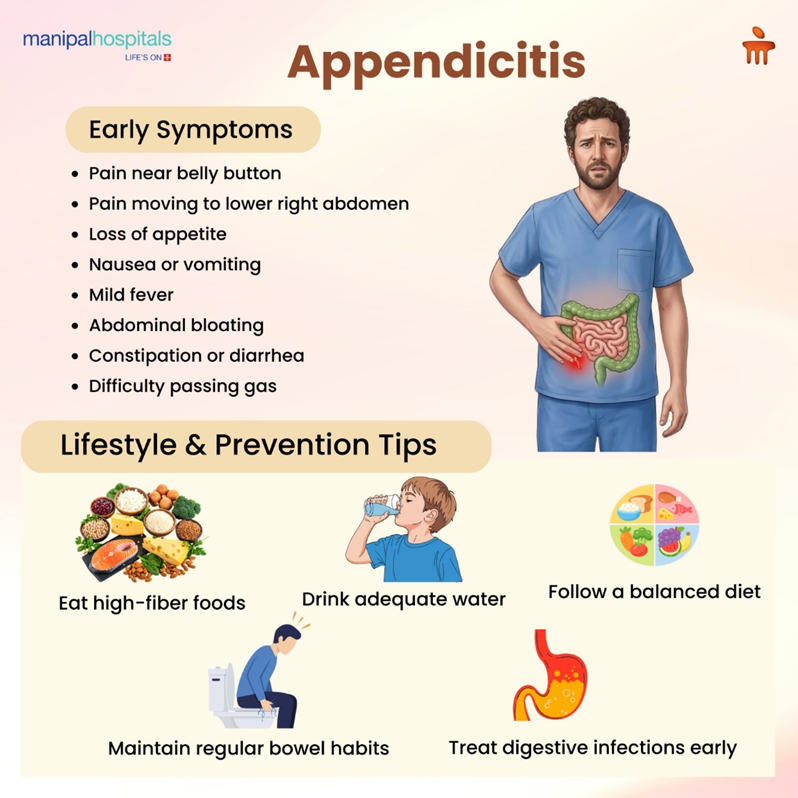
Early Signs of Appendicitis
Early appendicitis starts with subtle symptoms that gradually intensify. Detecting initial signs and getting prompt medical assistance can greatly reduce the risk of complications.
Common early appendicitis symptoms include:
How Does Abdominal Pain from Appendicitis Change?
One of the most distinctive signs of appendicitis is how the abdominal pain changes location and intensity over time. The pain often becomes worse when:
|
Stage |
Description |
|
Early stage |
Pain starts near the belly button |
|
Progression |
Pain migrates to the lower right abdomen |
|
Advanced stage |
Pain intensifies and becomes more localised, particularly when moving |
Pain can get worse when you move, cough, sneeze, or press on your stomach. If your abdominal pain from appendicitis does not go away or gets worse, you should see a healthcare professional, since these appendicitis symptoms can be similar to other stomach problems.
Causes of Appendicitis
Appendicitis usually happens when the opening of the appendix remains blocked, allowing bacterial growth and infection. Some of the most common causes include:
-
Hardened stool (faecal blockage)
-
Infections in the digestive tract
-
Lymphoid tissue swelling
-
Parasitic infections
-
Tumours (rare cases)
An obstructed appendix facilitates rapid bacterial growth, which causes swelling and pus formation. The pressure can rise so high that it causes rupture without prompt treatment.
Risk Factors for Appendicitis
Appendicitis can happen to anyone, but some things may make it more likely. Common risk factors include:
-
Age between 10 and 30 years
-
Possible familial tendency
-
Infections in the stomach and intestines
-
Enlarged lymphatic tissue in the intestines
Appendicitis can develop even in people who don't have identifiable risk factors, even though these factors increase susceptibility.
When Does Appendicitis Become an Emergency?
When inflammation progresses to the extent of potential rupture, appendicitis becomes a medical emergency. Immediate intervention is required to prevent the spread of infection within the abdominal cavity. If you have any of the following, seek immediate medical assistance:
-
Severe pain in the lower right abdomen
-
Abdominal rigidity
-
Pain that gets worse while moving or coughing
-
Inability to walk upright due to pain
-
Persistent vomiting or nausea
-
A fever that becomes high or persistent
-
Swelling in the abdomen
-
Inability to pass gas
-
Sudden pain relief followed by worsening illness (possible rupture)
Rupture of the appendix can result in peritonitis, a severe infection of the abdominal lining. This condition requires immediate surgical intervention and administration of antibiotics, in advanced care settings in Jayanagar.
How is appendicitis diagnosed?
To find out if someone has appendicitis, doctors look at their symptoms, do a physical exam, and run imaging or lab tests. A doctor may check for the following during the exam:
-
Pain in the lower right abdomen: The classic location of appendicitis pain.
-
Rebound tenderness: Pain when pressure is released from the abdomen.
-
Movement-related pain: Discomfort that worsens when you move.
Diagnostic Tests
Appendicitis can resemble other conditions, so precision is critical. Doctors must distinguish it from kidney stones, intestinal infections, or reproductive system issues. The following are the common tests used:
|
Test |
Purpose |
|
Blood test |
Detects signs of infection |
|
Urine test |
Rules out urinary tract problems similar to appendicitis |
|
Ultrasound |
Identifies inflammation or swelling in the appendix |
|
CT scan |
Provides detailed imaging of the abdomen and has the highest diagnostic accuracy |
|
MRI |
Often used for pregnant patients to avoid radiation exposure |
Appendicitis Treatment Options
The most effective appendicitis treatment is surgical removal of the appendix, a procedure known as appendectomy. There are 2 types of appendectomy:
|
Method |
How It Works |
Key Benefits |
|
Laparoscopic Surgery |
Uses a laparoscope (camera) and small incisions. |
Minimally invasive, less post-surgery pain, faster recovery, shorter hospital stay. |
|
Open Appendix Surgery |
Involves a larger abdominal incision. |
Recommended if there is a rupture of the appendix, infection has spread widely, or scar tissue from previous surgery makes laparoscopy difficult. |
In both procedures, the infected appendix is taken out, and antibiotics may be given to stop the infection from spreading.
Recovery After Appendix Surgery
Most patients experience a rapid recovery following appendectomy. The duration of recovery is influenced by whether the appendix ruptured before surgical intervention.
Typical Recovery Timeline
|
Stage |
What Happens |
Timeframe |
|
Hospital Stay |
Doctors monitor you, give antibiotics, and manage pain. |
1 to 3 days |
|
Light Activities |
Walking around, doing small daily tasks, but avoiding heavy lifting. |
1 to 2 weeks |
|
Full Recovery |
Back to normal routines, exercise, and work. |
2 to 4 weeks |
Tips for Recovery
-
Follow your doctor’s medication instructions.
-
Take prescribed antibiotics to prevent infection.
-
Avoid strenuous activities for several weeks.
-
Maintain a healthy diet for faster recovery.
-
Attend follow-up appointments.
-
Watch for signs such as fever or redness around the incision.
Usually, early treatment leads to a speedy recovery with few complications.
Can Appendicitis Be Prevented?
There is no definitive method to prevent appendicitis; however, certain lifestyle habits may promote digestive health and reduce the risk of intestinal obstruction. Healthy habits that may help include:
-
Eat plenty of fibre-rich foods: Fruits, vegetables, and whole grains help keep your digestion smooth and prevent constipation.
-
Stay well-hydrated: Drinking enough water supports bowel movements and keeps your intestines working properly.
-
Maintain regular bowel habits: Don’t ignore the urge to go; keeping a routine helps prevent problems like constipation or bloating.
-
Treat infections promptly: If you get a gastrointestinal infection, seek medical care early to avoid complications.
Although these measures support digestive health, appendicitis may still occur unexpectedly. Early recognition of appendicitis symptoms remains critical for optimal outcomes.
Conclusion
Appendicitis is a prevalent medical condition that can turn life-threatening if untreated. Early signs often start as mild stomach pain, which worsens as inflammation grows. If the appendix bursts, it can cause severe intra-abdominal infection. Detecting early symptoms of appendicitis and receiving prompt medical intervention significantly improves patient outcomes.
For personalised support and timely treatment, you can contact our expert general surgeons at Manipal Hospital, Jayanagar, Bangalore.
FAQ's
Early signs usually include pain in the abdomen near the navel, loss of appetite, nausea, a mild fever, and discomfort that slowly moves to the lower right side of the abdomen.
Appendicitis can become worse in 24 to 72 hours. If not treated, the appendix could burst and spread the infection throughout the abdomen.
Usually, an appendectomy is the best way to treat it. But in some mild cases, doctors may first treat the infection with antibiotics and watch it.
Yes. Appendicitis can happen to people of any age, but it is most common in teens and young adults. Appendicitis symptoms may be less typical or harder to recognise, so they need to be checked out by a doctor very carefully.
If the appendix breaks, bacteria can get into the abdominal cavity, which can lead to peritonitis, a severe infection. To stop the infection and avoid complications that could be fatal, you need emergency surgery and antibiotics.
Share this article on:


--Symptoms-and-Septoplasty-Recovery.webp "Deviated Nasal Septum (DNS): Symptoms and Septoplasty Recovery")