7 Min Read
--Mental-Health--The-Hidden-Connection.webp "Chronic kidney disease impact on mental well being")
Chronic Kidney Disease (CKD) is a progressive condition affecting millions worldwide. While its physical challenges are well-known, the profound impact it has on mental health is often overlooked. Recognising the significance of mental well-being is as crucial as focusing on physical wellness. Hence, identifying the causes of kidney disease, including diabetes and high blood pressure, early is vital. Chronic kidney disease treatments call for a comprehensive approach that extends beyond medical interventions, encompassing lifestyle and emotional support as the key to holistic care.
Synopsis
CKD and mental health challenges
Living with chronic kidney disease can cause significant mental health issues. Studies suggest 20-30% of CKD patients go through depression and anxiety, much higher compared to the general population. This connection is multifaceted:
-
Physiological factors - In chronic kidney disease (CKD), the kidneys are unable to remove toxins and metabolic waste from the body effectively. This results in toxin buildup, which can alter brain chemistry and neurotransmitter balance. As a result, symptoms such as persistent fatigue, poor concentration, memory difficulties, irritability, and mood changes are seen to affect overall mental well-being.
-
Psychological stressors - Being diagnosed with a long-term condition like CKD can be emotionally overwhelming. The continuous requirement for medical monitoring and intensive chronic kidney disease treatments, including regular dialysis sessions, hospital visits, and uncertainty about disease progression, may create feelings of fear, anxiety, frustration, and sometimes hopelessness.
-
Lifestyle changes - CKD requires adherence to strict regulations like dietary restrictions, fluid intake control, and reduced physical activity. These adjustments can disrupt daily routines and social habits, making patients feel restricted or different from others. In due course, such limitations may lead to social isolation, low mood, and decreased quality of life.
-
Financial burden - Managing CKD can be financially draining due to the long-term cost of medication, dialysis procedures, diagnostic tests, and frequent doctor consultations. This ongoing financial pressure may put additional stress on patients and their families, affecting emotional health and overall mental well-being.
Causes of Kidney Disease
CKD can develop due to several underlying health conditions that damage the kidneys over time and impair their ability to filter waste and excess fluids from the blood. The most common causes include:
-
Diabetes– When blood sugar levels remain consistently high, it can damage the small blood vessels in the kidneys, making it the leading cause of CKD.
-
High Blood Pressure– Long-term hypertension can strain and narrow the blood vessels in the kidneys, leading to a reduced filtering capacity.
-
Glomerulonephritis– Inflammation of the kidney’s filtering units (glomeruli) can interfere with normal filtration and lead to progressive kidney damage.
-
Polycystic kidney disease– A genetic condition that causes multiple cysts to develop in the kidneys, which gradually impairs kidney function.
-
Recurrent kidney infections/urinary blockages– Frequent infections, kidney stones, or other obstructions in the urinary system can cause long-term damage to kidney tissues.
Addressing mental well-being in CKD patients
Addressing mental health issues is a critical part of managing chronic kidney disease. Effective mental health support can improve treatment adherence and quality of life for the patient. An integrated care model should ideally focus on:
-
Early screening- Routine screening of CKD patients for depression, anxiety, and cognitive dysfunction can help identify mental health concerns at an early stage. Timely assessment allows specialists to intervene sooner, thereby improving emotional strength and overall treatment outcomes.
-
Psychological support- Access to professional counsellors, psychologists, and patient support groups can help individuals cope with the emotional burden of chronic illness. Sharing their experiences and receiving guidance can reduce feelings of isolation, stress, and uncertainty.
-
Patient education- Educating patients about their condition, the causes of kidney disease, and the importance of regularity in administering prescribed medicine for chronic kidney disease can empower them to actively participate in their care. Patient education can reduce fear, improve confidence, and encourage healthier lifestyle choices.
-
Holistic treatment plans- Integration of mental health interventions and medical treatments for CKD ensures that both physical and emotional aspects of the disease are addressed. Reports suggest that nearly 85% of CKD patients receiving comprehensive mental health support experience improved well-being and better treatment adherence.
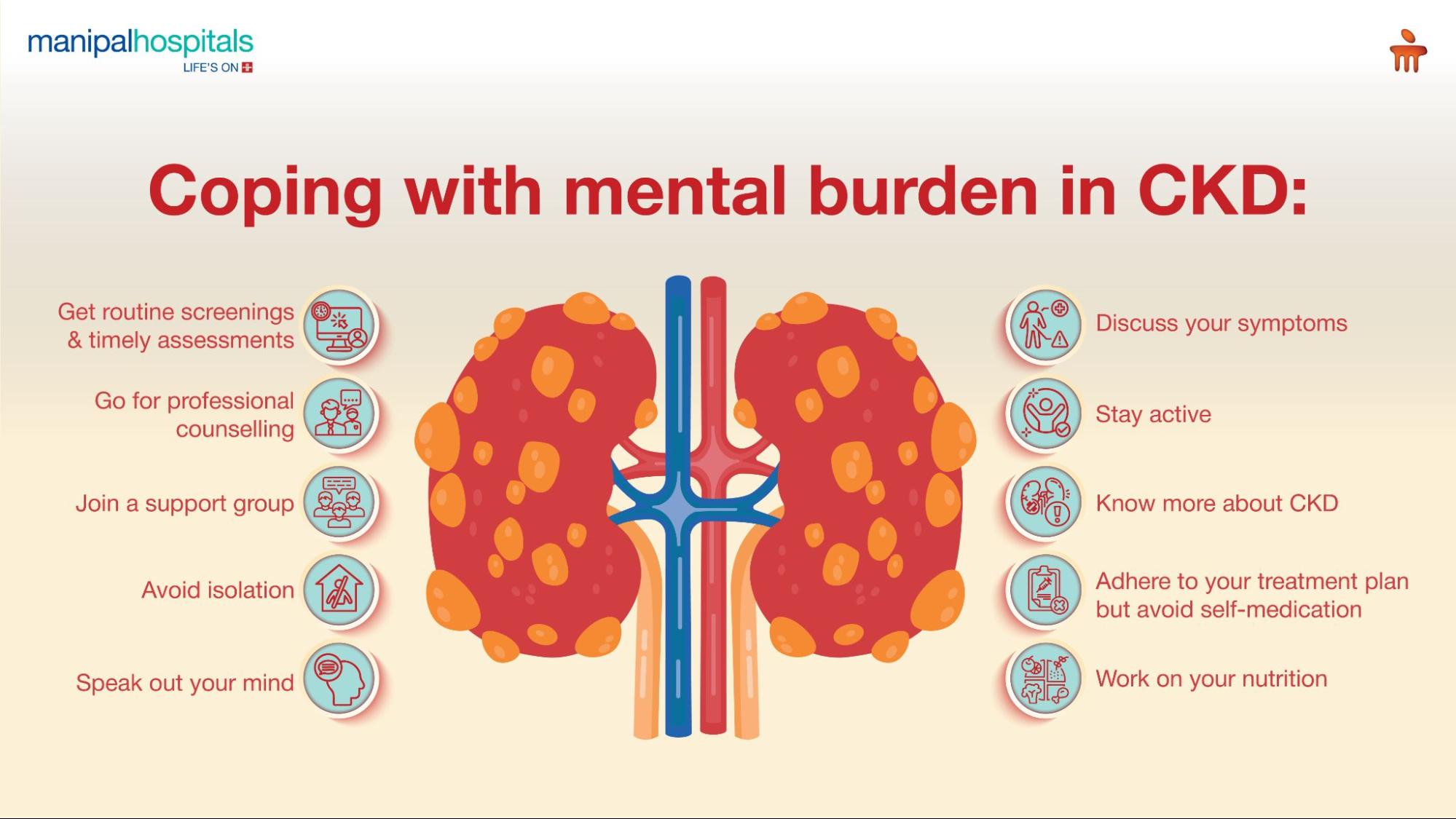
Guidelines for mental wellness in CKD
-
Communicate openly- Share your feelings with your healthcare team and loved ones
-
Seek professional help- Consult a mental health professional for persistent sadness or anxiety
-
Stay active- Engage in doctor-approved, gentle exercises
-
Connect with support groups- Join groups for shared experiences and empowerment
-
Adhere to treatment- Follow your treatment plan consistently. This includes taking your prescribed medicines regularly as and when advised
-
Do not isolate yourself- Avoid withdrawing from social activities and loved ones
-
Never ignore symptoms- Do not dismiss persistent feelings of sadness or anxiety
-
Stop self-medication- Do not use unprescribed substances or alcohol
-
Do not overlook nutrition- Work with a dietitian for balanced nutrition tailored to your condition
Conclusion
Living with Chronic Kidney Disease can affect both physical health and emotional well-being. Addressing mental wellness is an essential part of comprehensive care. If you or a loved one is struggling with the psychological impact of chronic kidney disease, it's crucial to seek timely medical advice from a healthcare professional. Consult our expert team of nephrologists at Manipal Hospitals Dhakuria, who collaborate with mental health professionals to provide you with timely guidance and comprehensive support in these cases. At Manipal Hospitals, we believe that early intervention, counselling, and integrated care can significantly improve quality of life and overall treatment outcomes.
FAQ's
Yes, chronic kidney disease can directly impact mental health. The accumulation of toxins due to impaired kidney function can affect brain chemistry, leading to symptoms like fatigue, cognitive issues, depression, and anxiety.
Conditions like diabetes and high blood pressure, the primary causes of kidney disease, are independently linked to increased risks of depression and anxiety. Managing these underlying conditions is crucial for both physical and mental well-being.
While there isn't a single medicine for chronic kidney disease designed to treat mental health directly, managing CKD effectively can indirectly improve mental well-being. Antidepressants or anxiolytics may be prescribed by a doctor if needed, alongside CKD treatments.
Patients with Chronic Kidney Disease may feel anxious about disease progression, treatment outcomes, financial concerns, or lifestyle limitations. Managing these uncertainties over time can create significant emotional and psychological stress.
Patients with Chronic Kidney Disease should seek help if they experience persistent sadness, anxiety, sleep problems, loss of interest in activities, or difficulty coping with treatment, as early support can improve both mental and physical health.
Share this article on: