
Kidney Transplant Surgery in Delhi ncr
Manipal Hospitals provides comprehensive care for kidney transplant in Delhi through a team of transplant surgeons, nephrologists, anaesthetists, and specialist nurses. The programme evaluation, surgery, and lifelong follow-up with streamlined clinical pathways. Treatment plans are tailored to each patient, ensuring safety, infection prevention, and optimal medication management. Patients receive counselling, donor coordination, and post-surgical monitoring supported by digital records and modern critical care. Nutrition, pharmacy, and psychological support enhance recovery and long-term stability.
Hospital Locations
-

Dwarka - Delhi NCR
-

Gurugram - Delhi NCR
-
Ghaziabad - Delhi NCR
How It Works
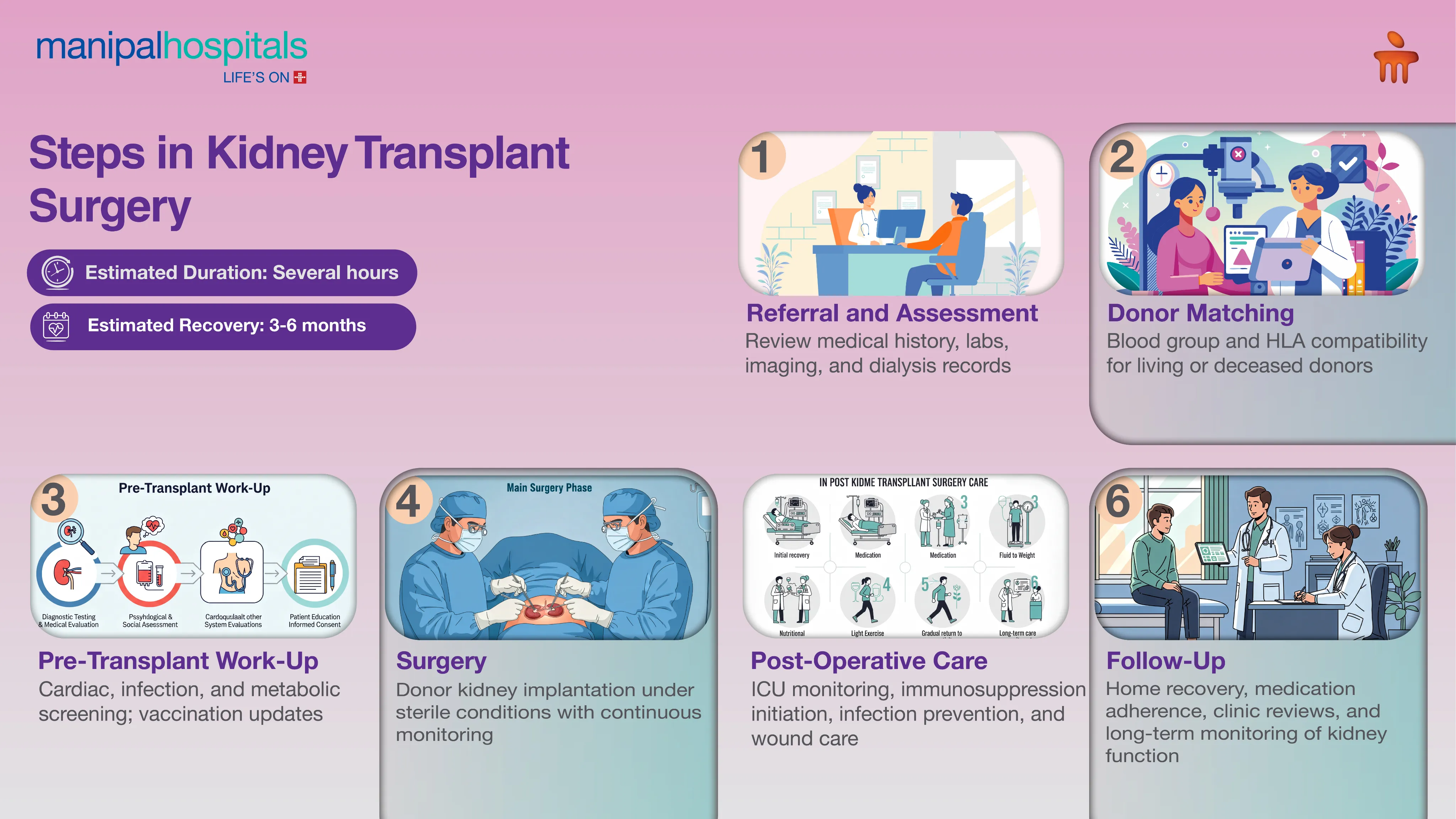
At Manipal Hospitals, Delhi, each transplant follows a systematic, transparent, and patient-focused approach to ensure safety, precision, and long-term success.
-
Referral and Assessment: Medical history, dialysis records, and suitability for transplantation are reviewed with imaging and laboratory tests.
-
Donor Pathways: Options include living related, unrelated (as per law), and deceased donors, confirmed through blood and HLA compatibility.
-
Pre-Transplant Work-Up: Screening for cardiac, metabolic, and infectious risks ensures readiness for surgery.
-
Counselling and Consent: Patients and families are briefed on the process, benefits, and medication plans before signing informed consent.
-
Surgical Planning: Surgeons outline vascular and ureteric strategies for graft placement.
-
Transplant Surgery: The donor kidney is implanted under sterile conditions with continuous intra-operative monitoring.
-
Immediate Post-Operative Care: Intensive monitoring tracks urine output, blood pressure, and graft perfusion.
-
Immunosuppression: Induction and maintenance therapy begin early with drug-level checks.
-
Infection Prevention: Line care, wound checks, and hygiene guidance lower infection risks.
-
Discharge and Follow-Up: Written instructions, medicine schedules, and review appointments ensure continuity of care.
Didn’t find what you were looking for?
Request a CallbackBenefits
Choosing Manipal Hospitals for kidney transplant surgery ensures:
-
Multidisciplinary team coordinating evaluation, surgery, and follow-up
-
Personalised care plans that align with clinical needs and lifestyle
-
Structured immunosuppression protocols with vigilant drug-level monitoring
-
Strong infection-prevention practices and post-operative safety checks
-
Integrated diagnostics and critical care supporting timely decisions
-
Nutrition, physiotherapy, and psychological support across recovery
-
Clear education on medicines, warning signs, and clinic schedules
What to Expect
Initial Consultation
A detailed review of medical history, dialysis course, and current medications.
Compatibility Testing
Blood group and HLA matching determine donor suitability; results guide the plan.
Pre-operative Preparation
Cardiac and infection screening, vaccination updates, and counselling for informed consent.
Surgery Day
Admission, anaesthesia assessment, and transplant procedure under an experienced team.
ICU Care
Close observation of urine output, graft perfusion, fluids, and pain control.
Starting Medicines
Immunosuppressive drugs begin early, with education on timing and side effects.
Recovery Milestones
Gradual mobilisation, diet advancement, and wound checks before discharge.
Home Guidance
Written instructions, helpline details, and a structured follow-up calendar.
Clinic Reviews
Regular tests assess kidney function, blood pressure, sugars, and drug levels.
Lifestyle Support
Nutrition and exercise advice tailored to recovery goals.
When to Seek Help
Clear guidance on fever, pain, swelling, or reduced urine output.
Why Manipal Hospitals?
Manipal Hospitals, Delhi, is recognised as one of the best kidney transplant centres in Delhi, known for its excellence in advanced renal care and patient outcomes. The hospital combines clinical expertise with modern infrastructure to ensure a safe and seamless transplant experience.
The multidisciplinary transplant team includes specialists in surgery, nephrology, anaesthesia, and intensive care. They coordinate at every stage, from donor evaluation to post-surgical recovery.
The processes are standardised for donor assessment, medication management, and infection control, supported by digital documentation and regular audits. The team prioritises medication adherence, timely follow-up, and lifestyle guidance to maintain long-term kidney function.
Supportive services such as nutrition counselling, physiotherapy, and psychological care help patients adapt smoothly after the transplant. With structured care plans, transparent communication, and 24x7 clinical supervision, Manipal Hospitals ensures holistic recovery and sustained wellness for every patient.
Centre of Excellence
Manipal Hospitals is recognised as the best kidney transplant centre in Delhi. The Department of Transplant Surgery manages living and deceased donor kidney transplants through protocol-based workflows. Collaboration with nephrology, anaesthesia, infectious diseases, and critical care ensures complete peri-operative support. Patients receive structured immunosuppression, wound care, and rehabilitation under one roof.
Services Offered
-
Living and deceased donor kidney transplantation
-
Donor and recipient compatibility testing
-
Comprehensive pre-transplant medical work-up
-
Individualised surgical planning and peri-operative care
-
Immunosuppression initiation and drug-level monitoring
-
Infection prevention, vaccination review, and wound care
-
Post-transplant clinic reviews and renal function tracking
-
Management of hypertension, diabetes, and lipid profile
-
Nutrition counselling for recovery and long-term health
Facilities & Services
-
Modular operating theatres suited for transplant workflows
-
Dedicated critical care with real-time monitoring
-
Advanced laboratories and imaging for rapid clinical decisions
-
Pharmacy support for immunosuppressive regimens and counselling
-
Protocol-driven line care and infection-control practices
-
Digital patient tracking and interdisciplinary inputs
-
Physiotherapy spaces supporting early mobilisation
-
Nutrition services aligned with post-transplant needs
Frequently Asked Questions
The duration varies with anatomy and complexity, typically lasting several hours. After surgery, patients are closely monitored in critical care for stability, urine output, and early signs of graft function.
Eligibility involves blood group and HLA typing, viral markers, cardiac evaluation, and imaging. Doctors also review vaccination status, dental health, and infection risks before clearing the procedure.
Both options are equally safe when performed under standard protocols. Living donation may allow planned scheduling and shorter waiting periods, while deceased donation expands access for suitable candidates.
Patients start with induction therapy and continue long-term maintenance drugs to prevent rejection. Doses and combinations are customised based on response, blood levels, and side-effect profiles.
Manipal Hospitals provides comprehensive kidney transplant care in Delhi with a focus on infection prevention. Patients receive prophylactic medications, hygiene counselling, and clear instructions on food safety and early symptom reporting.
Consult our Experts



You’re on Our Indian Website
Visit the Global site for International patient services
'Click' to chat with us
