
Hysteroscopy in Delhi ncr
Manipal Hospitals offers an accurate and minimally invasive hysteroscopy test in Delhi to diagnose and manage uterine conditions affecting fertility and overall health. This procedure uses a slim, camera-equipped instrument to examine the uterus and identify causes of abnormal bleeding, fibroids, or infertility. Specialists perform diagnostic and operative hysteroscopy with advanced visual systems for precision and safety. The hospital’s expert team ensures efficient treatment, comfort, and quicker recovery in a trusted, patient-centred environment.
Hospital Locations
-
Dwarka - Delhi NCR
-

Gurugram - Delhi NCR
-
Ghaziabad - Delhi NCR
How It Works
Hysteroscopy at Manipal Hospitals is a minimally invasive procedure for the evaluation or treatment of uterine disorders linked to fertility and menstrual concerns.
-
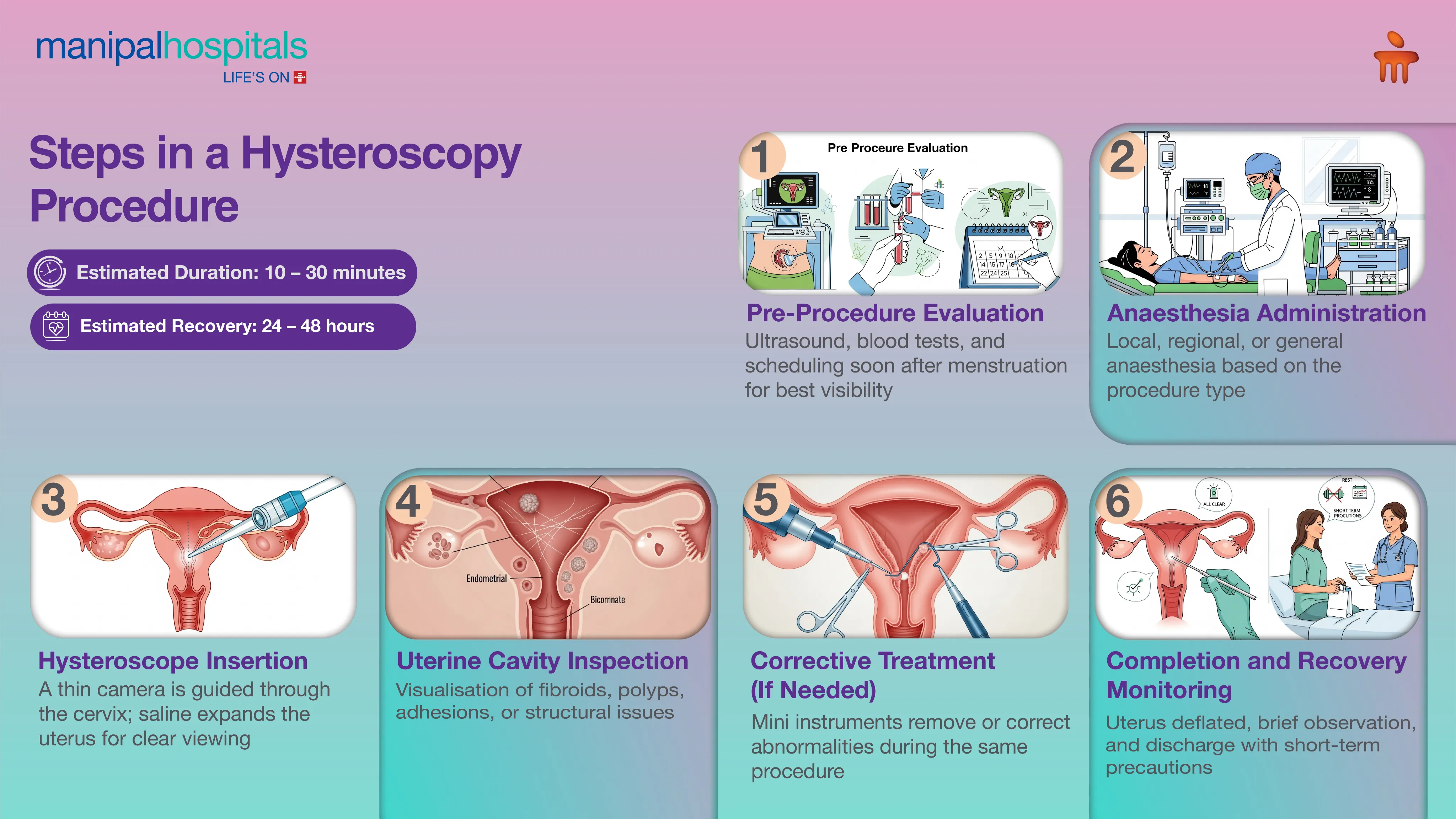
Pre-Procedure Preparation: Before hysteroscopy, baseline investigations such as ultrasound and blood analysis are performed to assess overall health. The procedure is generally scheduled soon after menstruation for optimal visibility of the uterine cavity.
-
Anaesthesia: Depending on the patient’s condition and the procedure’s complexity, local, regional, or general anaesthesia is administered to ensure complete comfort and safety.
-
Insertion of Hysteroscope: A narrow, lighted instrument called a hysteroscope is gently introduced through the cervix. Saline solution is used to expand the uterine cavity, providing a clear and unobstructed view for accurate examination.
-
Diagnostic View: The specialist examines the inner lining of the uterus on a monitor to identify fibroids, polyps, adhesions, or structural abnormalities that may affect fertility or cause abnormal bleeding.
-
Operative Phase: If necessary, miniature surgical tools are passed through the hysteroscope to treat detected conditions.
-
Completion and Observation: The uterus is deflated, and the patient is monitored for a short period before discharge.
Didn’t find what you were looking for?
Request a CallbackBenefits
Choosing Manipal Hospitals for Hysteroscopy ensures:
-
Accurate identification of fibroids, adhesions, and uterine abnormalities
-
Enhances fertility and IVF outcomes through uterine correction
-
Minimally invasive technique with faster recovery
-
Short hospital stay and minimal scarring
-
Diagnostic and operative capability in one procedure
-
Reduces recurrent miscarriages and implantation issues
-
Conducted by trained reproductive and gynaecological specialists
-
Safe procedure with close monitoring and guidance
What to Expect
Before the Procedure
Gynaecologist discusses symptoms, fertility goals, and medical background. Pre-operative investigations and fasting guidance are shared. Timing is planned after menstruation for clear visualisation.
During the Procedure
The hysteroscope is inserted through the cervix under anaesthesia. The surgeon inspects the uterine cavity and removes fibroids or adhesions when necessary.
After the Procedure
Brief observation period in the recovery area. Mild cramps or spotting can occur for a short time. Most patients resume normal activities within one or two days. Follow-up appointments confirm healing and discuss further reproductive plans.
Why Manipal Hospitals?
Manipal Hospitals, Delhi, is a trusted centre for advanced reproductive and uterine-care procedures, including hysteroscopy surgery. The hospital integrates diagnostic accuracy with modern surgical technology such as digital hysteroscopes, 3-D imaging, and modular theatres. Multidisciplinary collaboration between fertility, anaesthesia, and pathology specialists supports precise, patient-centred outcomes.
Meticulous infection control and continuous monitoring maintain high safety standards. Complex fertility cases often benefit from combined laparoscopy and hysteroscopy surgery in Delhi, enabling full pelvic evaluation in one sitting. Counselling and structured follow-ups ensure ongoing support for conception and uterine health.
With its legacy of innovation and compassionate practice, Manipal Hospitals delivers dependable care for women requiring uterine assessment or fertility-related procedures.
Centre of Excellence
Department of Reproductive Medicine and Gynaecology provides integrated fertility evaluation and surgical management. Specialists perform diagnostic and operative hysteroscopy, laparoscopy, and IVF support procedures. The team focus on restoring uterine health, improving conception chances, and providing comfort. Patients seeking laparoscopy and hysteroscopy surgery in Delhi receive individualised treatment supported by expert care, modern imaging and counselling.
Services Offered
Manipal Hospitals, Delhi, offers the latest services under the department of Reproductive Medicine and Gynaecology:
-
Diagnostic and operative hysteroscopy
-
Removal of fibroids, polyps, or adhesions
-
Correction of uterine septum or cavity abnormalities
-
Combined laparoscopy–hysteroscopy fertility evaluation
-
Hysteroscopy-assisted IVF planning and treatment
-
Management of recurrent miscarriage cases
-
Post-operative review and fertility counselling
-
Hormonal and reproductive follow-up programmes
Facilities & Services
Manipal Hospitals houses modular theatres with high-definition imaging, digital hysteroscopes, and real-time video systems. Sterile environments and advanced monitoring enhance surgical precision and comfort. Integrated IVF laboratories, anaesthesia support, and post-operative recovery units ensure comprehensive care. Experienced nursing teams guide preparation, aftercare, and follow-ups. The focus remains on safety, privacy, and patient reassurance.
Frequently Asked Questions
Hysteroscopy uses a slender telescope-like device to view the inside of the uterus. At Manipal Hospitals, the hysteroscopy test in Delhi is used to manage fibroids, polyps, and other abnormalities affecting fertility or bleeding patterns.
Doctors recommend it for unexplained infertility, heavy or irregular bleeding, miscarriage history, or suspected uterine growths. It allows both investigation and treatment in one visit.
Anaesthesia keeps you comfortable. Mild cramps or spotting can occur after a hysteroscopy procedure and usually resolve within a day. Over-the-counter pain relief is often sufficient.
After a hysteroscopy procedure, most patients return to routine activities within 24–48 hours. Your doctor will discuss rest guidelines and follow-up timing during discharge.
Yes. By treating fibroids, adhesions, or a uterine septum, hysteroscopy improves implantation success and pregnancy chances. This is particularly beneficial for women preparing for assisted reproduction cycles, helping create a healthier uterine environment for conception.
Consult our Experts



You’re on Our Indian Website
Visit the Global site for International patient services
'Click' to chat with us
