
Dialysis in Delhi ncr
Manipal Hospitals provides specialised renal care through its advanced dialysis center in Delhi. The hospital offers haemodialysis and peritoneal dialysis, ensuring safe and effective renal replacement therapy. Skilled nephrologists and support staff design individualised treatment plans for each patient. The hospital uses modern dialysis systems to ensure efficient removal of fluids and toxins from the body. Recognised for clinical excellence and compassionate care, Manipal Hospitals is a trusted destination for quality dialysis, supporting better health and improved quality of life.
Hospital Locations
-
Dwarka - Delhi NCR
-

Gurugram - Delhi NCR
-
Ghaziabad - Delhi NCR
How It Works
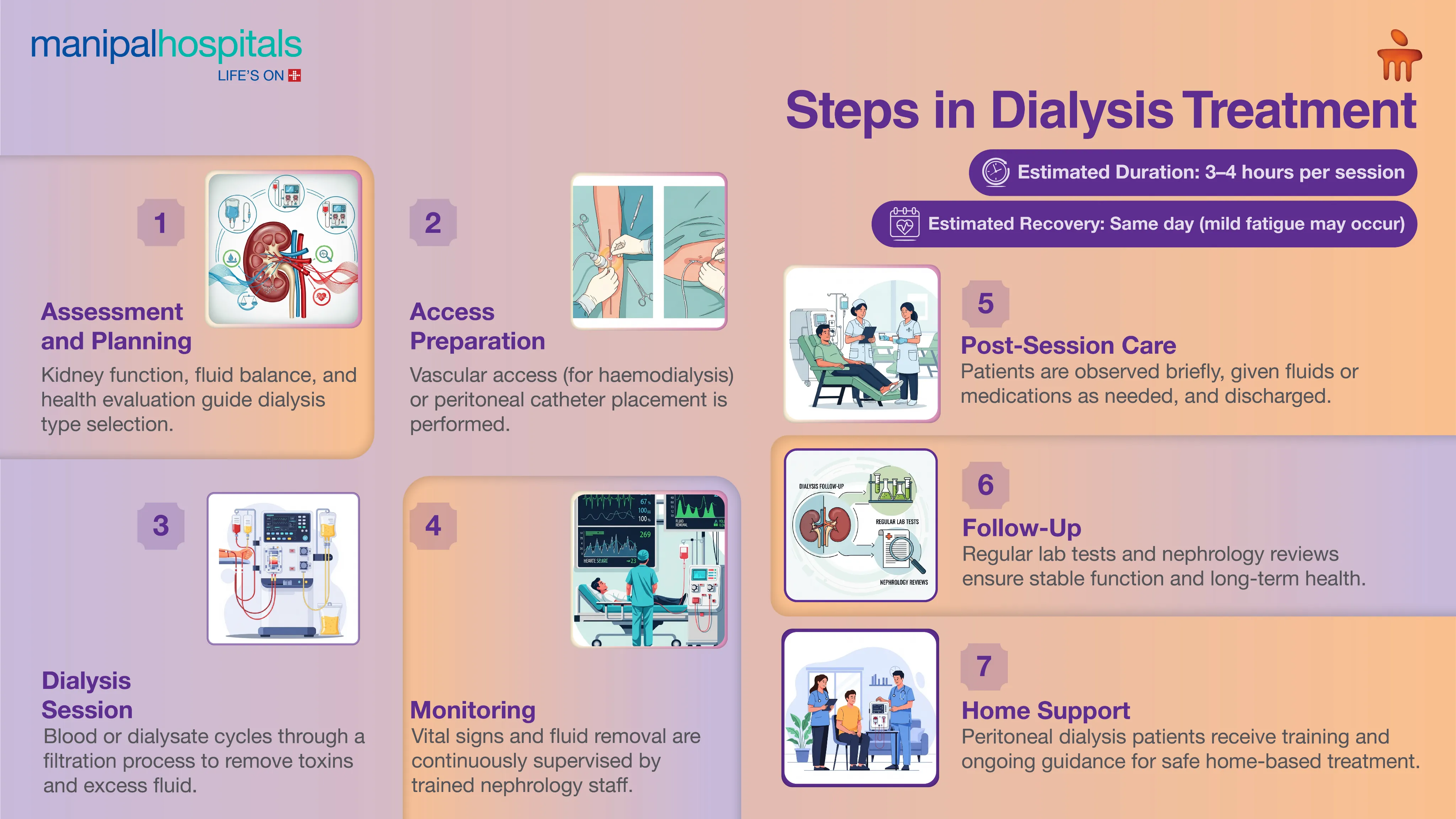
Dialysis is a life-sustaining procedure that replaces the kidney’s filtering function by removing toxins and excess fluids from the blood.
Types of Dialysis:
Haemodialysis, Peritoneal Dialysis, and Continuous Renal Replacement Therapy (CRRT) are vital procedures for managing kidney failure.
Haemodialysis: Blood is drawn through a vascular access point and filtered via a dialysis machine. The cleaned blood is then returned to the body. Sessions generally last three to four hours and are performed several times each week.
Peritoneal Dialysis: A sterile solution called dialysate is introduced into the abdominal cavity. Waste passes from blood vessels into this fluid, which is then drained. It may be performed manually or using an automated device, often allowing treatment at home.
Continuous Renal Replacement Therapy (CRRT): Used for critically ill patients, CRRT provides gentle, continuous filtration in intensive-care settings.
Manipal Hospitals employs modern dialysis machines to provide stable and effective kidney support. Single-use consumables and meticulous disinfection practices are followed to ensure patient safety and prevent infections.
Didn’t find what you were looking for?
Request a CallbackBenefits
Choosing Manipal Hospitals for Dialysis ensures:
-
Expert nephrologists and trained dialysis professionals ensure safe treatment for every patient.
-
Personalised treatment schedules and diet planning.
-
Advanced dialysis machines ensure accuracy and safety.
-
Hygienic, spacious dialysis units enhance comfort and reduce infection risks.
-
Flexible options, including in-centre and home dialysis programmes.
-
Dedicated emergency and technical support ensures uninterrupted therapy.
What to Expect
Infection Control
Strict hygiene and sterilisation protocols are followed during every session to minimise the risk of infection.
Initial Assessment
Comprehensive evaluation of kidney function, fluid balance, and overall health.
Access Creation
Surgical formation of vascular access for haemodialysis when required.
Dialysis Sessions
Conducted in a comfortable dialysis centre equipped with advanced monitoring systems.
Clinical Supervision
Continuous observation by nephrologists and trained nursing staff to ensure patient stability.
Regular Testing
Periodic blood tests guide dialysis adjustments, fluid removal, and medication management.
Nutrition and Counselling
Dieticians provide guidance on salt, protein, and fluid intake for better outcomes.
Follow-Up Support
Long-term care includes education, medication reviews, and psychological support for sustained health.
Patient Education
Patients receive guidance on home care, infection prevention, and recognising early warning signs of complications.
Emergency Care Access
24/7 medical assistance is available to address sudden symptoms or dialysis-related emergencies promptly.
Why Manipal Hospitals?
Manipal Hospitals, Delhi, has extensive expertise in renal medicine and is recognised for comprehensive dialysis services. The hospital integrates advanced haemodialysis and peritoneal dialysis technology with multidisciplinary clinical oversight. Modern dialysis units maintain stringent infection-control standards, ensuring patient safety and comfort.
The nephrology team includes experienced nephrologists, dialysis technicians, dieticians, and counsellors who collaborate to deliver holistic care. Manipal Hospitals’ use of biocompatible filters, ultrapure water systems, and automated machines enhances treatment precision and patient comfort.
As a reputed dialysis centre, the hospital also manages complex renal conditions and supports pre- and post-transplant care. Continuous quality monitoring, 24-hour availability, and a patient-centred approach make Manipal Hospitals a reliable destination for advanced dialysis in Delhi and overall kidney care.
Centre of Excellence
Nephrology Department at Manipal Hospitals, Delhi, offers comprehensive kidney-care services including haemodialysis, peritoneal dialysis, and renal transplant support. Experienced nephrologists manage acute and chronic renal disorders using modern diagnostic and therapeutic technologies. The department emphasises precision, safety, and comfort for every dialysis in Delhi. This approach helps patients achieve stability and improved quality of life.
Services Offered
-
Comprehensive renal replacement therapies, including haemodialysis, peritoneal dialysis, and continuous renal replacement therapy
-
Vascular-access surgeries, kidney biopsies, and transplant coordination services
-
Advanced monitoring and water-purification systems ensure safety during each dialysis session
-
Dedicated and experienced dialysis care team providing continuous support
-
Nutritional guidance and patient counselling for holistic renal management
Facilities & Services
-
Modern dialysis machines with dedicated water-treatment plants for safe and efficient therapy
-
Comfortable patient stations designed for ease and convenience during sessions
-
Continuous air-filtration and strict infection-control protocols for a sterile environment
-
24/7 support facilities, including laboratory, pharmacy, and emergency care
-
Commitment to delivering safe, effective, and high-quality renal healthcare
Frequently Asked Questions
Dialysis is a life-support treatment that removes waste products and excess fluid from the blood. When the kidneys can no longer perform this vital filtration function effectively on their own, dialysis is recommended.
Dialysis is recommended for patients whose kidneys cannot remove waste or excess fluid effectively due to chronic kidney disease, acute kidney injury, or other renal disorders. Nephrologists determine the need based on lab tests and overall health.
Dialysis is a painless procedure that helps filter waste from the blood. Some patients may experience mild discomfort or a brief sting during needle insertion, but the process itself is safe, well-tolerated, and closely monitored by professionals.
Yes, peritoneal dialysis can often be performed at home after supervision from healthcare experts. Patients connected with a dialysis center in Delhi receive continuous guidance, ensuring safe and effective treatment under professional medical monitoring.
The typical schedule for in-centre haemodialysis involves three sessions per week. Each session usually lasts three to four hours, though duration and frequency may vary based on individual medical requirements and clinical assessment.
Consult our Experts



You’re on Our Indian Website
Visit the Global site for International patient services
'Click' to chat with us
