_1_(4).webp "CT Scan in Delhi | Manipal Hospitals")
CT Scan in Delhi ncr
Manipal Hospitals, Delhi offers a comprehensive CT scan in Delhi that enables detailed assessment of internal organs, bones, soft tissues and vessels. Operated by expert radiologists and supported by modern imaging equipment, the service forms part of the diagnostics hub connecting with surgical, medical and interventional care. Patients seeking the CT scan services will find this unit embedded in an integrated hospital environment in Delhi.
Hospital Locations
-
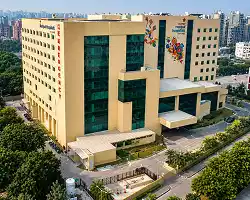
Dwarka - Delhi NCR
-

Gurugram - Delhi NCR
-
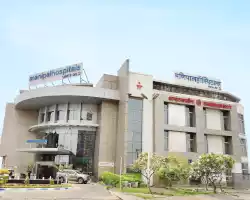
Ghaziabad - Delhi NCR
How It Works
-
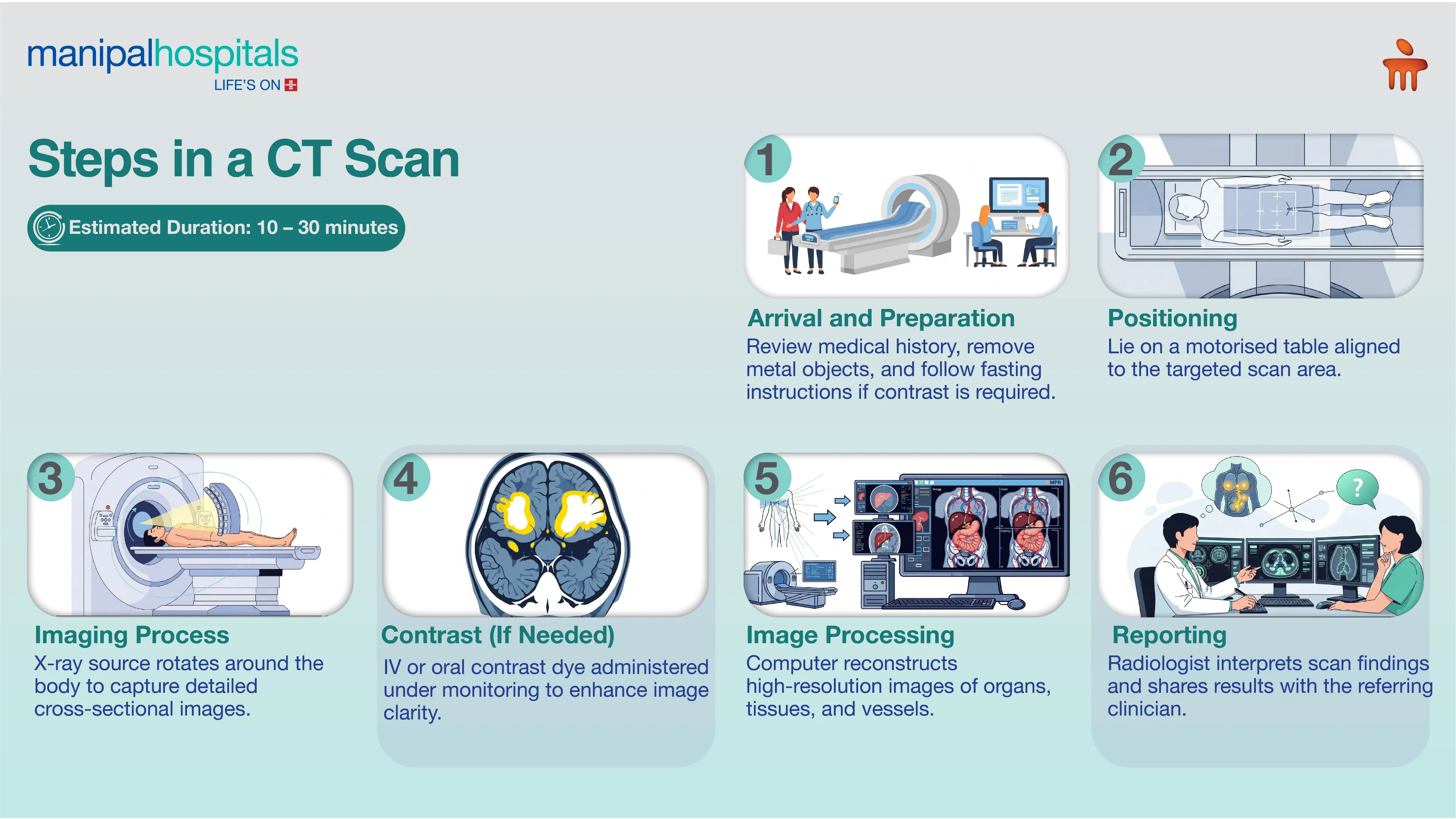
Referral and booking: The referring clinician requests the CT scan and provides clinical indications to the Radiology team.
-
Clinical review: The Radiology team reviews medical history and decides whether intravenous or oral contrast is required.
-
Pre-scan instructions: The patient is advised to remove metal items and follow any fasting or hydration guidance if contrast will be used.
-
Positioning: The patient lies on the motorised table, which is positioned to target the requested anatomical region.
-
Scanning sequence: The X-ray source and detectors rotate around the body while the table moves to capture cross-sectional images.
-
Contrast administration: If indicated, contrast dye is given via IV or orally under monitored conditions and observed for immediate reactions.
-
Targeted imaging: Scans are acquired of the brain, chest, abdomen, spine, vascular system, or other referred sites as specified.
-
Image reconstruction and review: Images are reconstructed into multiplanar views and reviewed by the radiologist for diagnostic features.
-
Reporting and coordination: The radiologist issues a report to the referring clinician; the unit coordinates further imaging or treatment planning.
Didn’t find what you were looking for?
Request a CallbackBenefits
Choosing Manipal Hospitals for a CT Scan ensures:
-
High-resolution imaging aids diagnosis across organs, bones, and vessels
-
Modern CT technology is integrated within a hospital environment for comprehensive care
-
Radiology service offers the support of specialist interpretation and connected clinical pathways
-
Convenient location and access to the CT scan centre with all-round diagnostics
-
Efficient workflow from scan to report to management planning
What to Expect
Clinical Assessment & Scheduling
The process begins with a review of your medical history, symptoms, and referral details to determine the most appropriate CT scan for your condition.
Pre-Scan Preparation
Patients receive instructions regarding fasting, hydration, medication use, and the removal of metal objects if required for the examination.
Contrast Evaluation (If Required)
The radiology team assesses whether intravenous or oral contrast is needed to improve image quality and may perform necessary safety checks beforehand.
Patient Positioning
You will be comfortably positioned on a motorised scanning table, and the imaging team will ensure proper alignment of the area being examined.
CT Scan Procedure
During the scan, the CT machine captures detailed cross-sectional images while the table moves through the scanner. The procedure is quick, painless, and typically completed within minutes.
Monitoring During Contrast Administration
If contrast dye is used, patients are monitored for comfort and any immediate reactions throughout the process.
Image Review & Reporting
Advanced software reconstructs high-resolution images, which are carefully analysed by experienced radiologists to generate a detailed diagnostic report.
Post-Scan Guidance & Follow-up
Results are shared with the referring clinician, who discusses the findings and recommends further investigations, treatment, or follow-up care if required.
Why Manipal Hospitals?
Manipal Hospitals, Delhi, has built a strong reputation in Diagnostic Imaging through consistent investment in advanced radiology technology, expert interpretation, and integrated patient workflows. The hospital’s services operates with modern multi-slice scanners and digital imaging systems that enhance accuracy and efficiency. Each examination is reviewed by a qualified radiologist, supported by standardised protocols for scan safety, dose control, and image quality assurance.
In addition to clinical accuracy, the department ensures minimal waiting times and rapid image reporting through linked digital archiving systems (PACS). The close coordination between imaging, referring physicians, and treatment units provides seamless continuity of care.
With its structured reporting systems, precision imaging tools, and multidisciplinary collaboration, Manipal Hospitals is regarded as one of the most dependable diagnostic facilities for patients seeking the best CT scan centre in Delhi.
Centre of Excellence
The Radiology and Imaging Department at Manipal Hospitals, Delhi, provides comprehensive diagnostic and interventional services, including CT scans, MRI, PET-CT, and ultrasound. The unit supports patients from appointment scheduling through scan performance, interpretation, and clinical follow-up. Its focus on precision, workflow efficiency, and patient safety defines the department’s diagnostic excellence in Delhi.
Services Offered
-
Routine and emergency CT scans (brain, chest, abdomen, spine)
-
Contrast-enhanced and angiographic CT studies
-
PET-CT imaging for oncology and metabolic evaluation
-
Image-guided biopsy and drainage procedures
-
Rapid digital reporting and case review
These services reflect the department’s versatility, enabling the specialists to provide accurate diagnosis and treatment planning.
Facilities & Services
The Radiology and Imaging Department is equipped with advanced multi-slice CT scanners, digital image-processing units, and contrast administration suites integrated with PACS. Patients benefit from designated preparation and recovery spaces, ensuring comfort, hygiene, and safety. Manipal Hospitals, the CT scan centre in Delhi supports efficient workflows and precise diagnostic outcomes.
Frequently Asked Questions
A CT scan generates detailed cross-sectional body images using X-rays and computer processing. It helps diagnose fractures, tumours, vascular diseases, internal bleeding, or organ damage, offering enhanced visual clarity compared with standard X-ray examinations.
Preparation requirements vary by scan type and use of contrast dye. Patients may be instructed to fast, wear loose clothing, or remove metal objects before attending their scheduled CT scan in Delhi.
The scanning itself lasts only a few minutes. However, including registration, preparation, and post-scan checks, the entire process may take approximately thirty minutes, depending on the type and complexity of the examination.
CT scans involve exposure to ionising radiation slightly higher than standard X-rays, but safety protocols minimise the dose to the lowest effective level. If contrast dye is used, mild allergic or kidney reactions can rarely occur, but precautionary assessments are performed before the CT scan.
Reports are typically generated shortly after image interpretation by the radiologist. The referring doctor will share the findings, discuss next steps, and advise on follow-up following the CT scan.
Consult our Experts



You’re on Our Indian Website
Visit the Global site for International patient services
'Click' to chat with us
