
Cognitive Therapy in Delhi ncr
Manipal Hospitals offers Cognitive therapy Delhi through its psychology and behavioural health unit, focusing on the connection between thoughts, emotions, and behaviours. This structured therapy helps individuals manage anxiety, depression, stress, and unhelpful behavioural patterns under the guidance of experienced therapists. The CBT programme provides personalised treatment plans, empowering patients to develop healthier coping mechanisms and achieve emotional well-being through evidence-based psychological care in a supportive and professional environment.
Hospital Locations
-

Dwarka - Delhi NCR
-

Gurugram - Delhi NCR
-

Ghaziabad - Delhi NCR
How It Works
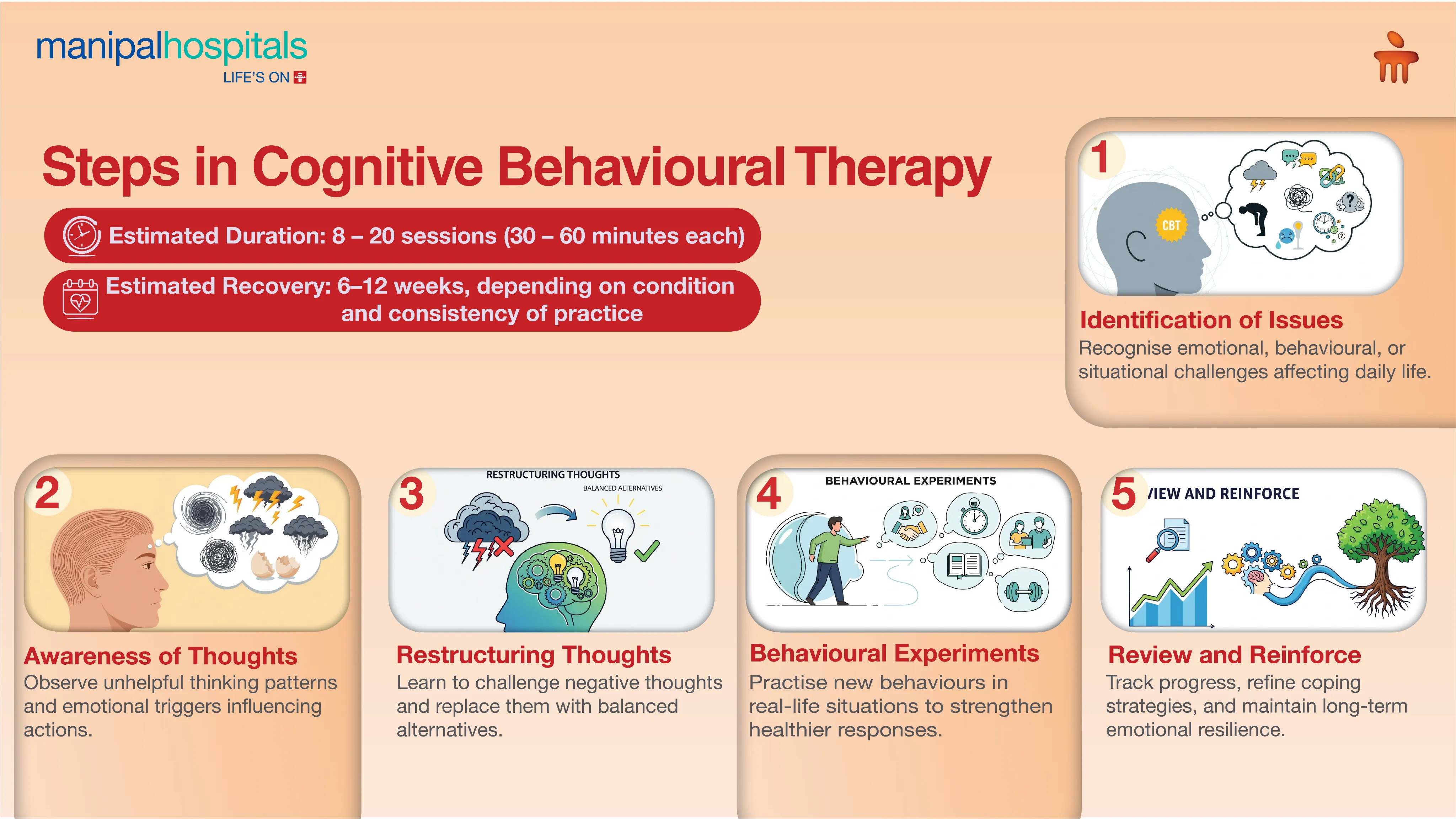
- Initial Assessment: The process begins with a detailed evaluation where the therapist reviews your personal history, current emotional challenges, and therapy goals. This helps identify underlying issues and sets clear, realistic objectives for treatment.
-
Goal Setting & Treatment Planning: Together with your therapist, you establish short- and long-term goals, ensuring therapy is focused, measurable, and tailored to your specific concerns.
-
Identifying Thought Patterns: In subsequent sessions, you explore unhelpful thoughts, emotional triggers, and behavioural habits that contribute to distress. This collaborative process builds awareness of negative thinking styles.
-
Cognitive Restructuring: Through guided discussions, you learn how to challenge distorted thoughts and replace them with balanced, evidence-based perspectives, promoting emotional stability.
-
Behavioural Strategies & Practice: Therapists introduce coping tools such as relaxation techniques, journaling, and exposure exercises. “Homework” assignments reinforce these skills in real-life situations between sessions.
-
Progress Review: Regular reviews monitor your development, refine strategies, and ensure therapy continues to meet your evolving needs.
Outcome & Empowerment: Over time, CBT enhances self-awareness, resilience, and problem-solving abilities, empowering you to manage future stressors effectively and maintain long-term mental well-being.
Didn’t find what you were looking for?
Request a CallbackBenefits
Choosing Manipal Hospitals for cognitive therapy in delhi ensures:
-
Offers structured, time-limited therapy to help manage anxiety, depression and stress
-
Empowers you to understand how thoughts, emotions and actions interrelate and to take control
-
Can be applied in conjunction with other treatments or as a standalone therapeutic route
-
Focuses on practical skills you can carry into everyday life for improved mental health resilience
-
Provided in a clinical hospital setting, ensuring access to related specialist support if needed
What to Expect
Initial Evaluation
The therapy begins with a detailed psychological assessment, including personal history, emotional symptoms, and therapy goals. Baseline measures, such as stress or mood scales, may be recorded for progress tracking.
Collaborative Formulation
The therapist explains the CBT model, linking thoughts, emotions, and behaviours. Together, session frequency, duration, and therapy goals are finalised.
Skill Introduction
Early sessions focus on learning core CBT techniques—such as identifying unhelpful thought patterns, practising cognitive restructuring, and developing relaxation or mindfulness strategies.
Homework and Monitoring
Patients are encouraged to maintain thought records, mood journals, or behavioural logs between sessions to apply learned strategies in daily life.
Behavioural Practice
Gradually, real-life behavioural experiments are introduced, helping patients test new ways of thinking and responding in practical situations.
Progress Review
At regular intervals, progress is reviewed to evaluate symptom improvement, refine strategies, and adjust therapy plans for maximum benefit.
Termination and Maintenance
In the final stage, patients create a relapse-prevention plan, consolidate coping skills, and prepare for long-term emotional resilience with optional follow-up sessions if needed.
Why Manipal Hospitals?
Manipal Hospitals, Delhi, offers a well-structured behavioural health service supported by experienced therapists and integrated with its wider medical and surgical departments. Cognitive therapy Delhi combines clinical expertise, evidence-based methods, and compassionate care to help individuals manage emotional and behavioural challenges effectively. With strong institutional support and qualified professionals, therapy is tailored to each patient’s needs, ensuring consistency and measurable progress.
The service maintains close links with psychiatry, psychology, and allied health departments, allowing for comprehensive and continuous care that extends beyond therapy sessions. This collaborative approach ensures both emotional and physical aspects of well-being are addressed. By blending therapeutic insight with medical excellence, Manipal Hospitals provides a trusted, holistic environment for individuals seeking structured cognitive behavioural therapy treatment to achieve lasting emotional resilience and mental wellness.
Centre of Excellence
The Psychology and Behavioural Health Department at Manipal Hospitals offers specialised therapies, including Cognitive therapy treatment Delhi. With personalised consultations, evidence-based treatment plans, and structured follow-up support, the department ensures comprehensive, compassionate, and continuous mental health care tailored to each patient’s individual needs and long-term therapeutic goals.
Services Offered
Manipal Hospitals offers a broad range of Cognitive Behavioural Therapy (CBT) treatment in Delhi for diverse emotional and behavioural needs.
-
Individual CBT sessions for anxiety, depression, and stress management.
-
Group therapy and psychoeducation workshops.
-
Digital tracking tools and guided self-help support.
-
Relapse-prevention strategies and coping skill reinforcement.
-
Coordinated care with psychiatry for holistic treatment outcomes
Facilities & Services
The Psychology and Behavioural Health Department at Manipal Hospitals ensures a professional, comfortable, and integrated care experience.
-
Private consultation and therapy rooms for confidentiality and focus.
-
Digital tools to track therapy goals, progress, and assignments.
-
Collaboration with psychiatry, neurology, and wellness services.
-
Evidence-based protocols ensuring measurable progress.
-
A calm, supportive setting promoting safety and emotional comfort throughout treatment.
Frequently Asked Questions
Cognitive behavioural therapy(CBT) helps individuals manage conditions such as anxiety, depression, obsessive compulsive disorder, panic attacks, phobias, and post-traumatic stress. It is also used to support people coping with chronic pain, insomnia, and stress-related disorders.
A usual course of cognitive behavioural therapy treatment lasts between 8 and 20 sessions. Early sessions focus on understanding the problem and setting goals, while later ones work on practising new thinking and behaviour patterns through exercises and review.
Between appointments, you may be asked to keep a thought diary, apply coping techniques, and test new responses in real-life situations. These “homework” tasks help reinforce learning and make therapy progress more tangible.
While open discussion is central, cognitive behavioural therapy combines conversation with practical exercises, worksheets, and structured techniques that teach problem-solving, relaxation, and healthier patterns of thinking.
Yes. In some cases, cognitive therapy Delhi at Manipal Hospitals is combined with medication, particularly for anxiety and depression. Therapists and psychiatrists often coordinate care to ensure the most effective overall treatment plan.
Consult our Experts



You’re on Our Indian Website
Visit the Global site for International patient services
'Click' to chat with us
