




 5 Min Read
Heart surgery has undergone a remarkable transformation over the past two decades. What once required large incisions, prolonged hospital stays, and extended rehabilitation can now be performed with precision using advanced technology. Robotic heart surgery represents one of the most significant breakthroughs in modern cardiac care. By combining surgical expertise with advanced cardiac robotics, surgeons can treat complex heart conditions while enabling faster recovery and improved outcomes. Such advanced procedures are routinely evaluated and performed by our cardiothoracic surgeons in Delhi-NCR.
This blog explores the latest advances in robotic heart surgery, the role of minimally invasive CABG, evolving heart bypass innovations, and how technology has reduced overall CTVS recovery time for patients.
Synopsis
- What Is Robotic Heart Surgery?
- Evolution of Cardiac Robotics in Heart Surgery
- Role of Minimally Invasive CABG in Robotic Surgery
- How Robotic Heart Surgery Improves CTVS Recovery Time
- Heart Bypass Innovations Enabled by Robotics
- Procedures Commonly Performed Using Robotic Heart Surgery
- Who Is an Ideal Candidate for Robotic Heart Surgery?
- Safety and Success Rates of Robotic Heart Surgery
- Post-Surgery Recovery and Rehabilitation
- Future of Robotic Heart Surgery
- Conclusion
What Is Robotic Heart Surgery?
Robotic heart surgery is a minimally invasive surgical approach where surgeons use robotic systems to perform precise cardiac procedures through small incisions. Unlike traditional open-heart surgery, robotic heart surgery does not require opening the chest or breaking the breastbone.
Key features of robotic heart surgery include:
-
High-definition 3D visualisation
-
Enhanced hand precision through robotic arms
-
Greater control during delicate cardiac procedures
With advancements in cardiac robotics, surgeons can now operate with exceptional accuracy, even in hard-to-reach areas of the heart.
Evolution of Cardiac Robotics in Heart Surgery
The development of cardiac robotics has revolutionised surgical cardiology. Early robotic systems assisted with basic movements, while modern platforms offer real-time imaging, tremor filtration, and enhanced dexterity.
Key Milestones in Cardiac Robotics
-
Introduction of robotic-assisted coronary procedures
-
Expansion into valve repair and bypass surgeries
-
Integration with imaging and navigation systems
These innovations have helped in gradually strengthening heart bypass innovations, making robotic heart surgery safer and more reliable than ever before.
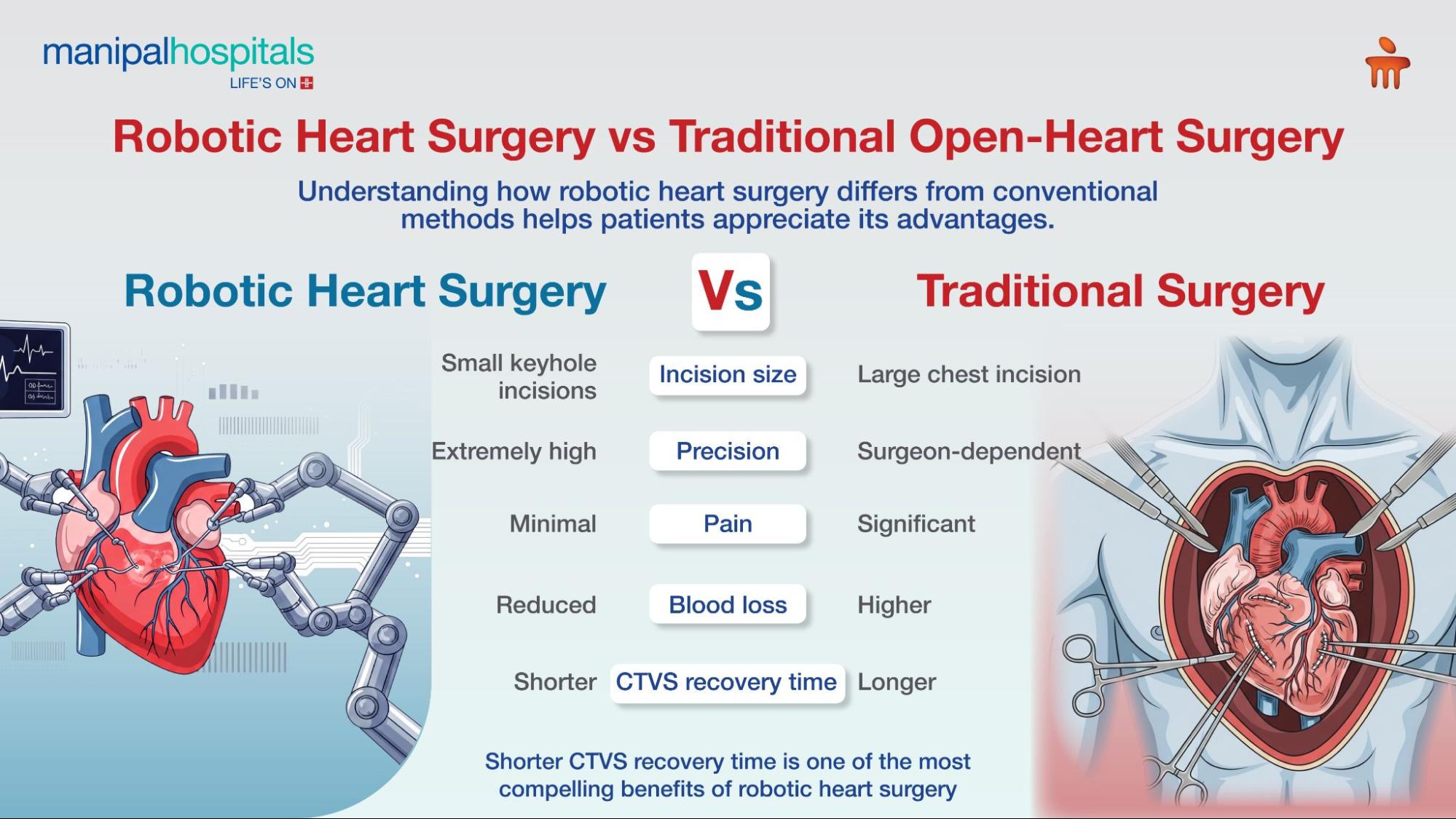
Role of Minimally Invasive CABG in Robotic Surgery
One of the most impactful applications of robotic heart surgery is minimally invasive CABG, otherwise known as Coronary Artery Bypass Grafting. Instead of opening the chest, minimally invasive CABG uses robotic assistance to bypass blocked coronary arteries through small incisions.
Advantages of Minimally Invasive CABG
-
No sternotomy - The procedure avoids cutting the breastbone, resulting in less pain, better chest stability, and quicker overall healing.
-
Reduced hospital stay - Patients typically experience shorter hospitalisation, allowing earlier discharge and reduced exposure to hospital-acquired complications.
-
Faster return to daily activities - Smaller incisions and reduced trauma enable patients to resume work, mobility, and routine activities much sooner.
-
Lower infection risk - Limited surgical exposure significantly decreases the risk of wound infections and postoperative complications.
Through cardiac robotics, minimally invasive CABG has become a cornerstone of modern heart bypass innovations.
How Robotic Heart Surgery Improves CTVS Recovery Time
A major concern for patients undergoing cardiac surgery is the CTVS recovery time. Traditional surgery often requires weeks or months of recovery. In contrast, robotic heart surgery significantly shortens CTVS recovery time.
Factors Reducing CTVS Recovery Time
-
Minimal tissue trauma
-
Reduced postoperative pain
-
Faster wound healing
-
Lower complication rates
Patients undergoing robotic heart surgery often resume normal activities much sooner, highlighting the impact of cardiac robotics on recovery.
Heart Bypass Innovations Enabled by Robotics
Modern heart bypass innovations focus on precision, safety, and patient comfort. Robotic heart surgery has expanded what is possible in bypass procedures.
Key Heart Bypass Innovations
-
Robotic-assisted artery harvesting
-
Beating-heart bypass techniques
-
Enhanced graft accuracy
These heart bypass innovations ensure long-term graft patency while minimising surgical stress.
Procedures Commonly Performed Using Robotic Heart Surgery
Robotic heart surgery is used for a variety of cardiac procedures.
Common Robotic Cardiac Procedures
-
Minimally invasive CABG
-
Mitral valve repair
-
Atrial septal defect closure
-
Cardiac tumour removal
The flexibility of cardiac robotics allows surgeons to tailor procedures for individual patient needs.
Who Is an Ideal Candidate for Robotic Heart Surgery?
Not every patient is suitable for robotic heart surgery, but many benefit from it.
Ideal Candidates
-
Single or limited coronary blockages
-
Valve disorders without severe calcification
-
Patients seeking a shorter CTVS recovery time
A thorough evaluation determines whether robotic heart surgery or traditional methods are more appropriate.
Safety and Success Rates of Robotic Heart Surgery
Extensive studies confirm that robotic heart surgery is safe when performed by experienced teams.
|
Outcome Measure |
Robotic Heart Surgery |
|
Surgical success rate |
95–98% |
|
Complication rate |
Low |
|
Infection risk |
Minimal |
|
Average CTVS recovery time |
Reduced significantly |
These outcomes demonstrate how cardiac robotics has transformed surgical success.
Post-Surgery Recovery and Rehabilitation
Recovery after robotic heart surgery is structured and efficient.
Postoperative Recovery Timeline
-
24–48 hours: Walking and light activity
-
3–5 days: Discharge from hospital
-
1–2 weeks: Resume daily routine
-
3–4 weeks: Full functional recovery
Reduced CTVS recovery time allows patients to regain confidence and mobility quickly.
Future of Robotic Heart Surgery
The future of robotic heart surgery is promising. Emerging technologies are expected to further enhance cardiac robotics.
Upcoming Advancements
-
AI-assisted robotic navigation
-
Remote robotic surgeries
-
Greater integration with imaging
These developments will further strengthen heart bypass innovations and redefine robotic heart surgery standards.
The continued evolution of this field is being actively driven by our cardiothoracic surgeons in Delhi-NCR.
Conclusion
Robotic heart surgery represents a paradigm shift in cardiac care. By leveraging advanced cardiac robotics, surgeons can perform complex procedures like minimally invasive CABG with exceptional precision and safety. Reduced CTVS recovery time, improved patient comfort, and cutting-edge heart bypass innovations make robotic heart surgery a preferred choice for eligible patients. As technology continues to evolve, robotic heart surgery is set to redefine the future of heart care.
FAQ's
Robotic heart surgery uses robotic systems for enhanced precision, smaller incisions, and faster recovery.
Yes, minimally invasive CABG offers comparable outcomes with reduced pain and shorter CTVS recovery time.
Most patients experience significantly reduced CTVS recovery time, returning to normal activities within weeks.
When performed by experienced teams, robotic heart surgery is highly safe and effective.
Cardiac robotics enhances precision, reduces complications, and supports faster healing.
Share this article on:





