




 7 Min Read
Traumatic injuries resulting from road accidents are a leading cause of emergency hospital admissions worldwide. In India, the burden of trauma injuries from road traffic incidents continues to rise due to increasing vehicle density and high-speed travel. Immediate and correct response to trauma injuries can significantly reduce complications, long-term disability, and mortality. Within the first golden hour, appropriate road accident first aid and timely accident injury treatment play a decisive role in patient outcomes. Early evaluation by emergency teams and, where required, referral to specialists, including our ENT specialists in Delhi-NCR for head, neck, or facial trauma, can be lifesaving.
Synopsis
- Understanding Traumatic Injuries from Road Accidents
- Common Types of Road Accident Injuries
- Symptoms of Trauma Injuries After a Road Accident
- Importance of Road Accident First Aid
- Step-by-Step First Aid for Accident Injury
- Emergency Medical Response and Accident Injury Treatment
- Hospital-Based Care for Road Traffic Injuries
- Rehabilitation After Trauma Injuries
- Preventing Trauma Injuries from Road Accidents
- Role of Specialised Care in Trauma Injuries
- Conclusion
Understanding Traumatic Injuries from Road Accidents
Trauma injuries are physical injuries caused by an external force acting on the body. In road accident injuries, trauma injuries often occur due to sudden deceleration, impact with vehicles or surfaces, or being thrown from a vehicle. Trauma injuries can range from minor abrasions to life-threatening internal bleeding or traumatic brain injuries.
Road traffic injuries frequently involve multiple systems of the body. Trauma injuries may affect bones, joints, muscles, internal organs, and the nervous system simultaneously. Because trauma injuries are often complex, accident injury treatment must be systematic and prioritised.
Common Types of Road Accident Injuries
Road accident injuries present in various forms, and trauma injuries often overlap. Common trauma injuries include:
1. Head and Facial Trauma Injuries
Traumatic injuries to the head may include concussions, skull fractures, or intracranial bleeding. Facial trauma injuries can damage the nose, ears, jaw, and sinuses. ENT evaluation is crucial in such trauma injuries, which is why access to our ENT specialists in Delhi-NCR can support comprehensive accident injury treatment.
2. Spinal and Neck Trauma Injuries
Road traffic injuries frequently cause spinal trauma injuries due to whiplash or direct impact. Any suspected spinal trauma injuries should be treated as emergencies to prevent permanent neurological damage.
3. Chest and Abdominal Trauma Injuries
Blunt trauma injuries to the chest can result in rib fractures or lung contusions, while abdominal trauma injuries may cause internal bleeding. These road accident injuries are not always visible, making prompt medical evaluation essential.
4. Limb and Orthopaedic Trauma Injuries
Fractures, dislocations, and crush injuries are common trauma injuries in road accidents. Improper handling can worsen these trauma injuries, highlighting the importance of correct road accident first aid.
Symptoms of Trauma Injuries After a Road Accident
Trauma injuries from road accidents do not always present immediately. Some symptoms may appear within minutes, while others develop over hours or even days. Recognising early warning signs is crucial for timely accident injury treatment and can prevent life-threatening complications.
1. Head Injury Symptoms
-
Loss of consciousness
-
Confusion or memory loss
-
Vomiting or nausea
-
Seizures
-
Bleeding from the nose or ears
These symptoms may indicate a traumatic brain injury, skull fracture, or intracranial bleeding and require urgent neurological evaluation.
2. ENT-Related Trauma Symptoms
-
Nosebleeds after impact
-
Swelling or deformity of the nose
-
Hearing loss
-
Ringing in the ears (tinnitus)
-
Ear bleeding
-
Difficulty breathing through the nose
-
Hoarseness or airway obstruction
Such symptoms suggest facial trauma or airway injury and warrant immediate ENT consultation.
3. Spinal Injury Symptoms
-
Severe neck or back pain
-
Numbness or tingling in limbs
-
Weakness in arms or legs
-
Loss of bladder or bowel control
-
Difficulty moving
These signs may indicate cervical spine trauma or spinal cord injury and should be treated as medical emergencies.
4. Chest and Abdominal Injury Symptoms
-
Chest pain while breathing
-
Abdominal pain or swelling
-
Vomiting blood
-
Bruising around the abdomen
Internal injuries are not always visible and require urgent imaging and trauma evaluation.
5. Limb and Orthopaedic Injury Symptoms
-
Visible deformity
-
Swelling and bruising
-
Severe pain on movement
-
Inability to bear weight
-
Open wounds or exposed bone
These symptoms suggest fractures, dislocations, or crush injuries and require orthopaedic trauma care.
Importance of Road Accident First Aid
Road accident first aid is the immediate care provided before professional medical help arrives. Proper road accident first aid can stabilise trauma injuries, control bleeding, prevent shock, and reduce complications.
First aid for accident injury does not replace hospital-based accident injury treatment but bridges the critical gap between injury and advanced care. In trauma injuries, minutes matter.
Step-by-Step First Aid for Accident Injury
-
Ensure Scene Safety - Before administering first aid for an accident injury, ensure the scene is safe. Avoid moving victims unless there is immediate danger, especially when spinal trauma injuries are suspected.
-
Check Responsiveness and Airway - For trauma injuries, check if the victim is conscious and breathing. Clear the airway gently if obstructed. Unconscious victims with trauma injuries require urgent emergency services.
-
Control Bleeding - Severe bleeding is common in trauma injuries from road traffic injuries. Apply direct pressure using a clean cloth or bandages. Bleeding control is a cornerstone of road accident first aid.
-
Immobilise Suspected Fractures - Trauma injuries involving limbs should be immobilised using splints or makeshift supports. This prevents further damage during transport.
-
Prevent Shock - Keep the injured person warm and calm. Shock is a serious complication of trauma injuries and road accident injuries.
-
Avoid Giving Food or Drink - Victims with trauma injuries may require surgery, so avoid giving food or liquids.
Emergency Medical Response and Accident Injury Treatment
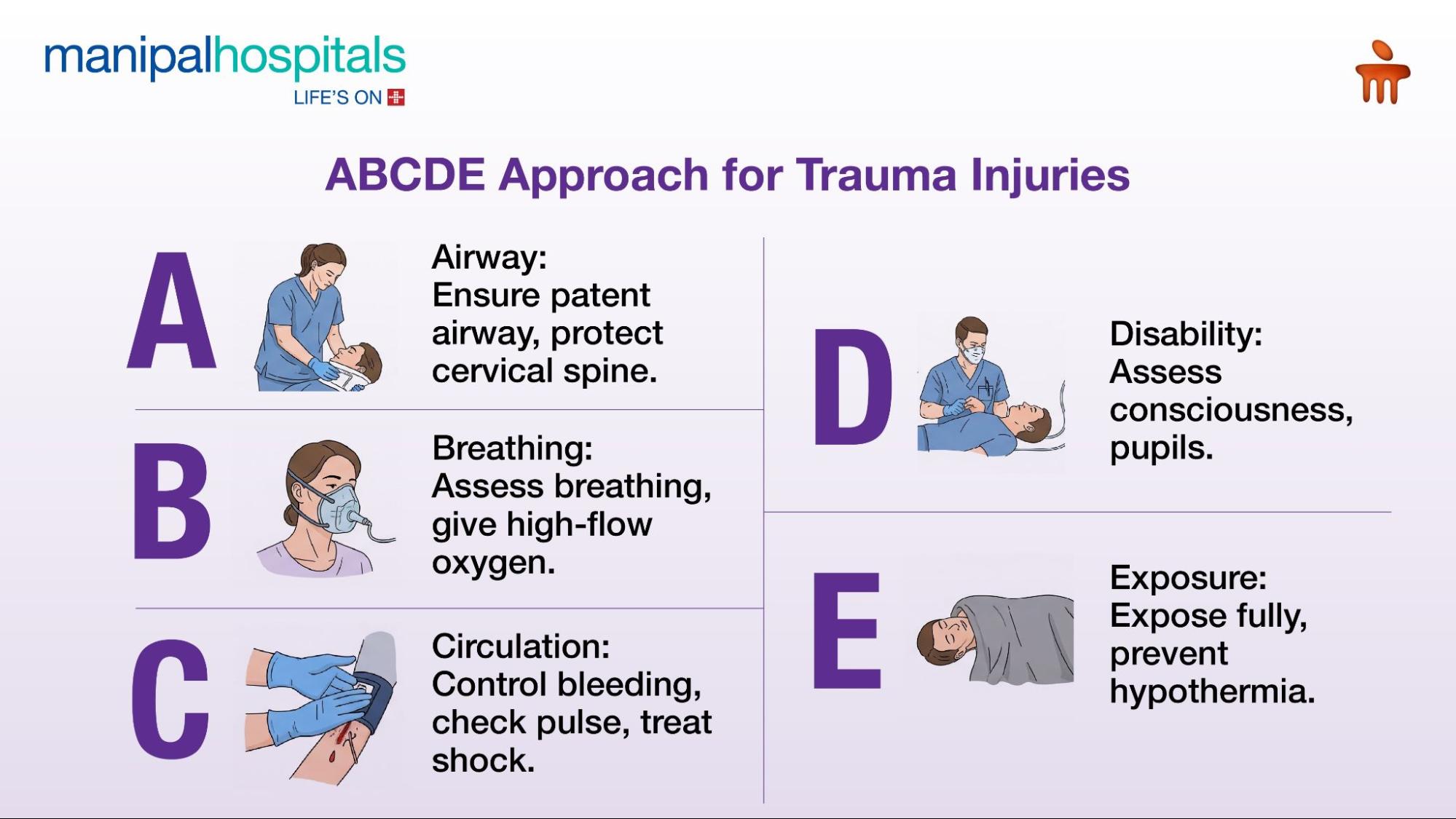
Once emergency services arrive, structured accident injury treatment begins. Trauma injuries are assessed using established protocols such as the ABCDE approach: Airway, Breathing, Circulation, Disability, and Exposure.
Accident injury treatment for trauma injuries may include oxygen support, intravenous fluids, imaging studies, and emergency surgeries. Road traffic injuries often require multidisciplinary care involving trauma surgeons, orthopaedic specialists, neurosurgeons, and ENT experts.
For head and neck trauma injuries, ENT consultation is critical. Hospitals supported by our ENT specialists in Delhi-NCR can ensure accurate diagnosis and timely intervention in complex trauma injuries.
Hospital-Based Care for Road Traffic Injuries
Road traffic injuries often require extended hospital care. Traumatic injuries may need surgical repair, intensive monitoring, or rehabilitation. Accident injury treatment plans are individualised based on the severity of trauma injuries.
Advanced trauma centres manage road accident injuries using modern imaging, minimally invasive procedures, and critical care support. Early intervention improves recovery outcomes in trauma injuries.
Rehabilitation After Trauma Injuries
Recovery from trauma injuries does not end with discharge. Road traffic injuries may require physiotherapy, speech therapy, or psychological support. Trauma injuries involving facial structures or hearing may need follow-up with ENT specialists, making access to our ENT specialists in Delhi-NCR beneficial for long-term recovery.
Preventing Trauma Injuries from Road Accidents
While accident injury treatment has advanced, prevention remains the best strategy. Using seat belts, helmets, obeying traffic rules, and avoiding distracted driving significantly reduce trauma injuries and road traffic injuries.
Public awareness of road accident first aid can also reduce the severity of trauma injuries when accidents occur.
Role of Specialised Care in Trauma Injuries
Not all trauma injuries are visible. ENT-related trauma injuries, such as nasal fractures, ear bleeding, or airway compromise, require expert evaluation. Facilities supported by our ENT specialists in Delhi-NCR provide integrated care for such trauma injuries, enhancing overall accident injury treatment outcomes.
Conclusion
Traumatic injuries from road accidents demand rapid response, correct road accident first aid, and structured emergency accident injury treatment. Awareness, preparedness, and access to specialised care can significantly reduce the long-term impact of trauma injuries and road traffic injuries on individuals and families.
FAQ's
Traumatic injuries are physical injuries caused by external force during a road accident, affecting bones, organs, or the nervous system.
Road accident first aid stabilises trauma injuries, controls bleeding, and prevents complications before professional accident injury treatment begins.
Do not move victims with suspected spinal trauma injuries unnecessarily, or give them food and drinks.
Road traffic injuries are managed through structured accident injury treatment, including imaging, surgery, and supportive care based on trauma injuries.
ENT specialists are essential for head, neck, facial, or airway-related trauma injuries, ensuring comprehensive accident injury treatment.
Share this article on:


.webp "Stroke Emergency: FAST Signs, Symptoms & What to Do")





