




 8 Min Read
Peptic ulcer disease is a common digestive condition affecting millions of people worldwide. Recognising peptic ulcer symptoms early can prevent complications and help patients receive timely care. Many individuals ignore peptic ulcer symptoms, assuming they are minor digestive issues, but persistent peptic ulcer symptoms may indicate an underlying ulcer. The two most common causes include long-term medication use and H pylori infection. Understanding peptic ulcer symptoms alongside the causes of H pylori infection can help patients seek early diagnosis and appropriate gastric ulcer treatment. A duodenal ulcer is another frequent form of ulcer that develops in the upper small intestine. Early consultation with our gastroenterologists in Delhi-NCR can help identify peptic ulcer symptoms, detect H pylori infection, and begin the right gastric ulcer treatment for both gastric ulcers and duodenal ulcer conditions.
Synopsis
What Is Peptic Ulcer Disease?
Peptic ulcer disease refers to open sores that develop in the stomach lining or the upper part of the small intestine. The most common warning signs include burning abdominal discomfort and other peptic ulcer symptoms that tend to worsen on an empty stomach. Many patients first notice mild peptic ulcer symptoms, but persistent peptic ulcer symptoms may suggest damage to the stomach or intestinal lining.
The condition commonly occurs due to H pylori infection, which weakens the protective mucous layer of the stomach. When untreated, H pylori infection can inflame stomach tissue and worsen peptic ulcer symptoms. Long-term use of anti-inflammatory medicines may also contribute to ulcer formation and intensify peptic ulcer symptoms.
Doctors often classify ulcers into stomach ulcers and duodenal ulcers. A duodenal ulcer forms in the first part of the small intestine and may produce different patterns of peptic ulcer symptoms compared with stomach ulcers. Treatment strategies usually involve eliminating H pylori infection and starting appropriate gastric ulcer treatment to relieve peptic ulcer symptoms and heal the affected tissue.
Major Causes of Peptic Ulcer Disease
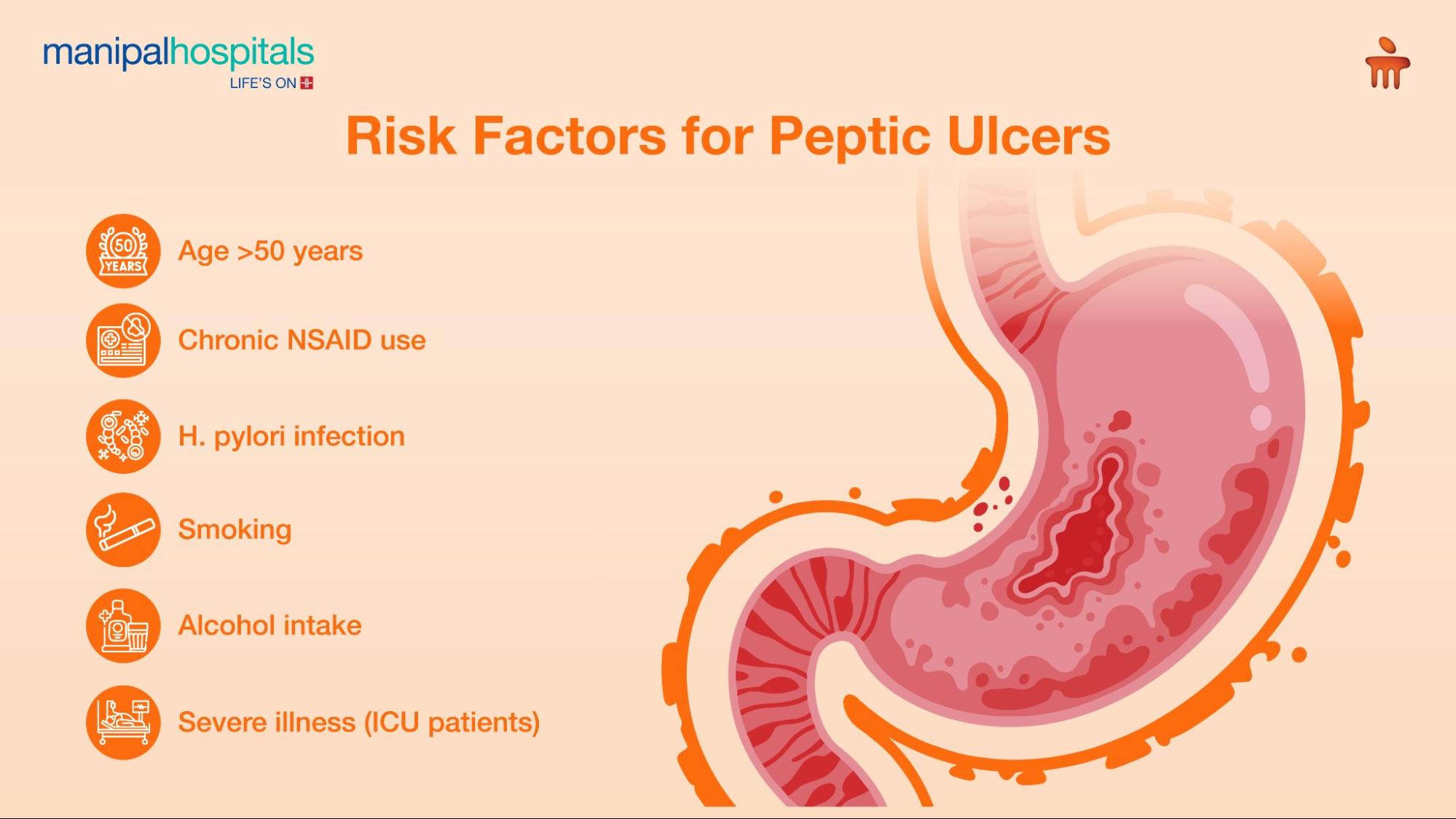
Several medical and lifestyle factors can trigger ulcers. Understanding these causes helps patients recognise peptic ulcer symptoms early and seek treatment before complications arise.
1. H. pylori Infection
One of the leading causes of ulcers worldwide is H pylori infection. This bacterium damages the stomach’s protective lining and increases acid production. Persistent H pylori infection often leads to inflammation and repeated peptic ulcer symptoms. Without treatment, H pylori infection may result in chronic ulcers or recurrent duodenal ulcer cases.
2. Excessive Stomach Acid
Increased acid secretion may irritate stomach tissue and worsen peptic ulcer symptoms. Acid imbalance can aggravate peptic ulcer symptoms, especially in patients already suffering from H pylori infection or a duodenal ulcer.
3. Long-Term Use of Painkillers
Non-steroidal anti-inflammatory drugs can weaken the stomach lining. Regular use may intensify peptic ulcer symptoms and raise the risk of a duodenal ulcer. Patients taking such medications often require specialised gastric ulcer treatment to manage peptic ulcer symptoms safely.
4. Lifestyle Factors
Smoking, alcohol consumption, and chronic stress can worsen peptic ulcer symptoms and slow recovery. These factors may also complicate gastric ulcer treatment and delay healing in individuals with duodenal ulcer conditions.
Understanding the Role of H. pylori Infection
A large proportion of ulcer cases are linked to H pylori infection. The bacteria colonise the stomach lining and gradually weaken its protective barrier. As H pylori infection progresses, stomach acid begins to damage underlying tissues, triggering peptic ulcer symptoms.
Persistent H pylori infection can cause both stomach ulcers and duodenal ulcers. Many patients experience recurring peptic ulcer symptoms such as abdominal burning or discomfort. If untreated, H pylori infection may continue to inflame the digestive tract, making peptic ulcer symptoms more severe over time.
Medical specialists usually test for H pylori infection using breath tests, stool tests, or endoscopy. Once diagnosed, eliminating H pylori infection becomes the first step of effective gastric ulcer treatment. Removing H pylori infection not only improves healing but also reduces the risk of future duodenal ulcer recurrence.
Common Peptic Ulcer Symptoms
Recognising peptic ulcer symptoms early can significantly improve treatment outcomes. Although symptoms vary, some warning signs appear frequently in both gastric and duodenal ulcer cases.
Typical peptic ulcer symptoms include:
Many patients report peptic ulcer symptoms that worsen at night or between meals. A duodenal ulcer often causes pain when the stomach is empty, while stomach ulcers may trigger peptic ulcer symptoms soon after eating.
In some cases, severe peptic ulcer symptoms may indicate complications such as bleeding. Black stools, vomiting blood, or sudden severe pain require immediate medical attention. These serious peptic ulcer symptoms may occur when a duodenal ulcer or stomach ulcer damages nearby blood vessels.
Persistent peptic ulcer symptoms should never be ignored. Medical evaluation can determine whether H pylori infection is present and guide the appropriate gastric ulcer treatment plan.
Diagnosis and Gastric Ulcer Treatment Options
Proper diagnosis plays a crucial role in managing peptic ulcer symptoms effectively. Doctors evaluate peptic ulcer symptoms through physical examination, laboratory tests, and imaging procedures.
Common diagnostic methods include endoscopy, breath testing for H pylori infection, and stool testing. Identifying H pylori infection allows physicians to design targeted gastric ulcer treatment plans that eliminate the bacteria and reduce peptic ulcer symptoms.
Medical Treatments
-
Antibiotics for H. pylori Infection - If tests confirm H pylori infection, antibiotics are prescribed to eradicate the bacteria. Treating H pylori infection is essential for healing ulcers and preventing future duodenal ulcer episodes.
-
Acid-Reducing Medicines - Proton pump inhibitors and other medications help lower stomach acid. These medicines ease peptic ulcer symptoms and support effective gastric ulcer treatment for both stomach ulcers and duodenal ulcer conditions.
-
Protective Medications - Some medications strengthen the stomach lining and reduce irritation, further improving peptic ulcer symptoms and supporting recovery during gastric ulcer treatment.
Seeking care from our gastroenterologists in Delhi-NCR ensures personalised evaluation, especially when peptic ulcer symptoms persist despite medication or when H pylori infection requires specialised management.
Lifestyle Changes for Ulcer Recovery
Lifestyle adjustments can support medical therapy and reduce recurring peptic ulcer symptoms. Patients undergoing gastric ulcer treatment are often advised to adopt healthy habits that promote healing.
Avoiding smoking and limiting alcohol can reduce irritation in individuals with duodenal ulcers or stomach ulcers. Balanced meals, adequate hydration, and stress management also help minimise peptic ulcer symptoms.
Individuals recovering from H pylori infection should complete their medication course and attend follow-up tests to confirm eradication. Proper monitoring ensures that gastric ulcer treatment remains effective and prevents recurrence of duodenal ulcer complications.
Guidance from our gastroenterologists in Delhi-NCR can help patients adopt dietary and lifestyle changes that reduce peptic ulcer symptoms and maintain long-term digestive health.
When to See a Specialist
Many people ignore recurring digestive discomfort, but persistent peptic ulcer symptoms should always be evaluated by a doctor. Continuous peptic ulcer symptoms may indicate an untreated H pylori infection or an underlying duodenal ulcer that requires medical attention.
If peptic ulcer symptoms last for several weeks, professional consultation becomes essential. Early evaluation can confirm H pylori infection, begin suitable gastric ulcer treatment, and prevent complications related to duodenal ulcer conditions.
Timely diagnosis, modern gastric ulcer treatment, and expert care from our gastroenterologists in Delhi-NCR can effectively manage peptic ulcer symptoms, treat H pylori infection, and reduce the likelihood of another duodenal ulcer.
FAQ's
Early peptic ulcer symptoms often include burning stomach pain, bloating, and mild nausea. These peptic ulcer symptoms may appear between meals or during the night.
Not everyone with H pylori infection develops ulcers, but untreated H pylori infection significantly increases the risk of stomach ulcers and duodenal ulcers.
Standard gastric ulcer treatment may last several weeks. Treatment duration depends on ulcer severity, the presence of H pylori infection, and whether the ulcer is a duodenal ulcer or a stomach ulcer.
Yes, a duodenal ulcer often causes peptic ulcer symptoms that worsen on an empty stomach, while stomach ulcers may trigger pain soon after eating.
If peptic ulcer symptoms persist for more than a few weeks, worsen suddenly, or include bleeding, you should consult a specialist for proper diagnosis and gastric ulcer treatment.
Share this article on:





