8 Min Read
Headaches are a common ailment, affecting nearly everyone at some point in their lives. While often dismissed as minor inconveniences, understanding the type of headache you are experiencing is crucial for effective management and relief. Two of the most prevalent types are migraines and tension headaches, each with distinct characteristics, causes, and treatment approaches. Distinguishing between them can be challenging, but it's a vital step towards finding appropriate care. Our neurologists in Delhi-NCR are dedicated to providing accurate diagnoses and personalised treatment plans for all headache disorders.
Synopsis
- Understanding the Headache Spectrum
- Migraine: More Than Just a Headache
- What are Migraine Symptoms?
- What Causes Migraines?
- Tension Headache: The Silent Achiever of Discomfort
- Migraine vs Tension Headache: Key Distinctions
- Beyond Migraine and Tension: A Glimpse at Cluster Headaches
- When to Seek Medical Advice? Delhi Doctor Tips for Headache Management
- Conclusion
Understanding the Headache Spectrum
Globally, headaches are one of the most common neurological disorders. According to the World Health Organisation, nearly 50% of adults experience a headache at least once a year, with tension headaches being the most frequent, followed by migraines. While many headaches are benign, some can significantly impact quality of life, underscoring the importance of understanding their nature. Accurate diagnosis, often aided by expert medical consultation, can improve treatment success rates by over 70%.
Migraine: More Than Just a Headache
Migraine is a complex neurological condition, not merely a severe headache. It’s characterised by recurrent attacks of moderate to severe head pain, often accompanied by other symptoms. These attacks can be debilitating, affecting daily activities and overall well-being. With proper management, over 80% of migraine sufferers report significant improvement in their quality of life and reduced attack frequency.
What are Migraine Symptoms?
-
Pain Characteristics: Often described as a throbbing or pulsating pain, typically on one side of the head (unilateral), but can be bilateral. The pain is usually moderate to severe and worsens with physical activity.
-
Associated Symptoms: Nausea and/or vomiting are common. Increased sensitivity to light (photophobia) and sound (phonophobia) are hallmark symptoms. Some individuals also experience sensitivity to smells (osmophobia).
-
Aura: Approximately 25-30% of migraine sufferers experience an "aura" – transient neurological symptoms that typically precede the headache phase. These can include visual disturbances (flashing lights, zigzag lines, blind spots), sensory changes (numbness or tingling), or speech difficulties.
-
Duration: Migraine attacks can last anywhere from 4 to 72 hours if left untreated.
What Causes Migraines?
The exact cause of migraines is not fully understood, but it's believed to involve a combination of genetic predisposition and environmental factors leading to abnormal brain activity. Triggers vary widely among individuals but commonly include:
-
Stress: Emotional stress is a leading trigger.
-
Hormonal Changes: Fluctuations in oestrogen, particularly around menstruation, can trigger migraines in women.
-
Dietary Factors: Certain foods (e.g., aged cheeses, processed meats, caffeine, alcohol) and irregular meal times.
-
Sleep Disturbances: Both too much and too little sleep can be triggers.
-
Environmental Factors: Bright lights, loud noises, strong smells, and changes in weather.
-
Genetics: A family history of migraines significantly increases one's risk.
Tension Headache: The Silent Achiever of Discomfort
Tension headaches are the most common type of primary headache, affecting a vast majority of the population at some point. They are typically less severe than migraines but can still be uncomfortable and interfere with daily life. Early intervention for tension headaches can reduce their frequency by up to 60%.
Tension Headache Symptoms:
Understanding tension headache symptoms is key to distinguishing them from other headache types:
-
Pain Characteristics: Often described as a constant, dull, aching pain or a feeling of pressure or tightness, like a band squeezing around the head. The pain is typically mild to moderate in intensity and usually affects both sides of the head (bilateral).
-
Location: Pain often radiates from the neck, shoulders, or scalp.
-
Associated Symptoms: Unlike migraines, tension headaches usually do not cause nausea, vomiting, or significant sensitivity to light or sound.
-
Duration: Can last from 30 minutes to several days.
Tension Headache Causes:
The primary tension headache causes are often related to muscle tension and stress:
-
Stress: Emotional or mental stress is the most common trigger.
-
Muscle Strain: Prolonged contraction of muscles in the neck, shoulders, and scalp due to poor posture, long hours at a computer, or physical strain.
-
Fatigue: Lack of adequate sleep or physical exhaustion.
-
Dehydration: Not drinking enough fluids.
-
Skipped Meals: Low blood sugar can trigger headaches.
-
Clenching the Jaw: Bruxism (teeth grinding) can also contribute.
Migraine vs Tension Headache: Key Distinctions
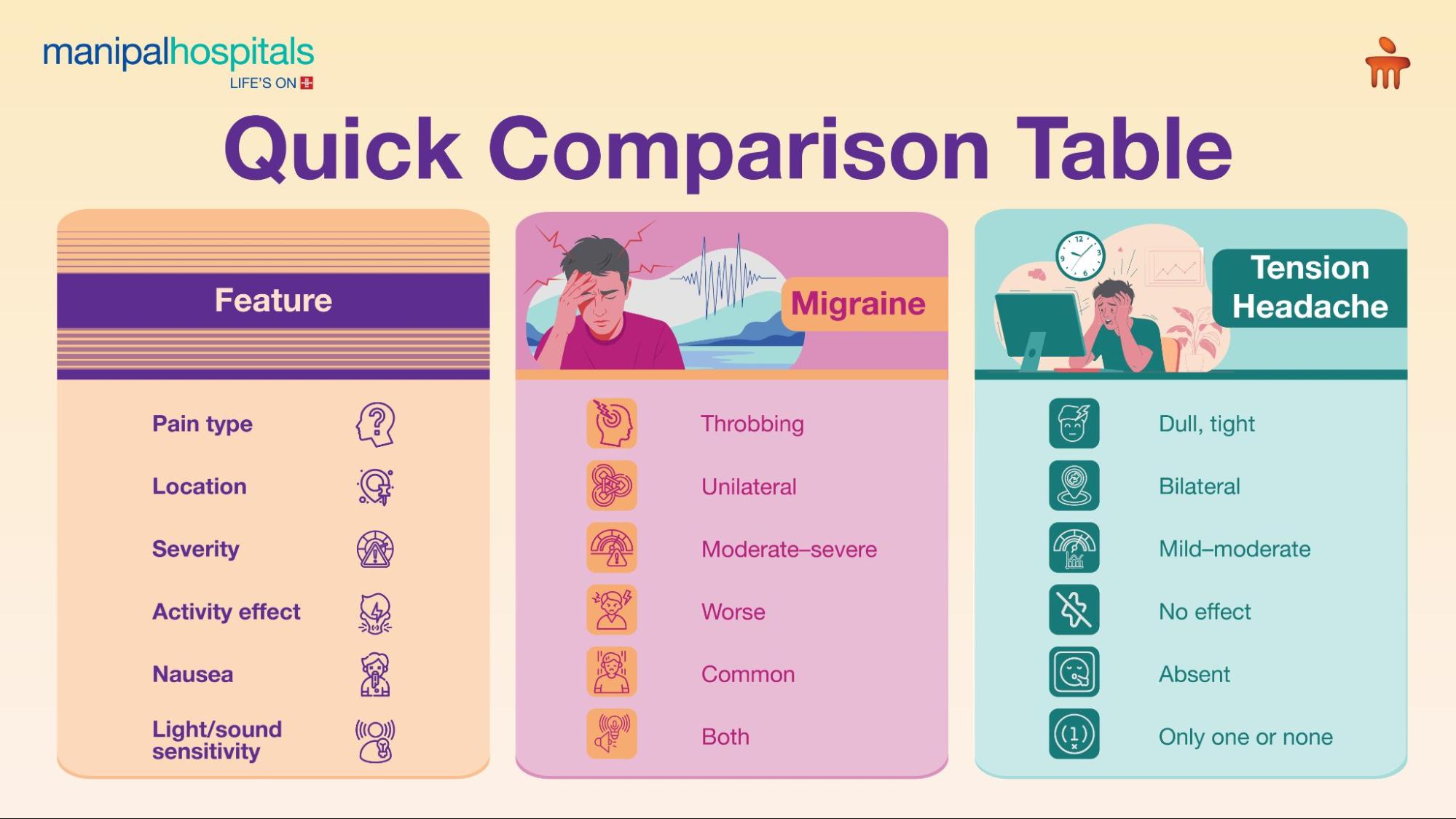
Here’s a clear comparison to help differentiate between a migraine and a tension headache:
-
Severity: Migraine pain is typically moderate to severe; tension headache pain is mild to moderate.
-
Quality of Pain: Migraine is often throbbing/pulsating; tension headache is a dull ache or pressure/tightness.
-
Location: Migraine is frequently unilateral; tension headache is usually bilateral.
-
Associated Symptoms: Migraines often come with nausea, vomiting, and sensitivity to light/sound. Tension headaches rarely do.
-
Aggravating Factors: Migraine pain worsens with physical activity; tension headache pain generally does not.
-
Aura: Present in some migraines, absent in tension headaches.
-
Triggers: Migraines have specific triggers (hormonal, diet, strong sensory input); tension headaches are more commonly linked to stress and muscle tension.
Understanding these distinctions is vital for seeking appropriate care. Our neurologists in Delhi-NCR excel in diagnosing these conditions accurately, ensuring you receive the most effective treatment for your specific headache type.
Beyond Migraine and Tension: A Glimpse at Cluster Headaches
While discussing tension headache vs migraine vs cluster headaches, it's important to briefly mention cluster headaches, a less common but extremely severe type. Cluster headaches are characterised by excruciating, unilateral pain, usually around the eye or temple. They occur in cyclical patterns or "clusters," often accompanied by autonomic symptoms like tearing, redness of the eye, nasal congestion, or drooping eyelid on the affected side. These are significantly different from both migraines and tension headaches in their intensity, duration (shorter, usually 15-180 minutes), and associated symptoms, requiring specialised diagnosis and management.
When to Seek Medical Advice? Delhi Doctor Tips for Headache Management
While many headaches are benign, certain symptoms warrant immediate medical attention. If you experience any of the following, consult a healthcare professional, such as one of our experienced neurologists in Delhi-NCR:
-
A sudden, severe headache, often described as the "worst headache of your life."
-
Headaches accompanied by fever, stiff neck, confusion, seizures, double vision, weakness, or numbness.
-
Headaches that worsen after a head injury.
-
Chronic headaches that change in pattern or intensity.
-
Headaches that start after age 50.
Accurate diagnosis is the cornerstone of effective tension headache treatment and migraine management. Modern diagnostic tools combined with clinical expertise can lead to a diagnosis in over 90% of cases, guiding effective interventions.
General Headache Management & Prevention Strategies:
-
Identify and Avoid Triggers: Keep a headache diary to pinpoint specific triggers.
-
Stress Management: Practise relaxation techniques like yoga, meditation, or deep breathing.
-
Maintain a Regular Sleep Schedule: Go to bed and wake up at the same time daily, even on weekends.
-
Stay Hydrated: Drink plenty of water throughout the day.
-
Eat Regular Meals: Avoid skipping meals to prevent blood sugar drops.
-
Limit Caffeine and Alcohol: Both can be headache triggers for some individuals.
-
Maintain Good Posture: Especially during long hours of desk work, to prevent neck and shoulder tension, which can contribute to tension headache causes.
-
Regular Exercise: Physical activity can reduce the frequency and intensity of headaches.
Conclusion
At Manipal Hospitals, we understand the profound impact headaches can have on your life. Our team of highly experienced neurologists in Delhi-NCR employs a comprehensive approach to headache diagnosis and management. We combine advanced diagnostic capabilities with empathetic, patient-centric care to develop tailored treatment plans. From lifestyle modifications and trigger identification to advanced therapies, we are committed to helping you achieve lasting relief and improve your quality of life.
If you are experiencing these symptoms, it's crucial to seek timely medical advice. Book an appointment with our expert neurologists at Manipal Hospitals today.
FAQ's
The main difference lies in severity, pain quality, and associated symptoms. Migraines are typically moderate to severe, throbbing, often unilateral, and accompanied by nausea/vomiting and sensitivity to light/sound. Tension headaches are mild to moderate, dull, band-like, bilateral, and usually lack associated symptoms like nausea.
Yes, tension headaches can become chronic if they occur 15 or more days a month for at least three months. Chronic tension headache symptoms can significantly impact daily life and require professional management.
There is a strong genetic component to migraines. If one or both parents have migraines, there's a higher chance their children will also experience them.
You should consult a doctor if your headaches are sudden and severe, accompanied by neurological symptoms (e.g., weakness, vision changes), worsen after a head injury, change in pattern, or significantly impact your quality of life. This is vital for proper diagnosis and effective tension headache treatment or migraine management.
Yes, stress is a common trigger for both types of headaches. For tension headaches, stress often leads to muscle tension in the head and neck. For migraines, stress can trigger neurological changes that initiate an attack.
Share this article on: