




.webp "Dr. Salil Yadav | Robotic & Laparoscopic Surgery Specialist in India | Manipal Hospitals")
 5 Min Read
Metabolic syndrome is a cluster of conditions that significantly raises the risk of heart disease, stroke, and type 2 diabetes. Affecting millions worldwide, metabolic syndrome often goes unnoticed until complications arise. Our general surgeons in Delhi-NCR regularly counsel patients on managing metabolic syndrome through lifestyle and, when needed, surgical interventions.
Synopsis
- What is Metabolic Syndrome?
- Metabolic Syndrome Symptoms
- Key Clinical Indicators
- What These Signs Indicate
- Metabolic Syndrome Diet Essentials
- Causes of Metabolic Syndrome
- Diagnosing Metabolic Syndrome
- Metabolic Syndrome Diet Essentials
- Lifestyle Management for Metabolic Syndrome
- When Metabolic Syndrome Requires Surgery
- Risks of Untreated Metabolic Syndrome
- Post-Surgical Care for Metabolic Syndrome
- Preventing Metabolic Syndrome Progression
- Long-Term Management of Metabolic Syndrome
- Advanced Screening for Metabolic Syndrome
- Nutritional Strategies in Metabolic Syndrome Diet
- Exercise Protocols for Metabolic Syndrome
- Psychological Support for Metabolic Conditions
- Success Stories in Metabolic Syndrome Management
What is Metabolic Syndrome?
What is metabolic syndrome? It's defined by at least three of five key risk factors: abdominal obesity, high blood pressure, high blood sugar, high triglycerides, and low HDL cholesterol. This metabolic dysfunction stems from insulin resistance and lifestyle factors.
-
Central obesity (waist >40 inches for men, >35 inches for women)
-
Blood pressure ≥130/85 mmHg
-
Fasting glucose ≥100 mg/dL
-
Triglycerides ≥150 mg/dL
-
HDL <40 mg/dL in men, <50 mg/dL in women
Metabolic Syndrome Symptoms
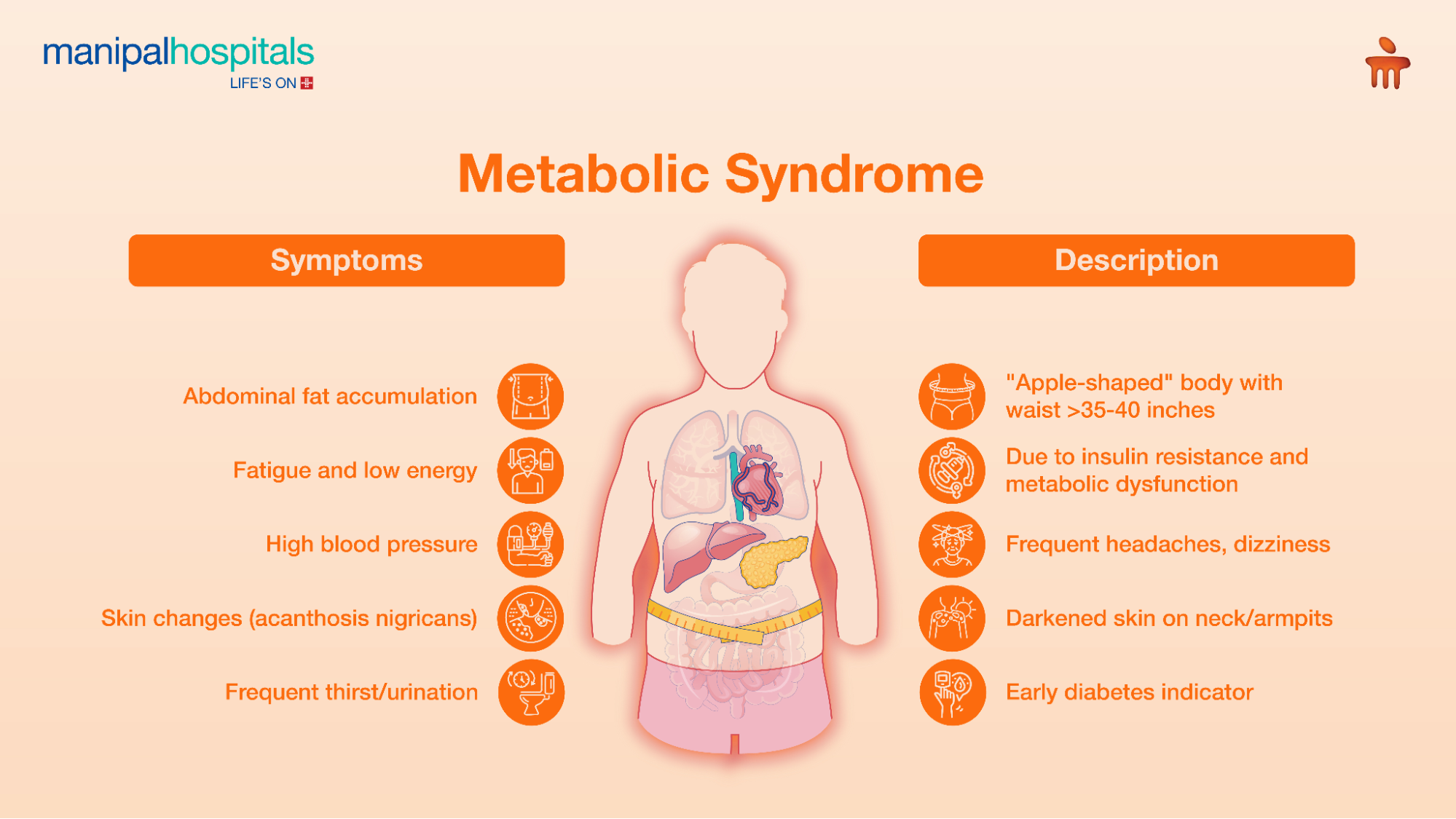
Metabolic syndrome symptoms are often subtle, making early detection challenging. Common signs include:
Key Clinical Indicators
-
Excess fat deposition around the abdomen
-
Persistent tiredness and reduced energy levels
-
Elevated blood pressure readings
-
Skin thickening or dark patches, especially around folds
-
Increased thirst and frequent urination
What These Signs Indicate
|
Clinical Feature |
Simplified Explanation |
|
Central obesity |
Body fat is mainly concentrated around the waistline |
|
Fatigue |
Result of insulin resistance and metabolic imbalance |
|
High blood pressure |
Often associated with vascular stress |
|
Skin changes |
Pigmentation changes linked to insulin dysfunction |
|
Increased thirst/urination |
Early warning sign of glucose intolerance |
Symptoms of metabolic syndrome, such as the ones listed above, signal underlying metabolic conditions. At Manipal Hospital Delhi- NCR, Our general surgeons recommend routine screenings for at-risk patients.
Metabolic Syndrome Diet Essentials
A metabolic syndrome diet focuses on whole foods:
|
Food Category |
Recommended |
Avoid |
|
Proteins |
Lean meats, fish, eggs |
Processed meats |
|
Carbs |
Whole grains, veggies |
Refined sugars |
|
Fats |
Avocados, nuts, olive oil |
Trans fats |
|
Fruits/Veggies |
Berries, leafy greens |
High-sugar fruits |
Our general surgeons in Delhi-NCR pair dietary advice with surgical evaluations for optimal management of metabolic syndrome.
Causes of Metabolic Syndrome
-
Metabolic syndrome arises from a mix of genetic and environmental factors:
-
Insulin resistance: Core driver of metabolic diseases
-
Sedentary lifestyle and poor diet
-
Genetics and family history
-
Ageing and hormonal changes
-
Chronic inflammation from obesity
Metabolic dysfunction worsens with high-sugar diets and stress.
Diagnosing Metabolic Syndrome
Diagnosis requires ≥3 criteria met. Tests include:
-
Blood work (lipids, glucose, HbA1c)
-
Waist circumference measurement
-
Blood pressure check
-
BMI assessment
Early identification prevents progression to severe metabolic conditions.
Metabolic Syndrome Diet Essentials
A metabolic syndrome diet focuses on whole foods:
|
Food Category |
Recommended |
Avoid |
|
Proteins |
Lean meats, fish, eggs |
Processed meats |
|
Carbs |
Whole grains, veggies |
Refined sugars |
|
Fats |
Avocados, nuts, olive oil |
Trans fats |
|
Fruits/Veggies |
Berries, leafy greens |
High-sugar fruits |
Our general surgeons in Delhi-NCR pair dietary advice with surgical evaluations for optimal management of metabolic syndrome.
Lifestyle Management for Metabolic Syndrome
Non-surgical approaches reverse early metabolic syndrome:
-
Exercise: 150 min/week moderate activity
-
Weight loss: 5-10% body weight reduction
-
Quit smoking: Improves insulin sensitivity
-
Stress reduction: Meditation, yoga
Pointers for success:
-
Track daily steps (aim 10,000)
-
Prioritise sleep (7-9 hours)
-
Monitor blood sugar regularly
When Metabolic Syndrome Requires Surgery
For severe cases (BMI ≥35-40 with comorbidities), bariatric surgery transforms metabolic syndrome. Options include:
|
Surgical Option |
Description |
Benefits for Metabolic Syndrome |
|
Gastric Sleeve |
Removes 80% stomach |
Rapid weight loss, diabetes remission |
|
Gastric Bypass |
Reroutes intestines |
Improves insulin resistance, lipids |
|
Gastric Banding |
Adjustable band |
Reversible, gradual weight loss |
Metabolic syndrome improves dramatically post-surgery, up to 70% resolution of diabetes. Our general surgeons in Delhi-NCR specialise in minimally invasive bariatric procedures, ensuring faster recovery and better outcomes.
Risks of Untreated Metabolic Syndrome
Ignoring metabolic syndrome leads to:
-
Heart attack/stroke (2x risk)
-
Type 2 diabetes (5x risk)
-
Fatty liver disease
- <>Kidney damage
-
Certain cancers
Metabolic diseases like these strain healthcare systems.
Post-Surgical Care for Metabolic Syndrome
After bariatric surgery:
-
Diet progression: Liquids → purees → solids
-
Vitamin supplementation (B12, iron, calcium)
-
Follow up every 3-6 months
-
Exercise integration
Our general surgeons in Delhi-NCR provide comprehensive follow-up to sustain metabolic syndrome reversal.
Preventing Metabolic Syndrome Progression
Proactive steps:
-
Annual health checkups
-
Family screening for metabolic conditions
-
Balanced metabolic syndrome diet
-
Regular physicals with surgeons
Long-Term Management of Metabolic Syndrome
Effective long-term management of metabolic syndrome requires consistent monitoring of metabolic syndrome symptoms and addressing underlying metabolic dysfunction. Our general surgeons in Delhi-NCR emphasise regular follow-ups to track progress in metabolic conditions and adjust treatment plans as needed for sustained health improvements.
Advanced Screening for Metabolic Syndrome
Advanced screening plays a crucial role in identifying metabolic syndrome early, before symptoms of metabolic syndrome become severe. Metabolic syndrome detection involves comprehensive blood panels and imaging that our general surgeons in Delhi-NCR utilise to provide precise diagnosis and personalised intervention strategies for metabolic diseases.
Nutritional Strategies in Metabolic Syndrome Diet
A well-structured metabolic syndrome diet incorporates anti-inflammatory foods that combat metabolic dysfunction while promoting weight management. Key elements include portion control, high-fibre intake, and balanced macronutrients, with guidance from our general surgeons in Delhi-NCR to optimise outcomes for patients with metabolic conditions.
Exercise Protocols for Metabolic Syndrome
Tailored exercise protocols specifically designed for metabolic syndrome help improve insulin sensitivity and reduce metabolic syndrome symptoms. Our general surgeons in Delhi-NCR collaborate with physiotherapists to create safe, progressive programs that address metabolic syndrome related fatigue and cardiovascular risks effectively.
Psychological Support for Metabolic Conditions
Psychological support is vital for managing metabolic syndrome, as stress exacerbates metabolic dysfunction and metabolic diseases. Our general surgeons in Delhi-NCR integrate counselling services to help patients cope with lifestyle changes required for successful metabolic syndrome management and long-term wellness.
Success Stories in Metabolic Syndrome Management
Patients undergoing surgery see:
-
50-70% excess weight loss
-
Normalised blood pressure
-
Improved quality of life
Our general surgeons in Delhi-NCR have helped hundreds reverse metabolic syndrome through expert care.
Metabolic syndrome demands action—lifestyle first, surgery when needed. Consult our general surgeons in Delhi-NCR for personalised plans. Because your health deserves the best.
FAQ's
What is metabolic syndrome? A cluster of conditions (obesity, hypertension, high sugar/lipids) increases risks for diabetes and heart disease.
Metabolic syndrome symptoms include abdominal obesity, fatigue, high BP, and skin darkening—often subtle until advanced.
Yes, a metabolic syndrome diet with whole foods, exercise, and weight loss can manage early metabolic dysfunction.
For BMI ≥35-40 with comorbidities, bariatric options like sleeve gastrectomy effectively treat metabolic syndrome.
Our general surgeons in Delhi-NCR perform bariatric surgeries, provide follow-up, and guide lifestyle changes for lasting metabolic syndrome control.
Share this article on:





