




 5 Min Read
Ear infections are among the most common health conditions affecting both children and adults. Understanding ear infection symptoms early can help prevent complications, reduce discomfort, and ensure timely medical care. Otitis media, a common type of ear infection, occurs when the middle ear becomes inflamed due to illness. Recognising ear infection symptoms and seeking appropriate care from our ENT experts in Delhi-NCR can significantly improve recovery outcomes and protect long-term hearing health.
Synopsis
- Understanding Ear Infections and Otitis Media
- Common Ear Infection Symptoms
- Otitis Media Symptoms in Children vs Adults
- Ear Infection Causes You Should Know
- Diagnosing Ear Infection Symptoms
- Ear Infection Treatment Options
- Home Care for Managing Ear Infection Symptoms
- Complications of Untreated Ear Infections
- Preventing Ear Infections
- When to Seek Medical Attention
- Conclusion
Understanding Ear Infections and Otitis Media
An ear infection develops when bacteria or viruses infect the structures of the ear. Otitis media specifically affects the middle ear, the air-filled space behind the eardrum. Ear infection symptoms often appear suddenly and may worsen if left untreated. Children are particularly vulnerable due to shorter Eustachian tubes, but adults can also experience persistent ear infection symptoms.
Otitis media symptoms typically follow a cold, sinus infection, or upper respiratory illness. Identifying ear infection symptoms at an early stage is essential for timely treatment and prevention of complications, such as hearing loss.
Common Ear Infection Symptoms
Recognising ear infection symptoms is the first step toward proper care. These symptoms may vary in intensity but commonly include:
-
Ear pain or discomfort
Ear pain or discomfort may range from mild aching to sharp, throbbing sensations that worsen while lying down or chewing.
-
A feeling of pressure or fullness in the ear
This sensation often feels like the ear is blocked, causing discomfort, imbalance, and temporary hearing changes during infection.
-
Difficulty hearing or muffled sounds
Sounds may appear dull or unclear due to fluid buildup behind the eardrum, interfering with normal sound transmission.
-
Fluid drainage from the ear
Drainage may be clear, yellow, or pus-like, sometimes indicating a ruptured eardrum requiring prompt medical evaluation.
-
Fever, especially in children
Fever signals the body’s immune response to infection and may be accompanied by irritability, fatigue, or poor appetite.
In many cases, ear infection symptoms may also include irritability, difficulty sleeping, or balance issues. Persistent otitis media symptoms should never be ignored, as delayed ear infection treatment can lead to chronic issues.
Otitis Media Symptoms in Children vs Adults
Otitis media symptoms can differ based on age. In children, ear infection symptoms may include frequent crying, pulling at the ear, feeding difficulties, or delayed speech development. Adults may experience sharper ear pain, hearing changes, or dizziness.
Understanding age-specific ear infection symptoms allows caregivers and individuals to seek early evaluation. Consulting our ENT expert in Delhi-NCR ensures accurate diagnosis and personalised ear infection treatment.
Ear Infection Causes You Should Know
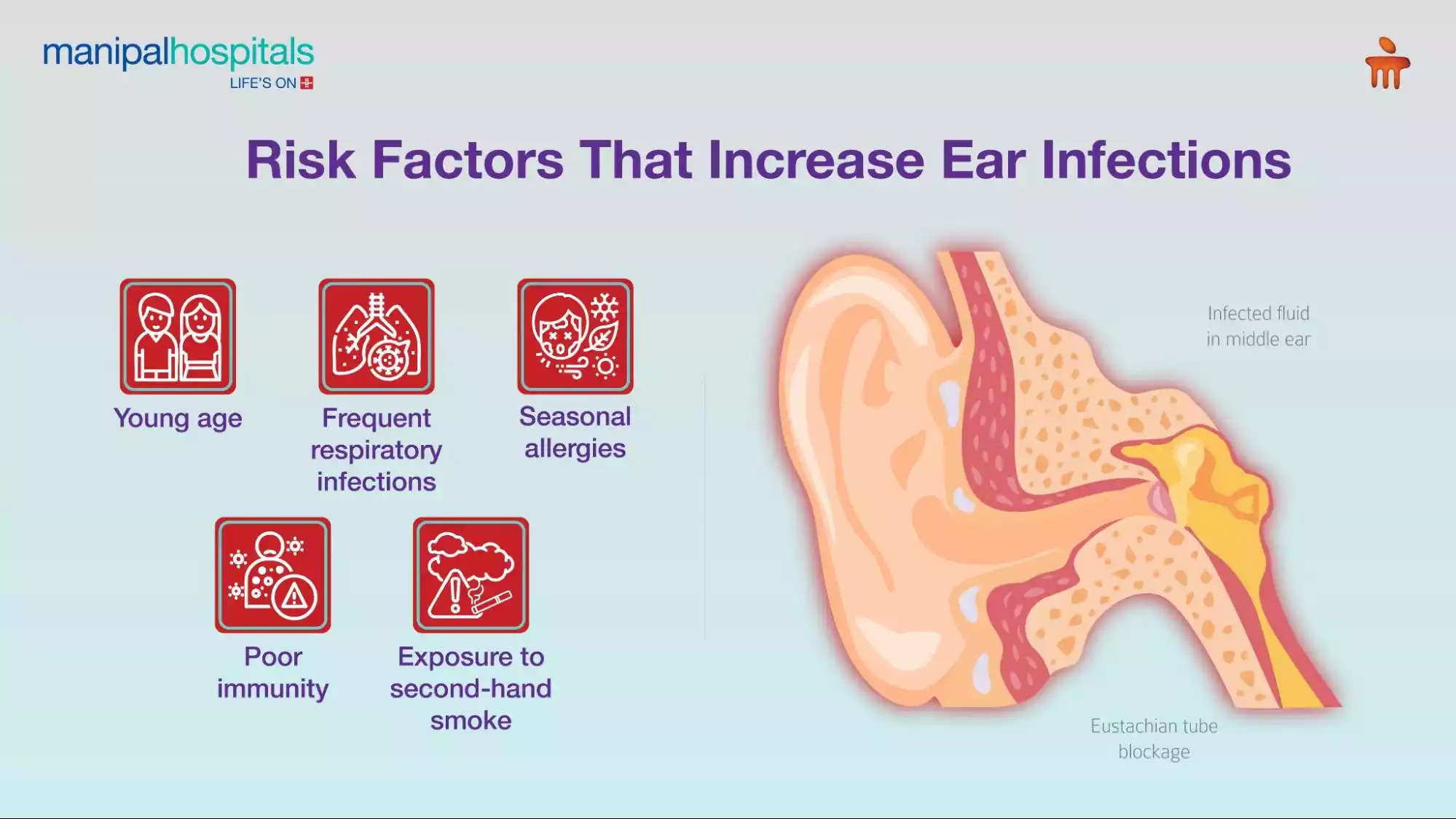
Understanding ear infection causes helps in prevention. Common ear infection causes include:
-
Bacterial or viral infections following colds
-
Allergies causing Eustachian tube blockage
-
Sinus infections
-
Exposure to smoke or pollutants
-
Fluid buildup behind the eardrum
These ear infection causes create an environment where germs thrive, leading to inflammation and worsening ear infection symptoms. Addressing the underlying ear infection causes is a critical part of effective ear infection treatment.
Diagnosing Ear Infection Symptoms
Diagnosis begins with a detailed assessment of ear infection symptoms. ENT specialists examine the ear using an otoscope to detect inflammation, fluid, or eardrum changes. In some cases, hearing tests may be recommended.
Accurate identification of ear infection symptoms ensures targeted ear infection treatment and reduces the risk of unnecessary antibiotics. Our ENT specialists at Manipal Hospitals in Delhi-NCR use evidence-based protocols for accurate diagnosis and effective treatment.
Ear Infection Treatment Options
Effective ear infection treatment depends on the cause and severity. Treatment options may include:
Medications
-
Antibiotics for bacterial infections
-
Pain relievers to manage ear infection symptoms
-
Decongestants or antihistamines if allergies contribute
Observation
In mild cases, doctors may recommend monitoring ear infection symptoms, especially in children, as some infections resolve naturally.
Surgical Intervention
For recurrent otitis media symptoms, procedures like ear tube placement may be advised to prevent fluid buildup and recurring ear infection symptoms.
Early ear infection treatment reduces complications and accelerates recovery.
Home Care for Managing Ear Infection Symptoms
Alongside medical ear infection treatment, supportive care helps ease ear infection symptoms:
-
Warm compresses to reduce pain
-
Adequate rest and hydration
-
Avoiding smoke exposure
-
Following prescribed medications strictly
These measures complement professional care and reduce the severity of otitis media symptoms.
Complications of Untreated Ear Infections
Ignoring ear infection symptoms can lead to serious complications, including:
-
Hearing loss
-
Chronic ear infections
-
Speech delays in children
-
Eardrum rupture
Timely ear infection treatment is crucial to prevent long-term consequences. Persistent otitis media symptoms warrant immediate specialist evaluation.
Preventing Ear Infections
Prevention focuses on reducing ear infections. Helpful strategies include:
-
Managing allergies effectively
-
Practising good hand hygiene
-
Staying up to date with vaccinations
-
Avoiding prolonged exposure to pollutants
Reducing ear infection causes lowers the frequency of ear infection symptoms and improves ear health.
When to Seek Medical Attention
You should consult a specialist if ear infection symptoms persist beyond a few days, worsen rapidly, or are accompanied by high fever or hearing loss. Recurrent otitis media symptoms require professional evaluation.
Seeking timely care from our ENT experts in Delhi-NCR ensures accurate diagnosis, effective ear infection treatment, and comprehensive follow-up.
Conclusion
Understanding ear infection symptoms, recognising ear infection causes, and seeking timely ear infection treatment are essential for preventing complications. Otitis media symptoms should never be overlooked, especially in children. With expert guidance, ear infections can be managed effectively and safely. Visit the ENT Department of Manipal Hospitals Delhi NCR today!
FAQ's
Ear infection symptoms commonly include ear pain, hearing difficulty, fluid drainage, fever, and a feeling of pressure in the ear.
Otitis media symptoms usually result from bacterial or viral infections following colds, allergies, or sinus infections.
Ear infection treatment depends on severity, age, and underlying ear infection causes, ranging from observation to medications or procedures.
Yes, mild ear infection symptoms may resolve on their own, especially viral infections, under medical supervision.
If otitis media symptoms persist, recur frequently, or cause hearing issues, consulting our ENT experts in Delhi-NCR is strongly recommended.
Share this article on:





