7 Min Read
Stress has become an unavoidable part of modern life, affecting mental well-being as well as physical health. One of the most common questions patients ask is: Can stress cause chest pain? The short answer is yes. Chronic stress can significantly impact heart health, contributing to symptoms that often mimic serious cardiac conditions. Understanding how stress affects the heart, why stress and heart pain occur, and whether stress can cause a heart attack is crucial for prevention and early intervention.
This blog explores the relationship between stress and heart health, explains whether you can get a heart attack from stress, and highlights effective stress management techniques to protect your heart.
Synopsis
- Understanding the Connection Between Stress and the Heart
- Can Stress Cause Chest Pain?
- How Stress Triggers Chest Pain
- Stress and Heart Pain: What It Feels Like
- Can Stress Cause Heart Problems Long-Term?
- Can Stress Cause a Heart Attack?
- Does Stress Cause Heart Attacks in Healthy People?
- Stress vs Cardiac Chest Pain
- Warning Signs You Should Not Ignore
- Effective Stress Management Techniques for Heart Health
- When to Consult a Cardiologist
- Conclusion
Understanding the Connection Between Stress and the Heart
Stress activates the body’s “fight or flight” response, releasing hormones such as cortisol and adrenaline. Over time, repeated stress responses strain the cardiovascular system. This raises an important concern: can stress cause chest pain even without blocked arteries? Medical evidence confirms that stress can trigger real physical symptoms.
According to our cardiologists in Delhi-NCR, unmanaged stress can increase blood pressure, elevate heart rate, and disrupt normal heart rhythms.
Can Stress Cause Chest Pain?
The question “Can stress cause chest pain?” is one of the most frequently asked in cardiology clinics. Stress-related chest discomfort often results from muscle tension, rapid breathing, or coronary artery spasms.
How Stress Triggers Chest Pain
-
Tightening of the chest wall muscles
-
Reduced blood flow due to vessel constriction
-
Increased heart workload
-
Heightened pain sensitivity
Although stress-related pain may not always indicate heart disease, stress and heart pain should never be ignored without evaluation.
Stress and Heart Pain: What It Feels Like
Stress and heart pain can feel similar to cardiac pain, making it difficult to distinguish.
Common Features of Stress and Heart Pain
-
Tightness or pressure in the chest: Often feels like heaviness that increases during stress and eases with rest.
-
Burning or aching sensation: May mimic heartburn or muscle pain and fluctuate with anxiety levels.
-
Pain during emotional distress: Commonly triggered by anxiety, fear, or sudden emotional events without physical exertion.
-
Relief with relaxation: Symptoms typically improve with deep breathing, rest, or calming techniques.
This overlap is why stress can cause chest pain, which often leads to emergency visits.
Can Stress Cause Heart Problems Long-Term?
Another key concern is that stress can cause heart problems over time. Chronic stress contributes to inflammation, unhealthy coping habits, and hormonal imbalance, all of which damage the heart.
Ways Stress Contributes to Heart Disease
-
Raises blood pressure
-
Promotes plaque buildup
-
Triggers irregular heartbeats
-
Worsens existing cardiac conditions
Medical evidence confirms that stress can cause heart problems is not hypothetical—it is a documented risk factor.
Can Stress Cause a Heart Attack?
Many patients ask repeatedly: Can stress cause a heart attack? While stress alone may not directly block arteries, it can act as a trigger.
How Stress Leads to a Heart Attack
-
Sudden blood pressure spikes
-
Increased clot formation
-
Coronary artery spasm
-
Elevated oxygen demand
This explains why doctors acknowledge that stress leads to heart attack risk, especially in vulnerable individuals. In fact, stress and heart attack events often coincide during emotional or psychological crises.
According to our cardiologists in Delhi-NCR, emotional stress is a known trigger for acute cardiac events.
Does Stress Cause Heart Attacks in Healthy People?
A common myth is that only those with heart disease are at risk. However, does stress cause a heart attack in otherwise healthy individuals? In rare cases, extreme stress can lead to stress-induced cardiomyopathy.
Stress-Related Cardiac Conditions
-
Broken heart syndrome
-
Temporary heart muscle weakness
-
Chest pain mimicking a heart attack
This reinforces the concern: can you get a heart attack from stress? Under extreme circumstances, yes.
Stress vs Cardiac Chest Pain
|
Feature |
Stress-Related Pain |
Cardiac Chest Pain |
|
Trigger |
Emotional stress |
Physical exertion |
|
Duration |
Variable |
Persistent |
|
Relief |
Relaxation |
Medication/rest |
|
Risk |
Functional |
Structural |
This table helps clarify that stress can cause chest pain versus true cardiac causes.
Warning Signs You Should Not Ignore
Even if stress is suspected, certain symptoms require urgent care:
-
Severe chest pressure
-
Pain radiating to the arm or jaw
-
Sweating or nausea
These signs may indicate stress and heart attack overlap and need immediate attention, as advised by our cardiologists in Delhi-NCR.
Effective Stress Management Techniques for Heart Health
Managing stress is essential to prevent stress from leading to heart attack scenarios. Evidence-based stress management techniques help protect the heart.
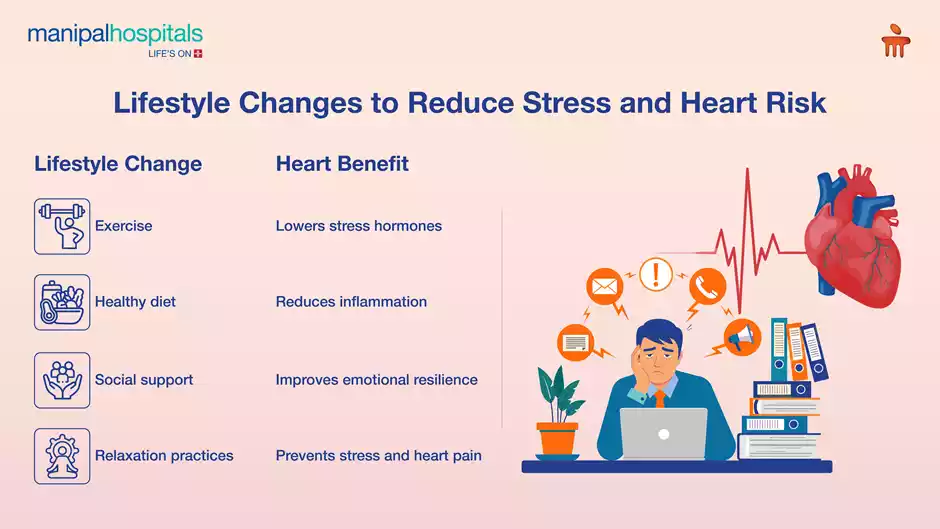
Recommended Stress Management Techniques
-
Deep breathing exercises
-
Regular physical activity
-
Mindfulness and meditation
-
Adequate sleep
-
Balanced nutrition
Implementing stress management techniques consistently reduces blood pressure and heart strain. Lifestyle-focused stress management techniques are strongly recommended by our cardiologists in Delhi-NCR.
When to Consult a Cardiologist
Persistent chest discomfort, even if stress-related, should be evaluated. Early consultation helps rule out serious causes of stress and heart pain. Regular check-ups are especially important for those experiencing chronic stress, a point emphasised by our cardiologists in Delhi-NCR.
Conclusion
Stress is more than a mental burden: it is a significant cardiovascular risk factor. From can stress cause chest pain to stress leads to heart attack, the evidence clearly links unmanaged stress to heart complications. Understanding stress and heart attack risks, recognising stress and heart pain, and adopting effective Stress management techniques can protect long-term heart health. Early evaluation and lifestyle changes remain the strongest defence against stress-related cardiac events.
Learn More: 6 Expert Tips for Lifestyle Changes to Prevent Heart Disease
FAQ's
Yes, stress can cause chest pain, even in people without heart disease.
Extreme emotional stress can act as a trigger; therefore, stress can cause a heart attack in high-risk situations.
Chronic stress increases risk factors, supporting the link that stress causes heart attacks indirectly.
In rare cases, you can get a heart attack from stress due to stress-induced cardiomyopathy.
Regular exercise, mindfulness, and healthy sleep habits are proven stress management techniques.
Share this article on: