




 6 Min Read
As we grow older, our bodies undergo several natural changes, and one of the most significant yet often overlooked changes is bone density loss. Bones that were once strong and resilient gradually become weaker, making them more prone to fractures and injuries. Understanding how ageing affects bone health is essential for preventing complications and maintaining mobility and independence later in life, especially with guidance from our experienced orthopaedics in Delhi-NCR.
This comprehensive guide explains the science behind bone density loss, explores why ageing bones become fragile, highlights risk factors, and outlines practical strategies such as exercise for bone density and foods for strong bones to protect skeletal health.
Synopsis
- What Is Bone Density Loss?
- The Natural Process of Bone Ageing
- Loss of Bone Mass: Why It Accelerates With Age
- Bone Deterioration and Its Long-Term Effects
- Ageing Bones and Structural Changes Over Time
- Signs and Symptoms of Bone Density Loss
- Diagnosis of Loss of Bone Density
- Exercise for Bone Density: Why Movement Matters
- Foods for Strong Bones: Nutrition and Bone Health
- Lifestyle Factors That Worsen Bone Deterioration
- Prevention Strategies for Bone Density Loss
- When to Seek Medical Advice
- Conclusion
What Is Bone Density Loss?
Bone density loss refers to a reduction in the amount of mineral content—primarily calcium and phosphorus—within the bones. As bone density loss progresses, bones become porous, fragile, and more susceptible to fractures, even with minor falls or stress.
Key Features of Bone Density Loss
-
Gradual thinning of bones
-
Increased fracture risk
-
Reduced bone strength
-
Slower bone repair
Bone density loss is a natural part of ageing, but the rate and severity vary from person to person.
The Natural Process of Bone Ageing
Understanding Bone Ageing
Bone ageing is a biological process where bone formation slows down while bone breakdown accelerates. During childhood and early adulthood, the body builds more bone than it loses. However, after the age of 30, this balance shifts, leading to loss of bone mass.
Why do Ageing Bones Weaken
-
Reduced calcium absorption
-
Hormonal changes
-
Decline in physical activity
-
Slower cellular regeneration
According to our orthopaedics in Delhi-NCR, early awareness of bone ageing allows individuals to take preventive measures before significant damage occurs.
Loss of Bone Mass: Why It Accelerates With Age
Loss of bone mass becomes more prominent with advancing age due to multiple physiological changes.
Major Contributors to Loss of Bone Mass
-
Decreased estrogen or testosterone levels
-
Nutritional deficiencies
-
Sedentary lifestyle
-
Chronic medical conditions
As loss of bone mass progresses, it contributes directly to bone density loss and structural weakness.
Bone Deterioration and Its Long-Term Effects
What Is Bone Deterioration?
Bone deterioration refers to the gradual breakdown of bone microarchitecture. While bone density loss affects mineral content, bone deterioration impacts bone quality and strength.
Effects of Bone Deterioration
-
Increased fracture risk
-
Spinal deformities
-
Chronic pain
-
Reduced mobility
Unchecked bone deterioration can significantly impair the quality of life in older adults.
Ageing Bones and Structural Changes Over Time
-
As the body ages, the internal structure of bones undergoes significant changes beyond mineral loss alone.
-
The supportive framework within bones becomes thinner, and microscopic spaces within the bone tissue enlarge.
-
These structural shifts reduce the bone’s ability to absorb impact and withstand everyday stress. Ageing bones also lose flexibility, making them more brittle and prone to cracks even without major trauma.
-
Reduced blood supply to bone tissue further slows repair and regeneration.
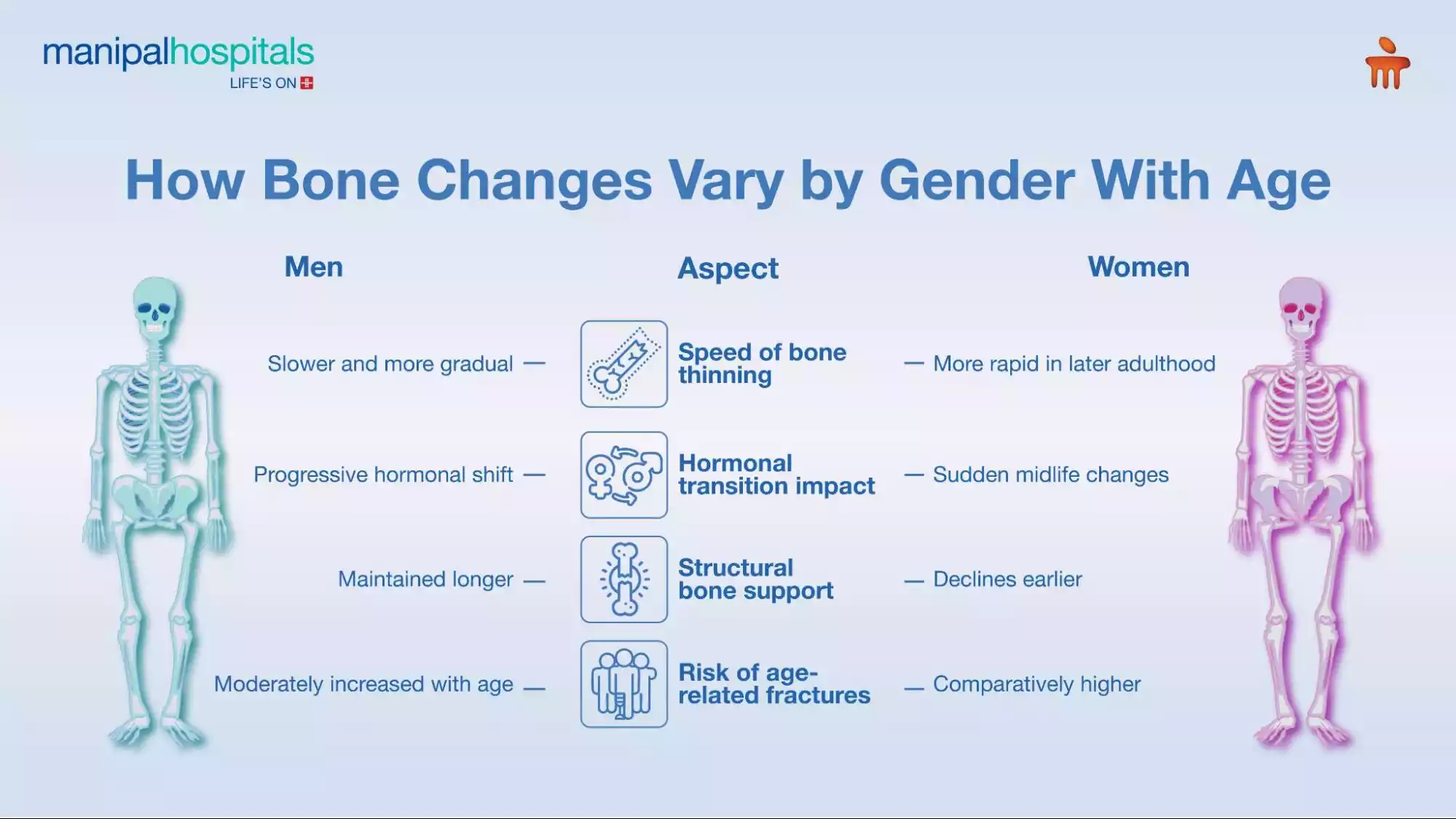
Signs and Symptoms of Bone Density Loss
Bone density loss often progresses silently until a fracture occurs.
-
Common Warning Signs
-
Frequent fractures
-
Loss of height
-
Stooped posture
Early detection of loss of bone density can prevent serious complications.
Diagnosis of Loss of Bone Density
How Bone Density Loss Is Diagnosed
Doctors use specialised tests to measure loss of bone density.
|
Test |
Purpose |
|
DEXA scan |
Measures bone mineral density |
|
X-rays |
Detect fractures |
|
Blood tests |
Assess calcium and vitamin D |
Early diagnosis helps slow bone density loss through timely intervention.
Exercise for Bone Density: Why Movement Matters
Role of Exercise in Preventing Bone Density Loss
Regular exercise for bone density stimulates bone formation and slows loss of bone mass.
Best Exercise for Bone Density
-
Weight-bearing exercises
-
Resistance training
-
Balance and flexibility exercises
|
Exercise Type |
Benefit |
|
Walking |
Maintains bone strength |
|
Strength training |
Builds bone mass |
|
Yoga |
Improves balance |
Regular exercise for bone density is one of the most effective non-medical ways to combat bone deterioration.
Foods for Strong Bones: Nutrition and Bone Health
How Diet Affects Bone Density Loss
Proper nutrition plays a crucial role in preventing bone density loss and supporting bone ageing.
Foods for Strong Bones
-
Dairy products
-
Leafy green vegetables
-
Nuts and seeds
-
Fatty fish
|
Nutrient |
Food Source |
|
Calcium |
Milk, cheese |
|
Vitamin D |
Fish, sunlight |
|
Protein |
Eggs, legumes |
Including foods for strong bones daily helps maintain bone integrity and reduces loss of bone density.
Lifestyle Factors That Worsen Bone Deterioration
Certain habits accelerate bone density loss and bone deterioration.
-
Risky Lifestyle Choices
-
Smoking
-
Excess alcohol consumption
-
Poor nutrition
-
Physical inactivity
Avoiding these factors is essential for protecting ageing bones.
Prevention Strategies for Bone Density Loss
-
How to Protect Ageing Bones
-
Regular bone density screening
-
Balanced diet
-
Regular exercise for bone density
-
Adequate sun exposure
Our orthopaedics in Delhi-NCR recommend early lifestyle modifications to minimise loss of bone mass.
When to Seek Medical Advice
You should consult a specialist if you experience:
-
Recurrent fractures
-
Persistent bone pain
-
Noticeable height loss
Early intervention can slow bone density loss and prevent long-term disability.
Conclusion
Bone density loss is a natural consequence of ageing, but it does not have to define one’s quality of life. Understanding bone ageing, recognising loss of bone mass, and addressing bone deterioration early can significantly reduce fracture risk. With the right combination of exercise for bone density, foods for strong bones, and medical guidance, individuals can protect ageing bones and maintain independence. Guided by experts like our orthopaedist in Delhi-NCR, proactive bone health management can lead to healthier, stronger bones well into later years.
FAQ's
Bone density loss occurs due to hormonal changes, reduced activity, and slower bone regeneration.
Exercise for bone density can slow and partially improve loss of bone density, but may not fully reverse severe damage.
Exercise for bone density can slow and partially improve loss of bone density, but may not fully reverse severe damage.
Bone ageing typically begins after the age of 30 when bone breakdown exceeds formation.
Foods for strong bones help, but they work best when combined with exercise and healthy lifestyle habits.
Individuals over 50 or with risk factors should undergo regular screening for bone density loss.
Share this article on:





