




 5 Min Read
Blood cancers—such as leukaemia, lymphoma, and myeloma-affect the blood, bone marrow, and lymphatic system. Because these conditions develop gradually, early recognition of blood cancer symptoms plays an important role in seeking timely medical evaluation. Many individuals overlook early signs, assuming they are related to fatigue, stress, or routine infections. However, consistent awareness of symptoms of blood cancer helps prompt timely consultation with specialists.
At Manipal Hospitals, our oncologists in Delhi-NCR emphasise that understanding early indicators and learning ‘what are the symptoms of blood cancer’ may help individuals approach healthcare professionals sooner for evaluation, especially if symptoms persist or worsen over time.
Synopsis
- What Are Blood Cancer Symptoms?
- Early Symptoms of Blood Cancer You Should Know
- Understanding Decreased White Blood Cells: Causes & Their Link to Blood Cancer Symptoms
- Woman Blood Cancer Symptoms: Do They Differ?
- Common Blood Cancer Signs vs. Last Stage of Blood Cancer Symptoms
- Risk Factors Related to Signs of Blood Cancer
- How Blood Cancer Is Evaluated (High-Level Overview)
- When to See Our Oncologists in Delhi-NCR
- Conclusion
What Are Blood Cancer Symptoms?
Before understanding individual signs, it’s important to know what the symptoms of blood cancer are in a general sense. Blood cancers affect the body’s blood-forming tissues, which impacts immunity, oxygen levels, and platelet function.
People may experience varied blood cancer symptoms depending on the type of cancer. While these symptoms do not confirm cancer, noticing multiple or persistent signs should encourage individuals to seek medical evaluation. Our oncologist in Delhi-NCR at Manipal Hospitals explains that symptoms can overlap with many non-cancerous conditions, which is why professional assessment becomes important.
Early Symptoms of Blood Cancer You Should Know
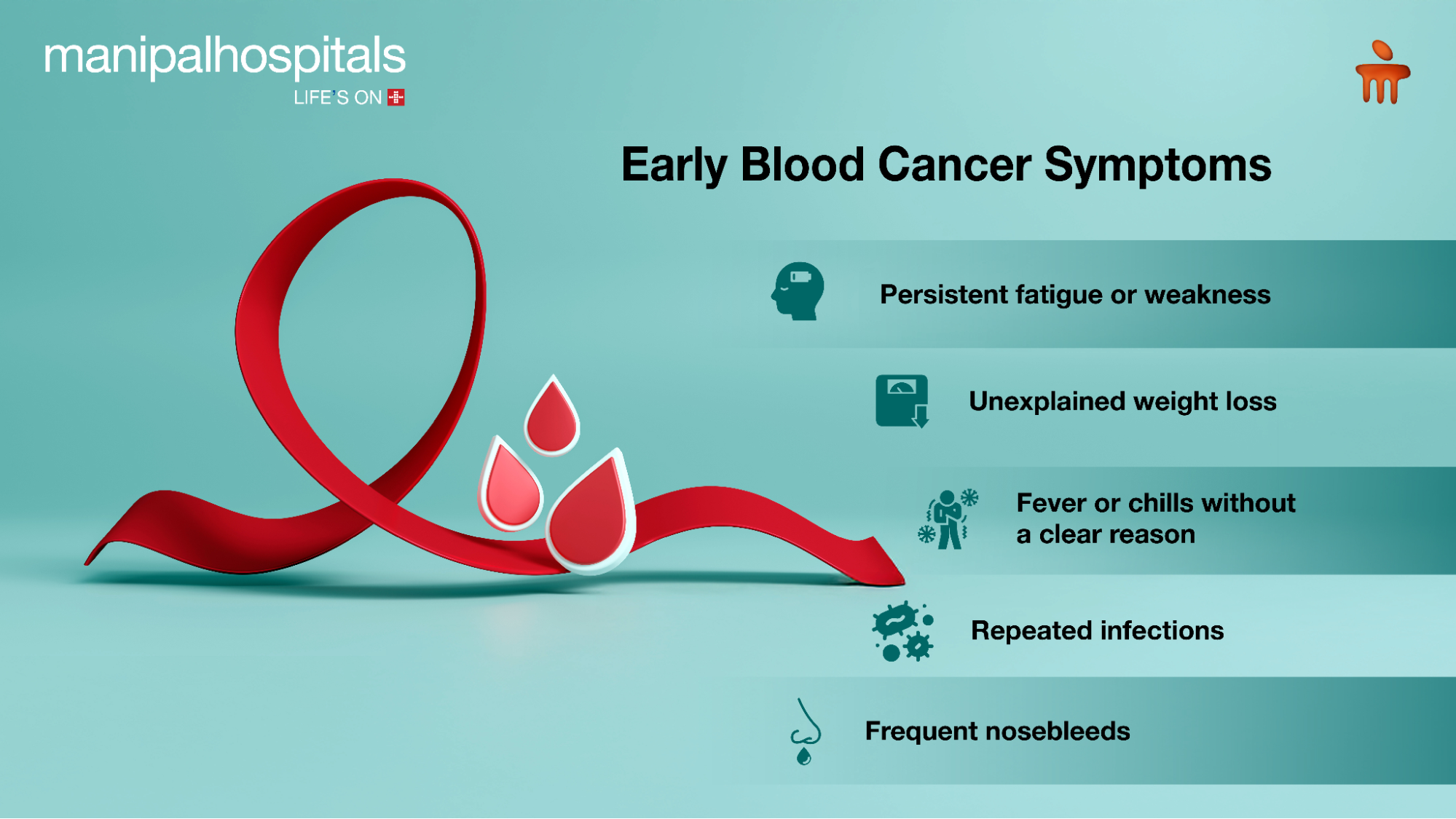
Early symptoms of blood cancer are often subtle. Below is a list of commonly reported early indicators:
-
Early Blood Cancer Symptoms
-
Persistent fatigue or weakness
-
Fever or chills without a clear reason
-
Repeated infections
-
Frequent nosebleeds or gum bleeding
-
Night sweats
-
Swollen lymph nodes
-
Unexplained bruising
These early blood cancer symptoms may appear in clusters or occasionally. At Manipal Hospitals, our oncologists in Delhi-NCR help patients understand whether persistent symptoms require further haematological evaluation.
Understanding Decreased White Blood Cells: Causes & Their Link to Blood Cancer Symptoms
A significant aspect of blood cancers is the impact on white blood cells. Decreased white blood cells cause a reduction in the body's ability to fight infections. Many patients with blood cancer experience lowered immunity.
Table: Decreased White Blood Cells – Causes & Connections
|
Possible Causes |
Overview |
|
Bone marrow involvement |
May reduce normal WBC production |
|
Nutritional deficiencies |
Can temporarily reduce the WBC count |
|
Viral infections |
Sometimes, lower WBC levels are briefly |
|
Autoimmune issues |
The body mistakenly destroys WBCs |
|
Blood cancers |
Can cause consistently low WBCs |
A drop in WBCs does not confirm cancer, but when paired with other blood cancer symptoms, it may prompt clinicians to investigate further. Our oncologists in Delhi-NCR at Manipal Hospitals evaluate these patterns carefully to determine whether further testing is needed.
Woman Blood Cancer Symptoms: Do They Differ?
Because hormonal cycles and general health patterns vary, women's blood cancer symptoms may present slightly differently.
Common Women's Blood Cancer Symptoms
-
Increased fatigue during menstrual cycles
-
Heavier or prolonged menstrual bleeding
-
Higher susceptibility to infections
-
Unusual bruising
-
Persistent bone or joint discomfort
However, women's blood cancer symptoms and male symptoms largely overlap. It is the persistence, combination, and progression of signs that may prompt evaluation by our oncologists in Delhi-NCR at Manipal Hospitals.
Common Blood Cancer Signs vs. Last Stage of Blood Cancer Symptoms
Understanding the difference between early signs and advanced signs can help patients recognise when symptoms require urgent attention.
Common Blood Cancer Signs (Early Indicators)
-
Fatigue
-
Fever
-
Unexplained bruising
-
Swollen lymph nodes
Last Stage of Blood Cancer Symptoms (Generalised Representation)
(These symptoms vary widely based on cancer type and individual factors.)
-
Significant and persistent weight loss
-
Intensified bone pain
-
Recurring infections
-
Noticeable swelling in the abdomen (due to enlarged organs)
Both the early and late stages of blood cancer symptoms should be evaluated by professionals. Manipal Hospitals ensures access to multidisciplinary specialists, including our oncologists in Delhi-NCR, who help guide individuals through thorough evaluations.
Risk Factors Related to Signs of Blood Cancer
Certain risk factors may increase the likelihood of experiencing signs of blood cancer:
Risk Factors
-
Family history of blood cancers
-
Previous exposure to radiation
-
Prolonged chemical exposure
-
Autoimmune disorders
-
Age above 55 years (for some types)
These factors do not confirm cancer but may encourage individuals to be more attentive to persistent blood cancer symptoms. Consulting our oncologists in Delhi-NCR at Manipal Hospitals may provide further clarity.
How Blood Cancer Is Evaluated (High-Level Overview)
A diagnosis is never made based on symptoms alone. A haematologist or oncologist may consider multiple steps:
High-Level Evaluation Steps
-
Clinical examination
-
Review of persistent symptoms
-
Complete blood count
-
Bone marrow testing (if needed)
-
Imaging studies (if suggested)
These assessments help identify whether symptoms of blood cancer require further follow-up. Manipal Hospitals offers advanced diagnostic tools to support such evaluations.
When to See Our Oncologists in Delhi-NCR
Individuals may consider seeing our oncologists in Delhi-NCR if they experience persistent or unexplained:
-
Fatigue
-
Bleeding tendencies
-
Recurrent infections
-
Weight loss
-
Night sweats
-
Lymph node swelling
These symptoms do not confirm cancer, but consistent patterns may warrant expert guidance. Manipal Hospitals provides comprehensive support throughout the evaluation process.
Conclusion
Awareness of early blood cancer symptoms, understanding what the symptoms of blood cancer are, and recognising changes in overall health may encourage timely medical evaluation. While many of these signs overlap with less serious conditions, noticing repeated patterns of symptoms of blood cancer offers an opportunity to consult specialists.
At Manipal Hospitals, our oncologists in Delhi-NCR support patients through evidence-based evaluation and personalised guidance. Whether exploring women's blood cancer symptoms, early indicators, or concerns about decreased white blood cells, professional insight helps clarify the next steps.
FAQ's
Commonly reported symptoms include fatigue, unintentional weight loss, fever, night sweats, repeated infections, and unusual bruising. These do not confirm cancer but may warrant evaluation.
Most symptoms are similar, though women may experience heavier menstrual bleeding or worsened fatigue during cycles. Persistent symptoms should be assessed professionally.
No. Decreased WBCs can occur due to infections, nutritional deficiencies, or autoimmune issues. Persistent low counts alongside other symptoms should be evaluated.
Advanced symptoms may include significant weight loss, recurrent infections, bone pain, breathing difficulties, or organ enlargement. Symptoms vary by individual and cancer type.
Anyone experiencing persistent unexplained symptoms like fatigue, bruising, prolonged fever, or swollen lymph nodes may seek guidance for further evaluation.
Share this article on:





