




 6 Min Read
An anterior cruciate ligament (ACL) injury is one of the most common and impactful knee injuries, especially among athletes and physically active individuals. With early evaluation by our Orthopaedics in Delhi-NCR, recognising ACL tear symptoms promptly and understanding the recovery process after surgery can make a significant difference in outcomes. From the initial injury to long-term rehabilitation, informed decisions help restore stability, confidence, and performance.
This comprehensive guide explains ACL tear symptoms, outlines how a knee ligament injury occurs, details surgical and non-surgical approaches, and walks through the complete ACL reconstruction recovery journey.
Synopsis
- Understanding the ACL and Its Role in Knee Stability
- Common ACL Tear Symptoms You Should Not Ignore
- How Does a Knee Ligament Injury Occur?
- Diagnosis of ACL Injuries
- Treatment Options for ACL Injuries
- What Is ACL Reconstruction Surgery?
- ACL Reconstruction Recovery: What to Expect
- ACL Rehab Timeline: A Phase-Wise Breakdown
- Role of Physiotherapy in Recovery
- Potential Risks and Complications
- Long-Term Outlook After ACL Reconstruction
- When to Seek Medical Advice
- Conclusion
Understanding the ACL and Its Role in Knee Stability
The ACL is a strong ligament connecting the thighbone (femur) to the shinbone (tibia). It plays a critical role in:
-
Stabilising the knee during pivoting movements
-
Preventing excessive forward movement of the tibia
-
Supporting sudden stops, turns, and jumps
Damage to this ligament leads to classic ACL tear symptoms, often disrupting daily activities and sports participation.
Common ACL Tear Symptoms You Should Not Ignore
Recognising ACL tear symptoms early allows timely diagnosis and treatment. These symptoms typically appear immediately or within hours of injury.
Key ACL Tear Symptoms
-
Sudden popping sound at the time of injury
-
Immediate knee swelling
-
Instability or “giving way” sensation
-
Difficulty bearing weight
-
Reduced range of motion
Persistent ACL tear symptoms often indicate a significant knee ligament injury requiring specialist evaluation.
How Does a Knee Ligament Injury Occur?
A knee ligament injury affecting the ACL commonly results from non-contact mechanisms.
Common Causes
-
Sudden direction changes during sports - Quick pivoting or cutting movements place excessive rotational stress on the knee, overstretching the ACL and causing fibres to tear abruptly.
-
Awkward landings from jumps - Landing with poor alignment or uneven weight distribution increases knee instability, forcing the ligament beyond its normal range of motion.
-
Rapid deceleration - Suddenly stopping while running creates intense forward shear forces on the knee joint, making the ACL vulnerable to tearing under load.
-
Direct trauma to the knee - A strong blow from another player, a fall, or a collision can push the knee into abnormal positions, resulting in immediate ligament damage.
Sports such as football, basketball, skiing, and cricket frequently report ACL tear symptoms linked to these movements. According to our Orthopaedics in Delhi-NCR, early assessment prevents secondary damage to cartilage or menisci.
Diagnosis of ACL Injuries
Accurate diagnosis confirms the presence and severity of a knee ligament injury.
Diagnostic Methods
|
Test |
Purpose |
|
Clinical examination |
Detect instability and swelling |
|
MRI scan |
Visualise ligament tear |
|
X-ray |
Rule out fractures |
MRI findings, combined with classic ACL tear symptoms, guide the treatment plan.
Treatment Options for ACL Injuries
Not all ACL injuries require surgery. Treatment depends on age, activity level, and severity of ACL tear symptoms.
Non-Surgical Management
-
Physiotherapy
-
Strength training
-
Activity modification
Surgical Management
For active individuals or athletes, sports knee surgery is often recommended to restore knee stability.
What Is ACL Reconstruction Surgery?
ACL reconstruction is a form of sports knee surgery where the torn ligament is replaced with a graft. This procedure is commonly performed arthroscopically.
Goals of Surgery
-
Restore knee stability
-
Eliminate recurrent ACL tear symptoms
-
Prevent future joint damage
Our Orthopaedics in Delhi-NCR emphasise personalised surgical planning for optimal outcomes.
ACL Reconstruction Recovery: What to Expect
ACL reconstruction recovery is a structured, phased process that requires patience and consistency.
Immediate Post-Surgery Phase
-
Swelling control
-
Pain management
-
Gentle mobility exercises
Early rehabilitation sets the foundation for a successful ACL reconstruction recovery.
ACL Rehab Timeline: A Phase-Wise Breakdown
Understanding the ACL rehab timeline helps set realistic expectations.
Phase 1: Weeks 0–2
-
Reduce swelling
-
Regain knee extension
-
Begin weight-bearing as tolerated
Phase 2: Weeks 3–6
-
Improve muscle strength
-
Restore knee flexibility
-
Normalise walking pattern
Phase 3: Weeks 7–12
-
Advanced strengthening
-
Balance and coordination training
Phase 4: Months 4–6
-
Sport-specific drills
-
Gradual return to activity
|
Rehab Phase |
Focus Area |
|
Early |
Pain and swelling |
|
Mid |
Strength and stability |
|
Late |
Functional training |
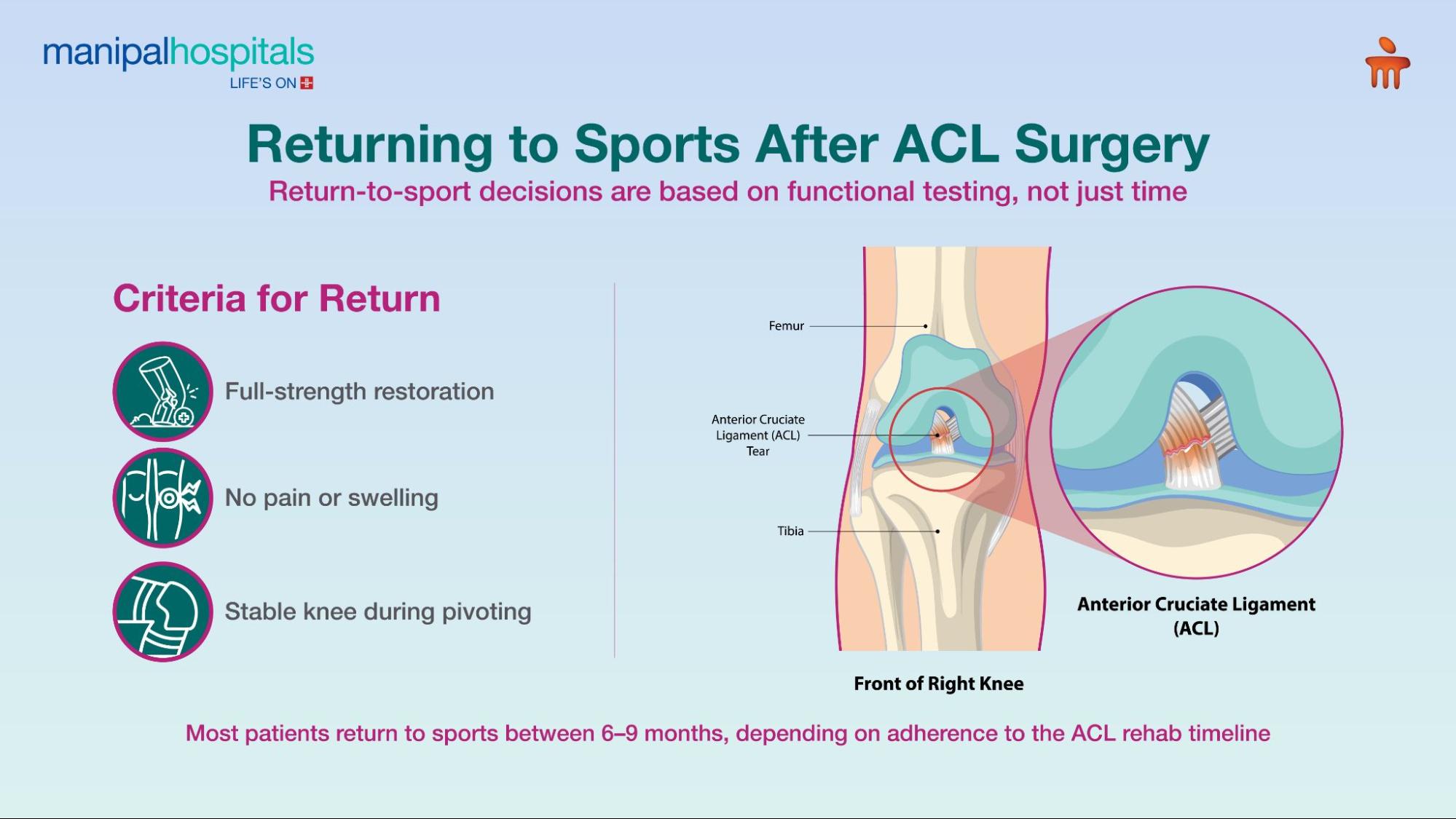
Following the ACL rehab timeline closely reduces re-injury risk and persistent ACL tear symptoms.
Role of Physiotherapy in Recovery
Physiotherapy is central to ACL reconstruction recovery.
Benefits of Structured Rehab
-
Prevents muscle wasting
-
Restores joint control
-
Improves confidence in movement
Skipping or rushing rehab increases the risk of recurrent knee ligament injury.
Potential Risks and Complications
While outcomes are generally excellent, patients should be aware of possible risks.
Possible Complications
-
Knee stiffness
-
Infection
-
Graft failure
-
Persistent ACL tear symptoms
Close follow-up with specialists minimises complications. Our Orthopaedics in Delhi-NCR recommend gradual progression rather than rushed recovery.
Long-Term Outlook After ACL Reconstruction
With proper rehabilitation, most patients achieve:
-
Full functional recovery
-
Return to sports or an active lifestyle
-
Reduced risk of future knee ligament injury
Consistent physiotherapy and strength training remain crucial even after formal ACL reconstruction recovery ends.
When to Seek Medical Advice
Consult a specialist if you experience:
-
Recurrent instability
-
Swelling after activity
-
Persistent ACL tear symptoms
Early intervention prevents long-term joint damage.
Conclusion
ACL injuries can be life-altering, but timely diagnosis and structured rehabilitation offer excellent outcomes. Recognising ACL tear symptoms, understanding treatment options, and committing to the full ACL rehab timeline are essential for long-term knee health. Whether managed conservatively or through sports knee surgery, a disciplined approach to ACL reconstruction recovery ensures stability, confidence, and return to activity.With guidance from experts at Manipal Hospital Delhi-NCR, patients can regain strength and mobility safely and effectively.
FAQ's
Early ACL tear symptoms include a popping sound, immediate swelling, and knee instability.
Not always. Mild injuries may respond to physiotherapy, but surgery is common for active individuals.
ACL reconstruction recovery typically takes 6–9 months, depending on rehab progress.
Yes, most patients return after completing the ACL rehab timeline and meeting functional criteria.
Ignoring symptoms can lead to chronic instability, cartilage damage, and early arthritis.
Share this article on:





