7 Min Read
Joint pain can be debilitating and significantly affect your quality of life, mobility, and overall well-being. For many, managing chronic joint pain becomes a daily struggle. Joint replacement surgery has emerged as a highly effective solution for such individuals suffering from debilitating joint pain, helping restore mobility, relieve chronic discomfort, and significantly improve overall quality of life when conservative treatments no longer provide adequate relief. Deciding when to undergo joint replacement can be challenging for many individuals living with chronic joint pain. This blog guides you through the signs that may indicate the need for joint replacement surgery, the conditions that commonly require it, and what to expect from the procedure.
Synopsis
Understanding joint pain and its impact
Joint pain can stem from various causes, including arthritis (osteoarthritis and rheumatoid arthritis), injuries, infections, or overuse. When conservative treatments no longer offer relief, considering joint replacement becomes significant. Understanding the indicators can help you make an informed decision.
The first line of treatment for most individuals experiencing joint pain is to explore the conservative or non-surgical options. For a significant number of patients, these approaches provide substantial relief. Studies show that over 70% of individuals with early to moderate joint degeneration can effectively manage their symptoms with these methods and can postpone or even avoid the need for surgery. These typically include:
-
Medication - Pain relievers, anti-inflammatory drugs
-
Physical therapy - Strengthening exercises, flexibility training
-
Lifestyle modifications - Weight management, activity adjustments
-
Injections - Corticosteroid or hyaluronic acid injections
However, if your pain persists or worsens despite these efforts and begins to impact your daily life severely, it might be time to consider a joint replacement.
Identifying the need for joint replacement surgery
Modern advancements in orthopaedic care, including techniques like robotic joint replacement, have made surgical procedures safer and more precise than ever. Many patients report a dramatic improvement in pain and mobility, with success rates often exceeding 95% at 10 years post-surgery. This technology assists surgeons in achieving optimal alignment and implant placement, contributing to the impressive long-term success rates seen in our patients.
Another aspect often considered by the joint replacement candidates is the expenditure. Joint replacement cost can vary depending on factors such as the type of joint replaced, the surgical technique used, hospital facilities, and the patient’s overall health condition. In India, the cost may also differ based on the city and the type of implant used.
You must decide on joint replacement surgery in collaboration with your orthopaedic specialist. Several factors can indicate the need for surgery as the most effective way to restore your mobility and alleviate pain. These include:
Persistent knee or hip pain: When your hip pain or knee pain becomes chronic and severe enough to limit everyday activities such as walking, climbing stairs, or even sleeping comfortably
-
Significant functional limitation – If you experience stiffness and reduced range of motion, making simple tasks challenging
-
Ineffectiveness of conservative treatments – In case you have already tried non-surgical treatments for an extended period (typically several months) without significant improvement
-
X-ray showing severe damage - If imaging studies show advanced joint degeneration, bone-on-bone friction, or severe deformity
-
Impact on quality of life - When your pain affects your emotional well-being, social activities, and overall enjoyment of life in a profound way.
Advantages of joint replacement
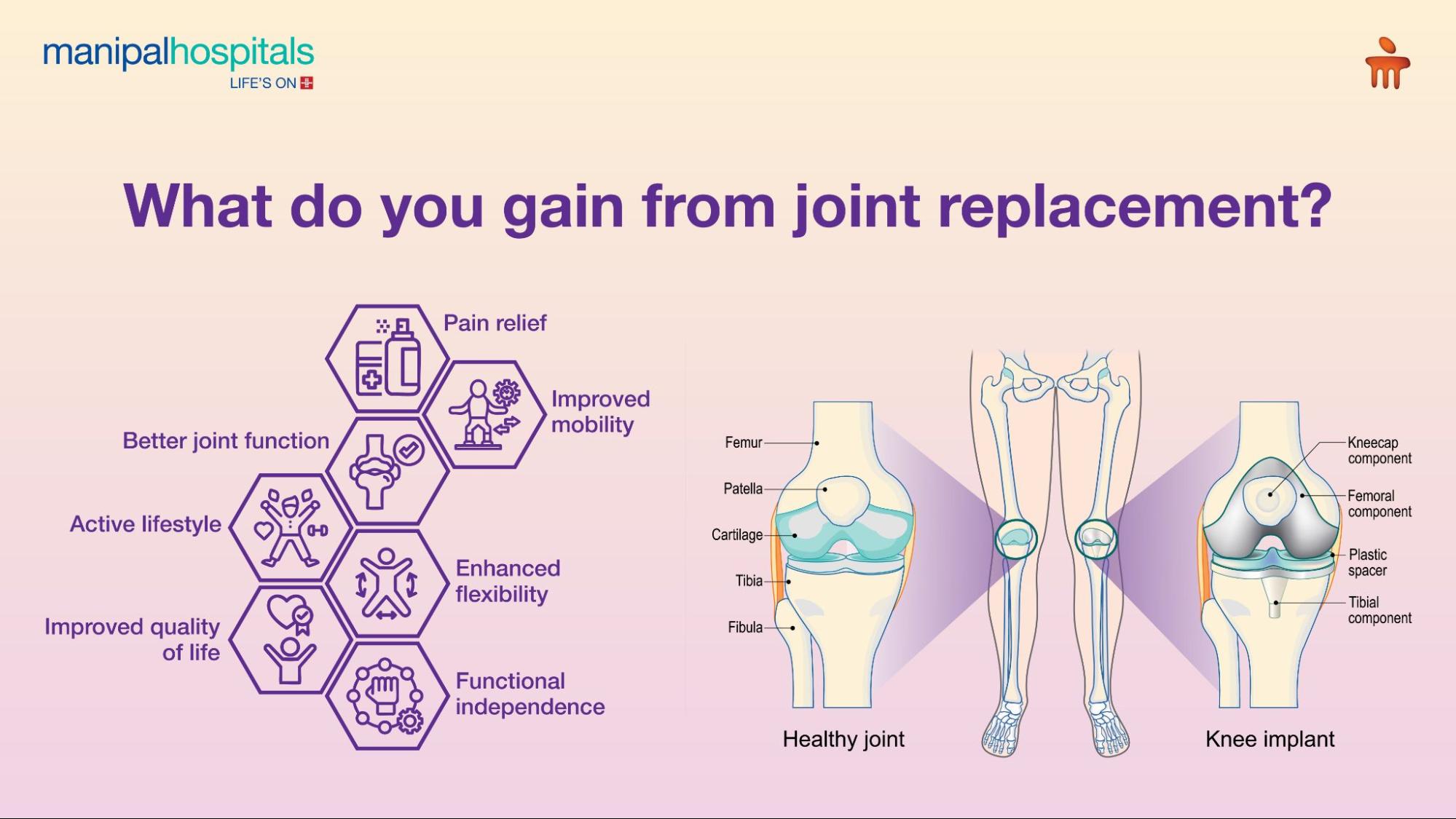
Joint replacement surgery offers several benefits for individuals struggling with severe joint pain and limited mobility, helping them regain comfort, movement, and independence in their daily lives.
-
Relief from chronic pain – Severe joint pain is reduced or eliminated.
-
Improved mobility – Movement becomes easier and more comfortable.
-
Enhanced quality of life – Patients can return to active daily living.
-
Restoration of joint function – The joint can be moved more smoothly.
-
Long-lasting results – Modern implants can function for many years.
-
Better comfort – Less pain leads to improved sleep and well-being.
-
Easier daily activities – Walking, climbing stairs, and standing become simpler.
Guidelines for Joint Replacement Patients
Go for regular check-ups with your orthopaedic surgeon, as they are essential to monitor your recovery and joint health.
|
What you should do |
What you should not do |
|
Adhere strictly to your surgeon's and physical therapist's guidelines for exercises, activity levels, and wound care |
Avoid high-impact activities or heavy lifting before your surgeon clears you |
|
Engage in physical therapy, as regular and dedicated participation in rehabilitation is crucial for regaining strength, flexibility, and mobility |
Do not ignore, but report any new or worsening pain, swelling, or signs of infection to your medical team immediately |
|
Take prescribed pain medication as directed to ensure comfort during recovery |
Do not skip physical therapy sessions, as inconsistent therapy can hinder your recovery and optimal outcome |
|
This reduces stress on your new joint and promotes longevity of the implant |
Avoid sudden jerks and protect your new joint by moving carefully and deliberately, especially in the initial recovery phase |
Conclusion
Recognising the right time for joint replacement can make a significant difference in relieving pain and restoring mobility. If chronic joint pain is limiting your life, consider your options with our team of expert orthopaedic surgeons at Manipal Hospitals Broadway. We provide personalised care and guidance tailored to every individual patient’s condition and need. Our patient-centric approach and state-of-the-art surgical technology ensure enhanced precision and potentially faster recovery. At Manipal Hospitals, we are committed to helping you regain your mobility and enjoy a pain-free life.
FAQ's
Recovery varies, but most patients can resume light daily activities within 3-6 weeks. Full recovery and return to more strenuous activities can take 3-6 months, often sooner with consistent physical therapy.
Pain management is a priority before, during, and after joint replacement surgery. While some discomfort is normal during recovery, effective pain medication and physical therapy help manage it well.
Modern joint implants are designed to be highly durable and long-lasting. In hip and knee joint replacement surgeries, studies show that more than 80–90% of implants continue to function effectively even 15–20 years after the procedure.
Many patients can return to low-impact sports like swimming, cycling, and golf. High-impact sports are generally discouraged to protect the new joint. Discuss your specific activity goals with your surgeon.
Robotic joint replacement offers enhanced precision in implant placement and alignment, which can lead to improved outcomes, potentially faster recovery, and better long-term function compared to traditional methods.
Share this article on: