

-
Medical Library
-
Centre of
Excellence
Centre of Excellence
- Accident and Emergency Care
- Anesthesiology
- Cardiology
- Cardiothoracic Vascular Surgery
- Dialysis
- Gastrointestinal Science
- Laparoscopic Surgery
- Liver Transplantation Surgery
- Medical Gastro
- Minimal Access Surgery
- Neonatology & NICU
- Nephrology
- Neurology
- Neurosurgery
- Obstetrics and Gynaecology
- Organ Transplant
- Orthopaedics
- Spine Care
- Sports Medicine
- Urology
Other Specialities
- Andrology
- Bariatric Surgery
- Bone Marrow Transplantation
- Cancer Care/Oncology
- Clinical Psychology
- Dental Medicine
- Dermatology
- Diabetes and Endocrinology
- Ear Nose Throat
- Fetal Medicine
- General Surgery
- Genetics
- GI Surgery
- Growth and Hormone
- Gynaec Oncology
- Hand Surgery
- Healthy Weight Clinic
- Hematology
- Hepatobiliary Surgery
- ICU and Critical Care
- Infectious Disease
- Internal Medicine
- Interventional Radiology
- IVF and Infertility
- Kidney Transplant
- Medical Oncology
- Nuclear Medicine
- Ophthalmology
- Oral Maxillo Facial Surgery
- Paediatric And Child Care
- Paediatric General Surgery
- Paediatric Intensive Care Unit
- Paediatric Surgery
- Paediatric Urology
- Pain Medicine
- Plastic And Cosmetic Surgery
- Podiatric Surgery
- Psychiatry
- Pulmonology (Respiratory and Sleep Medicine)
- Radiology
- Radiotherapy (Oncology Radiation)
- Renal Sciences
- Rheumatology
- Surgical Gastro
- Surgical Oncology
- Vascular and Endovascular Surgery
Speciality Clinics
- Doctors
- Bhubaneswar
- International Patients


Clinics


 Search
- Self Registration
- Mars - Ambulance
- Emergency Health Card
- Corporate & PSU
- Insurance Helpdesk
- Awards And Achievements
- Careers
- Contact Us


Radiology
Best Radiology Services In Bhubaneswar
We are trusted as the best Radiology hospitals in Bhubaneswar, as we offer the best radiology treatment plan to our patients. The premier multispecialty centre, Manipal Hospitals Bhubaneswar, offers a wide range of radiological treatments. We are one of a kind in the country to have specialists in the fields of interventional radiology, vascular radiology, neuroradiology, musculoskeletal radiology, and abdominal and chest radiology. Individuals walk in with musculoskeletal, cardiovascular, thoracic, gastrointestinal, genitourinary, neurological and cerebrovascular problems. We even treat individuals suffering from fatal diseases like cancer. Manipal Hospitals Bhubaneswar is the most trusted provider of radiology care in Bhubaneswar, combining clinical expertise, innovative ideas, and compassionate support.

OUR STORY
Know About Us
Why Manipal Hospitals?
One of the best radiology centres in Bhubaneswar is run by a group of radiologists who work closely with radiology technicians to help every patient receive the highest standard of care. The services include advanced CT scanning, digital X-rays, mammography, 3 Tesla MRI, and 4D ultrasound with multiple probes. Our devices and procedures are up-to-date with the latest technology as we conduct research and trials regularly. Here is why patients choose us:
-
Outstanding radiologists and radiology technicians
-
Latest technology high-end MRI, CT, PET-CT, digital X-ray and ultrasound
-
Radiation safety protocols and low-dose imaging techniques
-
A wide range of diagnostic tools for making accurate treatment plans
-
Seamless care by using PACS
-
Skilled technicians ensure accurate and precise reports
-
Accessible insurance staff to help manage clinical finances
Treatment & Procedures
Peripheral Artery Disease
Peripheral Artery Disease (PAD) is a condition characterised by the narrowing of arteries that supply blood from the heart to various parts of the body. The most common form of PAD affects the lower extremities, reducing blood flow to the legs and feet, while a less common form impacts the upper extremities, affecting the arms, hands, and fingers.…
Deep Vein Thrombosis
Deep Vein Thrombosis (DVT) is a serious condition where blood clots form in the deep veins, usually in the legs, and can lead to severe health problems if untreated, such as pulmonary embolism when clots travel to the lungs. At Manipal Hospitals in Bhubaneswar, Odisha, our Radiology Department offers specialised care for DVT using advanced imaging…
Pulmonary Embolism
Pulmonary embolism (PE) is a medical condition in which blood clots in the legs, called deep vein thrombosis (DVT), break off and travel along the bloodstream, subsequently blocking the artery that aids in supplying blood to the lungs. Considered a serious and fatal form of venous thromboembolic disease, PE causes oxygen levels to drop in your lungs,…
Dialysis Access
The Radiology Department at Manipal Hospitals in Bhubaneswar, Odisha, offers specialised services for dialysis access. Dialysis access procedures are critical for patients with kidney failure who require regular dialysis treatments. These procedures involve creating and maintaining access points in the body, such as arteriovenous (AV) fistulas, grafts,…
Angioplasty and Stenting
Angioplasty, also called Percutaneous Transluminal Angioplasty (PTA) or Balloon Angioplasty, is a procedure that involves the insertion of a balloon-tipped catheter inside narrowed blood vessels, especially coronary arteries, that supplies blood to the heart. The procedure is done with the help of guided scans, such as X-rays, and contrast dye to visualise…
Biopsies
A biopsy is a medical process in which your body is examined by having a small sample of tissue removed. It's a vital instrument that aids medical professionals in using a microscope to examine cells and tissues for problems like cancer, infections, or other disorders. The skin, internal tissues, and organs are among the bodily parts on which biopsies…
Fluoroscopic Imaging
Our Radiology Department offers advanced fluoroscopic imaging services to aid in the diagnosis and treatment of various medical conditions. Fluoroscopic imaging is a specialised technique that uses continuous X-ray beams to create real-time images of internal structures and functions of the body. This technology is particularly valuable for guiding…
Mammography
Mammography is an imaging technique that uses specialised X-rays for the detection of tumours and other abnormalities present in the breast. It is commonly employed either for screening purposes or as a diagnostic tool. A mammogram uses low doses of radiation that fall well within established safety thresholds. The advantages of mammography surpass…
MRI
A magnetic resonance imaging (MRI) scan is a non-invasive diagnostic imaging scan that uses magnetic and radio waves to produce detailed images of the internal structures of the body, including bones, blood vessels, and soft tissues. An MRI scanner looks like a large tube with a table placed in the centre. The patient is placed at the table and slides…
X-rays or Radiographs
X-rays or radiographs, are a type of diagnostic procedure that uses electromagnetic waves to capture images within the structures of the body. An X-ray image consists of a combination of black and white shades resulting from different tissue absorptions of radiation. Bones appear white due to their calcium content, while soft tissues, like fat, absorb…
CT Imaging
CT scan is done with the use of X-rays to take pictures of the patient’s body internally.

The Department of Radiology at Manipal Hospitals Bhubaneswar integrates advanced radiology sciences with expert care. We are among the few radiology centres in Bhubaneswar that meet international standards and remain operational 24/7, offering an advanced emergency service to address critical emergency cases. A multidisciplinary team ensures that patients receive precise diagnostics, advanced therapies, and rehabilitation support, reinforcing our reputation as a trusted leader in radiology care.
Manipal Hospitals Bhubaneswar is one of the best radiology centres in Bhubaneswar. We offer modern radiology treatment with compassionate care. Our services include:
-
High-resolution 64/128 slice CT scans, digital X-rays, mammography, 3 Tesla MRI and 4D ultrasound
-
Interventional radiology to ensure accurate diagnosis
-
Nuclear medicine and PET-CT for cancer patients
-
Fluoroscopy units for real-time imaging
-
Minimal invasive surgical methods
-
PACS for storing the digital data and the retrieval of image data
-
Multiple probes to ensure the safety and comfort of patients
-
Independent research and collaboration studies
-
Evidence-based treatment practices
-
Operational 24/7 emergency services with well-equipped ambulances
We have a well-equipped squad, skilled to provide comprehensive care in treating patients and their families with kindness and precision.
Facilities & Services
The radiology unit at Manipal Hospitals Bhubaneswar is renowned for offering the best treatment opportunities in the state. It utilises the latest technology and specialised knowledge to provide patients with the best care possible. We provide one of the finest treatment facilities to our patients.
-
Advanced diagnosis to ensure accuracy and efficiency
-
Advanced cross-section imaging with the latest diagnostic tools
-
Multiple specialised pediatric imaging techniques for children
-
State-of-the-art, eye-catching infrastructure at an easy-to-find location
-
Skilled emergency staff to ensure safe transit during emergency cases
-
Patient-first approach in treatment plans
-
Great health plans at the desk office with trained staff to ensure clarity and confidentiality
FAQ's
Patients visit the Radiology department at Manipal Hospitals Bhubaneswar for expert diagnosis, advanced treatment, and personalized care. The department specializes in managing Peripheral Artery Disease, Deep Vein Thrombosis, Pulmonary Embolism, Dialysis Access, Angioplasty and Stenting, Biopsies, Fluoroscopic Imaging, Mammography, MRI, X-rays or Radiographs, CT Imaging, ensuring world-class medical support for patients.
The Radiology department at Manipal Hospitals Bhubaneswar provides a wide range of treatments, including:
- Peripheral Artery Disease
- Deep Vein Thrombosis
- Pulmonary Embolism
- Dialysis Access
- Angioplasty and Stenting
To book an appointment with a Radiology expert at Manipal Hospitals Bhubaneswar, please call +91 9355533824. Our dedicated team will assist you in scheduling a convenient consultation.
For your initial consultation at Manipal Hospitals Bhubaneswar, please bring:
- Medical Records – Previous reports, imaging scans, and lab results.
- Medication List – Details of current and past prescriptions.
- Insurance Details – Health insurance card and referral documents (if applicable).
- Personal ID Proof – For registration purposes.
Providing these documents will help our specialists ensure a comprehensive diagnosis and personalized treatment plan.
Manipal Hospitals Bhubaneswar is a preferred choice for Radiology due to:
- Highly experienced specialists.
- State-of-the-art medical infrastructure.
- Comprehensive treatment plans with a multidisciplinary approach.
- Advanced diagnostic & surgical facilities.
- Patient-centric care with personalized treatment options.
We are committed to providing world-class healthcare with compassionate service.
At Manipal Hospitals Bhubaneswar, we offer facilities such as:
The radiology unit at Manipal Hospitals Bhubaneswar is renowned for offering the best treatment opportunities in the state. It utilises the latest technology and specialised knowledge to provide patients with the best care possible. We provide one of the finest treatment facilities to our patients.
-
Advanced diagnosis to ensure accuracy and efficiency
-
Advanced cross-section imaging with the latest diagnostic tools
-
Multiple specialised pediatric imaging techniques for children
-
State-of-the-art, eye-catching infrastructure at an easy-to-find location
-
Skilled emergency staff to ensure safe transit during emergency cases
-
Patient-first approach in treatment plans
-
Great health plans at the desk office with trained staff to ensure clarity and confidentiality
Our team ensures precise diagnosis and treatment planning for each patient.
One of the best radiology centres in Bhubaneswar is run by a group of radiologists who work closely with radiology technicians to help every patient receive the highest standard of care. The services include advanced CT scanning, digital X-rays, mammography, 3 Tesla MRI, and 4D ultrasound with multiple probes. Our devices and procedures are up-to-date with the latest technology as we conduct research and trials regularly. Here is why patients choose us:
-
Outstanding radiologists and radiology technicians
-
Latest technology high-end MRI, CT, PET-CT, digital X-ray and ultrasound
-
Radiation safety protocols and low-dose imaging techniques
-
A wide range of diagnostic tools for making accurate treatment plans
-
Seamless care by using PACS
-
Skilled technicians ensure accurate and precise reports
-
Accessible insurance staff to help manage clinical finances
Diagnostic radiology and interventional radiology are two subfields that fall under the umbrella of radiology. Radiologists are medical professionals with a specialisation in radiography.
Diagnostic radiology makes internal body structures visible to medical professionals. Diagnostic radiologists are medical professionals who specialise in the interpretation of these pictures. In many cases, the radiologist or other healthcare professionals can:
-
Determine the origin of your symptoms.
-
Keep track of how your body reacts to any medications you are consuming for a sickness or ailment.
-
Check for a variety of diseases, including heart disease, colon cancer, and breast cancer.
The most common types of diagnostic radiological exams are as follows:
-
Computerised Axial Tomography (CAT) scans, which include CT Angiography, are often referred to as Computed Tomography (CT).
-
Upper gastrointestinal and barium enema fluoroscopy
-
Magnetic Resonance Angiography (MRA)
-
Magnetic Resonance Imaging (MRI)
-
Breast imaging
-
Nuclear medicine includes diagnostic techniques such as thallium cardiac stress testing, and thyroid, and bone scans.
-
Plain X-rays, such as chest X-rays; PET imaging, PET scans, or PET-CT when paired with CT Ultrasound; Positron Emission Tomography
Interventional radiologists use imaging technologies like CT, ultrasound, MRI, and fluoroscopy to guide procedures, allowing for smaller incisions and treating conditions in various body parts. They treat cancers, tumours, artery blockages, uterine fibroids, back pain, liver problems, and kidney problems. Interventional radiologists typically make no or small incisions and rarely require hospital stays, with most patients requiring moderate sedation.
Probably the most well-known type of diagnostic testing is X-ray imaging. X-rays use electromagnetic radiation, which contains energy forms that resemble waves, much like visible light.
The X-ray examination is performed by a certified technician, who may also ask you to provide a brief history, remove any metal objects, and put on a hospital gown. The type of X-ray being done determines how you are positioned. Several views of the X-ray can be required. When undergoing radiography, you must remain still, as the images can become fuzzy due to motion. When the picture is being taken, you could be asked to hold your breath or remain motionless for a brief period.
Inform your medical team if you are pregnant or suspect you could be pregnant before the X-ray. Images containing metal may be hazy. You should try to wear comfortable, loose-fitting clothes. You might also have to wear a hospital robe and take off all jewellery.
X-rays don't hurt. Nonetheless, a few body positions required for an X-ray may be uncomfortable for a short while.
X-rays are usually controlled and monitored so that you will be exposed to the least amount of radiation while creating the image. There is extremely little risk of cancer or abnormalities with the majority of ordinary X-rays. The majority of specialists believe that the advantages of adequate X-ray imaging far exceed the risks. Young children and unborn children are particularly vulnerable to the dangers of X-rays. Inform your medical professional if you suspect pregnancy.
Within twenty-four hours of reviewing your films, the radiologist will transmit the results to the referring physician. The referring physician will talk to you about the results of the X-ray.
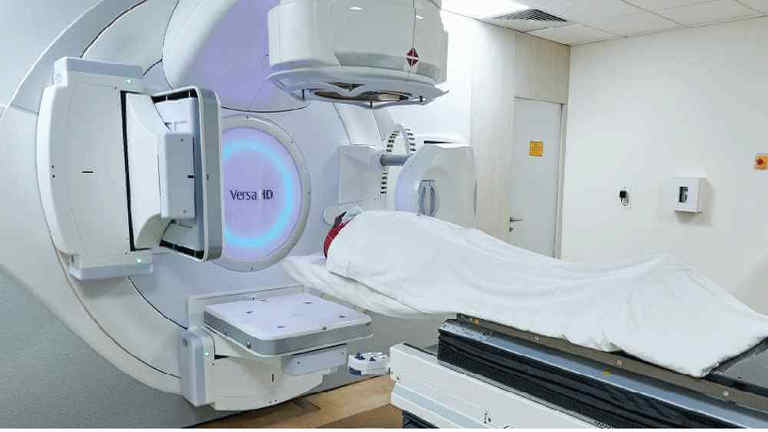
CT scans are painless procedures where you lie still for some time on a table that slides in and out of the centre of the machine.
A technologist monitors the procedure and may ask you to hold your breath to avoid blurring images. Contrast may be needed to examine internal organs, with intravenous contrast requiring fasting for three hours before the scan. Oral contrast (barium) takes up to one hour to coat the gastrointestinal tract lining. The scan usually lasts a few minutes, but preparation time can take up to an hour. After the scan, you can resume normal activities. If intravenous contrast was used, drink at least eight glasses of water daily to flush the contrast out. Results can be expected within 48 hours.
Explore Stories
Home Bhubaneswar Specialities Radiology



You’re on Our Indian Website
Visit the Global site for International patient services
