9 Min Read
Chronic pancreatitis is one of those conditions that often starts quietly, then slowly begins to affect everyday life in very real ways. At first, it may feel like recurring stomach discomfort, bloating, or a dull ache after meals. Over time, though, the problem can become harder to ignore. Digestive issues in chronic pancreatitis may lead to poor appetite, weight loss, greasy stools, or ongoing pain that disrupts eating, sleeping, and even working comfortably.
With the right medical support, practical diet changes, and steady follow-up care, many people are able to manage the condition better and protect their quality of life. In this blog, we’ll understand why counselling matters for cancer patients and share helpful information about chronic pancreatitis, including its causes, symptoms, and how it can be treated.
Synopsis
- What Is Chronic Pancreatitis?
- Causes of Chronic Pancreatitis
- Symptoms of Chronic Pancreatitis
- Digestive Issues in Chronic Pancreatitis
- How Is Chronic Pancreatitis Diagnosed?
- Treatment for Chronic Pancreatitis
- Chronic Pancreatitis Diet: What Helps?
- Surgery for Chronic Pancreatitis: When Is It Needed?
- Living with Chronic Pancreatitis Day to Day
- Conclusion
What Is Chronic Pancreatitis?
The pancreas is a small but important organ located behind the stomach. It helps with two major jobs: producing digestive enzymes that break down food and making hormones like insulin that help regulate blood sugar. In chronic pancreatitis, the pancreas becomes inflamed over a long period of time. That ongoing inflammation can damage the organ, cause scarring, and reduce its ability to work properly.
Unlike acute pancreatitis, which comes on suddenly, chronic pancreatitis develops gradually. The damage is usually long-term, and in some cases it can become permanent. This is why early attention matters. The sooner the problem is recognised, the better the chance of slowing progression and managing symptoms effectively.
Causes of Chronic Pancreatitis
There is no single reason why chronic pancreatitis develops. In many people, it happens because of repeated injury to the pancreas over time. The causes of chronic pancreatitis can vary, but some are more common than others.
One of the leading causes is heavy alcohol use over many years. Alcohol can irritate and damage the pancreas, increasing the risk of long-term inflammation. Smoking is another major factor and can make the condition worse.
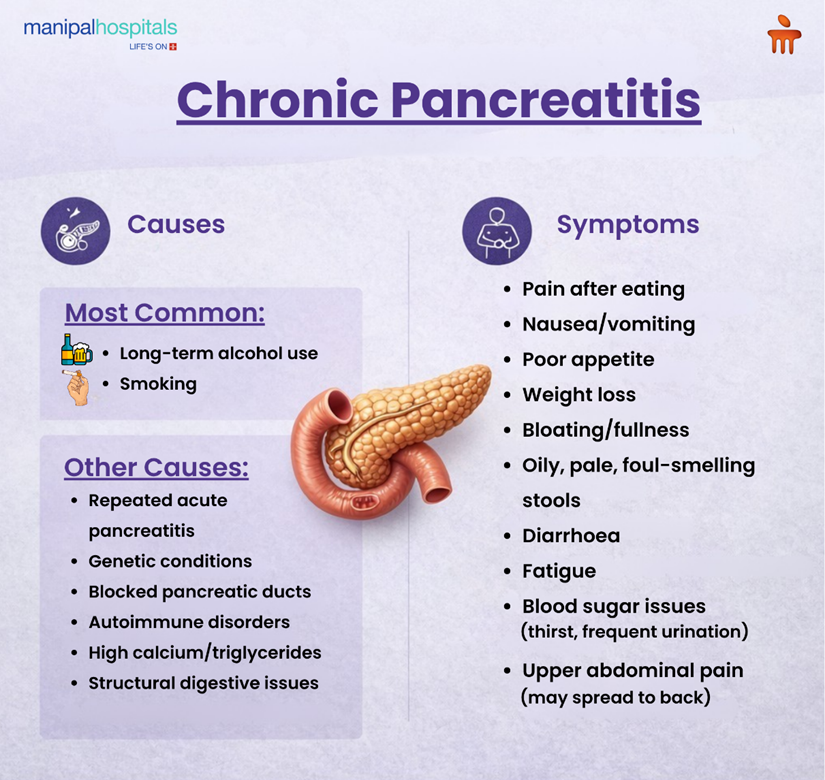
Other possible causes include:
-
Repeated episodes of acute pancreatitis
-
Genetic conditions that affect the pancreas
-
Blocked pancreatic ducts
-
Autoimmune disorders
-
High calcium or high triglyceride levels
-
Certain inherited or structural problems in the digestive system
Sometimes, no clear cause is found. Even then, the condition is real and still needs proper treatment. Understanding the causes of chronic pancreatitis is helpful, but it is just as important to look at how the condition affects the body day to day.
Symptoms of Chronic Pancreatitis
The symptoms of chronic pancreatitis can look different from person to person. Some people mainly notice pain, while others struggle more with digestion. In many cases, symptoms come and go at first, which can make them easy to dismiss.
Common symptoms of chronic pancreatitis include:
-
Upper abdominal pain, sometimes spreading to the back
-
Pain that may get worse after eating
-
Nausea or vomiting
-
Poor appetite
-
Weight loss without trying
-
Bloating or a feeling of fullness
-
Oily, pale, or foul-smelling stools
-
Loose stools or diarrhoea
-
Fatigue
-
Signs of blood sugar problems, such as increased thirst or frequent urination
Because the pancreas helps digest food, damaged pancreatic tissue can lead to digestive issues in chronic pancreatitis that become very noticeable after meals. Some people begin avoiding food because they fear the pain or discomfort that may follow. Over time, that can affect nutrition, energy levels, and overall strength.
Digestive Issues in Chronic Pancreatitis
Digestive issues in chronic pancreatitis happen because the pancreas may not produce enough enzymes to break down fat, protein, and carbohydrates properly. When food is not digested well, the body does not absorb nutrients the way it should.
This can lead to a few frustrating problems. Meals may sit heavily in the stomach. Stools may appear greasy or float because fat is not being absorbed properly. A person may also lose weight even when eating enough, simply because the body is not getting the full benefit of the food.
How Is Chronic Pancreatitis Diagnosed?
When doctors suspect chronic pancreatitis, they usually begin with a careful history of symptoms, lifestyle factors, and past episodes of pancreatitis. Tests may be used to look more closely at the pancreas and check how well it is functioning.
These may include blood tests, stool tests, ultrasound, CT scans, MRI, or endoscopic imaging. In some cases, doctors also examine for diabetes or vitamin deficiencies because chronic pancreatitis can affect both digestion and hormone production.
A clear diagnosis matters because chronic pancreatitis can overlap with other digestive problems. The more specific the diagnosis, the more targeted the treatment can be.
Treatment for Chronic Pancreatitis
Treatment depends on the cause, the severity of symptoms, and how much the pancreas has already been affected. In general, the main goals are to reduce pain, improve digestion, and prevent complications.
Pain management
Pain is often one of the hardest parts of chronic pancreatitis. Depending on how severe it is, doctors may suggest medicines or other pain relief approaches. The aim is to ease discomfort while keeping side effects under control.
Pancreatic enzyme replacement
If the pancreas is not making enough digestive enzymes, enzyme supplements may be prescribed with meals. These can help the body break down food more effectively and reduce digestive issues in chronic pancreatitis.
Blood sugar management
Since the pancreas also helps regulate blood sugar, some people with chronic pancreatitis develop diabetes or blood sugar swings. In those cases, treatment may involve monitoring, medication, or insulin.
Treating the underlying cause
If alcohol, smoking, high triglycerides, or another trigger is contributing to the problem, dealing with that cause is a key part of treatment. Without that step, symptoms may continue to progress.
Nutrition support
Doctors or dietitians may suggest ways to improve nutrient intake and maintain weight. This can make a real difference in long-term care.
Chronic Pancreatitis Diet: What Helps?
A chronic pancreatitis diet is usually designed to make digestion easier, reduce discomfort, and support good nutrition. There is no single perfect plan for everyone, but a few practical habits often help.
Many people feel better when they eat smaller meals more often rather than having large portions at once. This can reduce the strain on the digestive system. Limiting high-fat foods may also help, especially if fat digestion is difficult. Still, fat should not be removed carelessly without medical advice, since the body still needs healthy nutrients.
A chronic pancreatitis diet often focuses on:
-
Smaller, more frequent meals
-
Lean protein sources
-
Easy-to-digest foods
-
Good hydration
-
Avoiding alcohol completely
-
Stopping smoking
-
Taking enzyme supplements if prescribed
It is also important not to become overly restrictive. People with chronic pancreatitis often need enough calories and nutrients to stay strong. A balanced approach tends to work much better than extreme dieting.
Surgery for Chronic Pancreatitis: When Is It Needed?
Not everyone with chronic pancreatitis needs surgery, but in some situations it becomes the best option. Surgery for chronic pancreatitis may be considered if pain remains severe despite treatment, if the pancreatic duct is blocked, if there are complications like cysts or obstruction, or if there is significant structural damage.
There are different types of surgery depending on the problem. Some procedures help drain the pancreatic duct, while others remove damaged tissue or relieve pressure in the area. The decision is always individual and depends on the person’s symptoms, scan results, and overall condition.
Surgery for chronic pancreatitis is usually discussed only after other treatments have been reviewed, but for the right patient, it can bring meaningful relief and improve quality of life.
Living with Chronic Pancreatitis Day to Day
Living with chronic pancreatitis can feel tiring, especially when symptoms interfere with eating or cause constant worry. Still, many people find that steady habits help them feel more in control.
A few practical steps often make daily life easier:
-
Avoid alcohol completely if advised by your doctor
-
Do not smoke
-
Follow your prescribed medicines or enzyme supplements carefully
-
Eat in a way that supports digestion
-
Keep track of symptoms and food triggers
-
Attend follow-up visits regularly
It can also help to pay attention to patterns. For example, if a certain type of meal always causes pain or bloating, that is useful information to share with your doctor. Small observations can lead to better treatment decisions.
Conclusion
Chronic pancreatitis is a long-term condition, but it does not have to control every part of life. Once the causes of chronic pancreatitis are understood and the symptoms are properly addressed, treatment can become much more focused and effective. From medicines and enzyme support to nutrition planning and, in some cases, surgery, there are several ways to reduce symptoms and support better daily living under the care of best gastroenterology experts in Manipal Hospital Bhubaneswar.
The most important thing is to listen to your body and not ignore ongoing digestive problems. Digestive issues in chronic pancreatitis may seem like “just stomach trouble” at first, but they can be signs of a deeper problem that deserves attention. With the right care from the Gastrointestinal Science department in Manipal Hospital, Bhubaneswar, you can manage the condition more comfortably and protect your long-term health.
FAQ's
No. Acute pancreatitis comes on suddenly and may improve with treatment, while chronic pancreatitis develops over time and causes long-term damage.
In many cases, the damage cannot be fully reversed, but symptoms can often be managed well with treatment and lifestyle changes.
Pain is common, but not everyone experiences it the same way. Some people notice more digestive issues than pain.
No. Alcohol is a major risk factor, but there are many causes of chronic pancreatitis, including smoking, genetic factors, blockages, and autoimmune conditions.
Yes. A well-planned chronic pancreatitis diet can make digestion easier and help support nutrition, especially when paired with medical treatment.
Share this article on:


_need_Surgery__Expert_Guide_.webp "Expert guide on gallbladder polyps and treatment options")


7.png)