6 Min Read
The brain is an intricate and vital part of our body. Thinking about brain surgery can be overwhelming and can raise many questions about the safety of the procedure. However, brain shunt surgery is not only safe but can also be life-changing for many patients. Excess fluids in the brain usually result from hydrocephalus, infection, brain bleed, and tumours. This excess fluid in the brain creates pressure on the brain, which is felt by the patient in the form of headaches. Brain shunt surgery is used to relieve the brain of excess fluid by draining them into another part of the body where it can be absorbed naturally.
Having knowledge of how brain shunt surgery is carried out and how the body heals and functions with the shunt in place is sure to make the entire experience much less intimidating. This blog walks you through the procedure, recovery process, possible adjustments in daily life, and the long-term outlook so you can feel more informed and prepared.
Synopsis
Why a Brain Shunt May Be Needed?
Fluid constantly circulates in the brain and spinal cord in the form of cerebrospinal fluid (CSF). It cushions the brain, removes waste, and helps maintain pressure balance. However, problems arise when this fluid is being produced at a rate that is faster than it is being absorbed, or when its drainage is blocked. When this happens, there is a gradual increase in pressure inside the skull. This, in turn, can cause damage to brain tissues, hence interfering with brain functions.
Among the common conditions that may require a shunt include:
-
Hydrocephalus is a condition in which there is an accumulation of fluid in the ventricles of the brain.
-
Blocked fluid drainage as a result of tumours or scar tissue.
-
A brain haemorrhage, which may be a result of a brain injury or stroke.
-
Infection of the central nervous system.
-
Inserting a shunt after brain tumour surgery is also a common procedure, in which there is impairment of the fluid drainage, even after the removal of the brain tumour.
Symptoms caused by increased cerebrospinal fluid pressure may include headaches, nausea, balance problems, vision disturbances, memory problems, and personality changes.
Understanding the Brain Shunt Procedure
When doctors recommend surgery, it is intended to provide a safe route for excess fluids to be drained continuously. The brain shunt procedure is a surgical intervention that involves inserting a small, flexible tube that redirects excess fluid away from the brain to another part of the body, usually the abdomen. Three main aspects of brain shunt surgery include:
-
Catheter in the brain: A small tube inserted into the brain’s ventricle, which is usually filled with fluid.
-
Valve: A device that regulates the amount of fluid is attached to the tube.
-
Drainage catheter: The second tube that redirects excess fluids away from the brain, usually to the abdomen, heart, or chest, is connected.
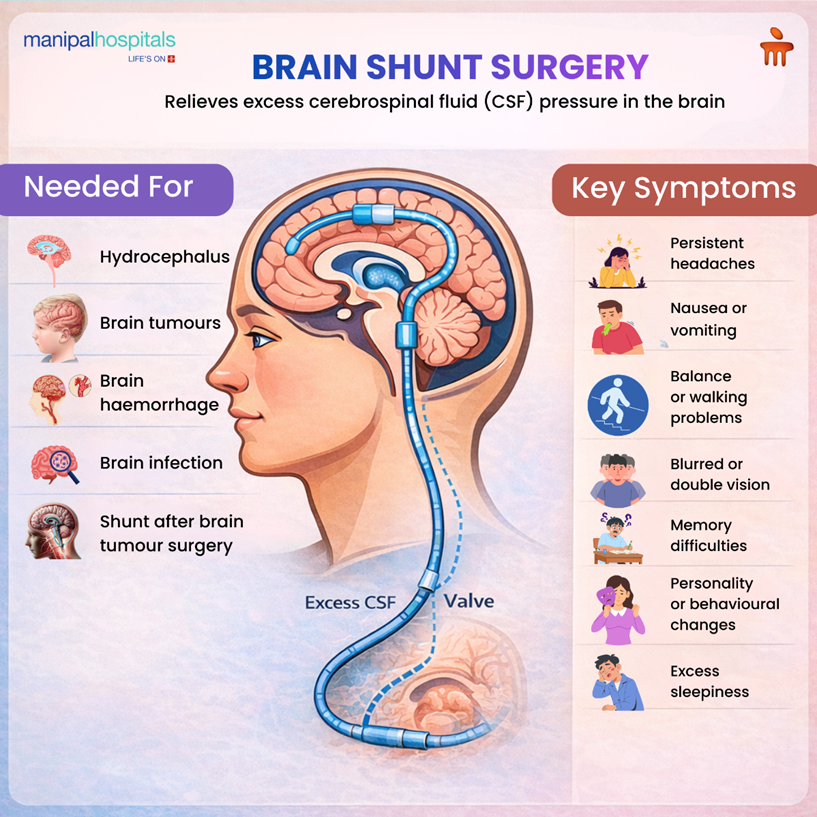
During brain shunt surgery, a small incision is made in the skull, allowing a surgeon to insert a catheter into the brain’s ventricle. The tube is then directed under the skin to the abdomen, where it is safe for it to be absorbed by the body.
Although the idea may sound intimidating, brain shunt surgery in adults is a well-established procedure performed by experienced neurosurgeons around the world.
Brain Shunt Surgery Recovery Time: What to Expect
The healing process for brain shunt surgery takes place over time. Although the healing process for each individual may vary slightly, the general healing pattern tends to follow a predictable trend as the brain readjusts itself to normal pressure levels:
|
Recovery Phase |
What Happens in the Body |
Typical Timeframe |
|
Immediate post-surgical phase |
Monitoring in the hospital, wound care, and observation for shunt function |
First 24-72 hours |
|
Early healing period |
Incisions begin closing, swelling reduces, and energy levels gradually improve. |
First 2 weeks |
|
Neurological adjustment |
The brain adapts to stable fluid pressure; symptoms like headaches or balance issues often improve |
3-6 weeks |
|
Activity reintroduction |
Light physical activity resumes; driving and work may gradually restart with medical advice |
4-8 weeks |
|
Long-term stabilisation |
Regular follow-ups ensure the shunt continues functioning properly |
Ongoing |
The full brain shunt surgery recovery time often ranges from four to eight weeks for most daily activities, though deeper neurological healing can continue over several months.
Possible Complications
As with any surgery, there are certain complications that may be associated with surgery. Although complications are rare, recognising the symptoms will allow you to seek medical attention promptly if something is not as expected.
Some symptoms that you should watch for include:
-
Persistent or worsening headaches
-
Fever or redness around the incision sites
-
Sudden nausea or vomiting
-
Changes in balance, vision, or speech
-
Unusual sleepiness or confusion
These symptoms may signal that the shunt is blocked or that an infection is present. However, usually, neurosurgeons can treat these complications easily once recognised. This ensures that the shunt continues to work well for many years.
Long-Term Recovery After Brain Shunt Surgery
For many people, brain shunt surgery can significantly improve the quality of life by relieving pressure caused by fluid buildup in the brain. Long-term outcomes depend on the underlying cause of hydrocephalus and how early the surgery is performed. Many adults are able to return to normal daily activities after recovery. In some cases, the shunt may need adjustment or replacement over time. Regular follow-up visits help doctors detect problems early and ensure the shunt continues to function properly.
Conclusion
While brain shunt surgery may seem daunting at first, understanding the reason behind it can help ease concerns. The procedure helps reduce high pressure in the brain by allowing excess fluid to drain and circulate normally. Recovery usually occurs gradually, with many people returning to regular routines within a few weeks while continuing follow-up care to ensure the shunt functions properly. For individuals seeking specialised care for the best brain shunt surgery in Bhubaneswar, visit the best neurosurgery hospital at Manipal Hospitals, Bhubaneshwar and contact our neurosurgery experts at Manipal Hospitals, Bhubaneshwar, for personalised and effective treatment.
FAQ's
Yes. Although many shunts work well for years, blockages or mechanical problems can still occur over time. Symptoms such as recurring headaches, confusion, or balance problems may suggest the shunt needs medical evaluation.
Standard airport metal detectors and scanners are safe for individuals who have shunts. You might consider carrying a medical identification card that indicates you have a shunt.
Low-impact activities like walking, swimming, or cycling are usually safe once recovery is complete. Contact sports that involve head injury risk may require medical clearance or protective measures.
Most people living with a brain shunt tolerate changes in weather and altitude without difficulty. However, sudden pressure changes at very high altitudes may occasionally cause discomfort, so discussing travel plans with your doctor is advisable.
Some shunt valves are adjustable and can be affected by strong magnetic fields. MRI scans are still possible, but the valve settings may need to be checked or reprogrammed afterwards by a neurosurgeon.
Share this article on: