8 Min Read
Persistent neck discomfort, stiffness when turning the head, or tension in the shoulders may sometimes indicate an underlying spinal issue. One possible cause is the straightening of the cervical spine, where the natural curve of the neck reduces or becomes straight. This change can affect how the neck supports the weight of the head and may strain surrounding muscles and nerves.
The condition often develops gradually due to prolonged desk work, poor posture, or neck injuries. Over time, symptoms may begin to affect daily activities and comfort. This blog explains the causes of cervical spine straightening, the symptoms to watch for, how doctors diagnose the condition, and how minimally invasive surgery may help restore cervical spine alignment.
Synopsis
How the Cervical Spine Is Normally Aligned?
The cervical spine, or the neck portion of the backbone, normally has a gentle inward curve known as lordosis. This natural curve helps distribute the weight of the head evenly and allows smooth movement of the neck in different directions.
When the normal curve of the neck becomes less curved or straight, it is called 'straightening of the cervical spine'. This may happen for a short time due to muscle tension or poor posture. If it continues, extra strain can develop in the vertebrae, discs, and nearby ligaments.
Over time, this altered alignment can affect how forces pass through the neck during everyday activities such as bending, lifting, or sitting for long periods. As a result, the neck muscles may work harder to maintain balance, often leading to stiffness, discomfort, and fatigue.
Causes Behind Cervical Spine Straightening
The spine is influenced by lifestyle habits and physical stress. Cervical straightening rarely occurs without an underlying trigger. In most cases, it develops gradually rather than appearing suddenly.
A common cause of this is the straightening of the cervical spine due to muscle spasms. This is usually a response to neck muscle spasms, which occur when there is neck pain, injury, or inflammation. The spasms cause temporary straightening of the spine, and repeated spasms may lead to long-term changes in its structure. Other causes of changes in cervical spine structure include:
-
Poor posture when working with computers or phones
-
Degenerative changes in the discs, leading to loss of neck curvature
-
Injuries or whiplash, especially after accidents
-
Weak neck muscles, as well as upper back muscles, which do not provide adequate support
-
Stress, which causes long-term muscle spasms around the neck
Signs Your Cervical Spine Alignment Has Changed
When there is a change in the normal neck curvature, there is usually a sign that something is not right. Recognising the straightening of cervical spine symptoms early can help you seek timely medical attention before the condition progresses.
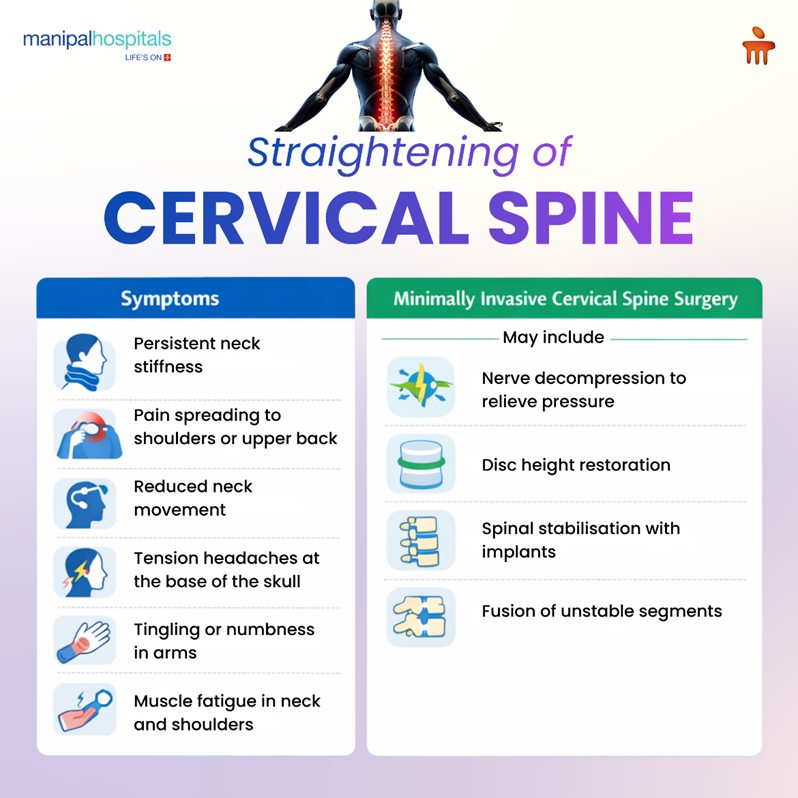
Common signs include:
-
Persistent neck stiffness that worsens after long periods of sitting
-
Pain radiating toward the shoulders or upper back
-
Reduced ability to rotate or tilt the neck comfortably
-
Frequent tension headaches starting at the base of the skull
-
Tingling or numbness travelling down the arms
-
Muscle fatigue around the neck and shoulder region
While these symptoms may not always indicate a structural issue, recurring discomfort should never be ignored. The spine plays a central role in protecting nerves, so changes in alignment deserve careful evaluation.
When Conservative Care Is Not Enough?
Many people with cervical spine straightening initially respond well to non-surgical approaches. Physiotherapy, posture correction, muscle strengthening, and lifestyle changes can help restore balance for those with mild straightening of the cervical spine. However, there are cases where the symptoms persist despite the best conservative management. These are usually due to changes in the spine that start affecting the nerves and stability.
Doctors may consider advanced straightening of cervical spine treatment if:
-
Pain continues for several months despite therapy.
-
Nerve compression causes arm weakness or numbness.
-
Disc damage affects spinal stability.
-
Daily activities become difficult due to limited neck movement.
When these concerns arise, minimally invasive spinal procedures may offer a way to restore alignment while reducing recovery time.
Minimally Invasive Surgery for Cervical Spine Alignment
Surgical procedures for various spinal problems have undergone tremendous change over the years. Minimally invasive approaches aim to correct the problem while preserving as much normal tissue as possible.
During minimally invasive surgical procedures for the straightening of the cervical spine, the surgeon makes small incisions using specialised equipment. This ensures that the cervical spine can be accessed accurately without causing damage to the muscles.
The surgical procedures for the straightening of the cervical spine may involve the following steps:
-
Decompressing the nerves if they are compressed by the growth of bones or the disc
-
Stabilising the spine using small spacers
-
Restoring the height of the disc, thus giving the cervical spine its natural curve
-
Fusing the unstable sections of the spine, thus giving the spine the desired curve
Comparison of Minimally Invasive Cervical Procedures
Different surgical techniques may be used depending on the underlying cause of the spinal alignment change. Each approach has specific goals and recovery expectations:
|
Procedure |
When It Is Recommended |
Surgical Approach |
Recovery Characteristics |
|
Cervical Microdiscectomy |
A disc herniation compressing the spinal nerves |
Removal of a damaged disc fragment through a small incision |
Often allows early neck movement and a shorter hospital stay |
|
Minimally Invasive Cervical Fusion |
Segment instability affecting spinal curvature |
Small implants are placed between vertebrae to maintain spacing |
Stabilises alignment and supports long-term spinal balance |
|
Cervical Disc Replacement |
Disc degeneration without severe instability |
Artificial disc inserted to preserve motion |
Maintains flexibility while improving spinal structure |
|
Endoscopic Decompression |
Narrowing of nerve pathways due to bone or disc changes |
Ultra-small endoscopic instruments are used to relieve nerve pressure |
Minimal tissue disruption and quicker functional recovery |
These procedures are carefully selected from the orthopaedic experts in Manipal Bhubaneswar based on imaging findings, symptom severity, and overall spinal health.
Conclusion
Neck discomfort and stiffness may sometimes be associated with straightening of the cervical spine, particularly when the symptoms start affecting daily activities. Identifying the underlying cause can help guide appropriate treatment. If conservative treatment does not provide relief, minimally invasive surgery may be considered to help restore the natural curve of the neck and improve movement and comfort.
If symptoms persist, seeking expert evaluation is important. Specialised straightening of cervical spine treatment is available at Manipal Hospital Bhubaneswar, where spine specialists provide personalised care for recovery and long-term spinal health.
FAQ's
Yes, it is possible for the spine to recur if the factors that influence spinal posture are not corrected. Long-term correction of posture, strengthening the muscles, and ergonomic adjustments are necessary to correct spinal curvature.
Neck alignment is another factor that is significant in the comfort of the bed. The curvature of the spine can affect the level of comfort in bed. The right pillows can help with the comfort of the bed.
Doctors usually rely on tests like X-rays or MRI scans to check for spinal alignment changes. The tests provide an accurate evaluation of the cervical curve, disc, and nerve compression.
Frequent forward bending of the neck while using phones can gradually strain the cervical spine. Over time, repeated stress may influence spinal alignment and muscle balance.
Age alone does not determine surgical eligibility. Doctors usually consider the overall health condition, bone quality, and nerves before opting for surgery. Minimally invasive procedures help many elderly patients when the symptoms interfere with their lives.
Share this article on: