5.png)
 7 Min Read
1.webp "Common Causes of Sinus Infections and How to Prevent Them")
We’ve all had that feeling before. A heavy head. A nose that refuses to clear. Breathing turns into an effort, and everything feels foggy. What starts off as a simple cold can quietly turn into something more tiring: a sinus infection.
Sinuses are small air pockets in your face that should stay light and open. When they swell or fill with mucus, they start pressing against nearby areas. That’s when the pain and pressure build up. Sometimes it goes away on its own. Sometimes it just stays, hanging around for weeks. Understanding the sinus infection causes can help you see why these problems happen and how to stop them from coming back.
Synopsis
- What Causes Sinus Infections?
- Spotting the Symptoms Early
- How Doctors Find Out What’s Going On
- Medical Options for Sinus infection Treatment
- Simple Home Remedies for Sinus Infection
- How to Prevent Sinusitis
- Supporting Your Sinuses with Lifestyle Changes
- When to See a Doctor
- After Recovery: Keeping Your Sinuses Clear
- Finding Relief and Moving Forward
What Causes Sinus Infections?
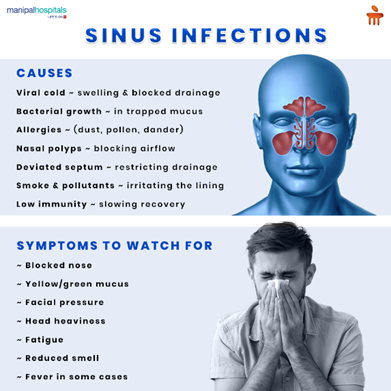
Sinuses work best when air flows smoothly through them. The problem starts when this flow is blocked. The lining inside your nose and sinuses swells, and the natural drainage slows down. Once mucus gets trapped, infection begins.
Here are some of the most common causes of sinus Infections:
-
Viral infections: Most sinus troubles begin with a simple cold. The virus irritates the lining, and swelling traps mucus inside.
-
Bacterial infections: When the trapped mucus stays for too long, bacteria begin to grow. This is one of the frequent causes of sinus Infections for long-lasting cases.
-
Allergies: Dust, pollen, or animal dander can irritate your sinuses again and again until inflammation sets in.
-
Nasal polyps: These are soft growths inside the nose that quietly block airflow and turn into another common cause of sinus infections.
-
Deviated septum: When the wall dividing the nostrils bends to one side, the sinuses don’t drain properly.
-
Irritants in the air: Smoke, perfume, or pollutants make the delicate nasal lining sore and reactive.
-
Low immunity: When your body's defenses are weak, even small infections can grow stronger and settle in.
Each of these sinus infection causes may sound minor, but together they can make breathing harder and recovery slower.
Spotting the Symptoms Early
You can usually tell when something’s off. A sinus infection feels different from a normal cold. You might notice:
-
A blocked or stuffy nose
-
Thick yellow or green mucus
-
Pressure around the eyes, forehead, or cheeks
-
Tiredness that doesn’t lift easily
-
Trouble smelling or tasting food
-
Occasional fever or toothache
Most viral infections settle down in a week or so. But if your discomfort lasts longer, it may be a sign that bacteria have joined in. Knowing the difference early can help you get the right sinus infections treatment before it becomes more uncomfortable.
How Doctors Find Out What’s Going On
At the clinic, your doctor will usually start by gently pressing around your face to locate the pain. They might check your nose with a small light to see if the lining looks swollen. Sometimes, a scan is suggested to get a closer view of the sinuses and spot blockages or hidden causes of sinus infections.
If your infections continue to return, the doctor may ask a few questions about your habits, environment, or allergies. Understanding what triggers your sinus issues helps in choosing the right sinus infection treatment that fits your condition.
Medical Options for Sinus infection Treatment
The good thing is that most sinus infections respond well to simple care. Doctors usually start with methods that reduce swelling and clear mucus.
Common sinus infection treatment options include:
|
Treatment Type |
Description |
|
Decongestants |
They ease pressure and open blocked nasal passages for easier breathing. |
|
Saline sprays |
Gentle rinses that wash away irritants and keep the nose moist. |
|
Antibiotics |
Given only when bacteria are clearly responsible for the sinus infection, not for viral cases. |
|
Steroid sprays |
elp reduce deep inflammation and are especially useful for allergy-related sinus issues. |
|
Pain relievers |
Used for headaches and general discomfort commonly associated with sinus blockage. |
If medicines and sprays don’t help, your doctor might recommend a minor procedure. It could involve removing nasal polyps or correcting a deviated septum. This kind of sinus infections treatment is usually needed only when other measures stop working.
Simple Home Remedies for Sinus Infection
When the infection is mild, a bit of care at home can make a real difference. Here are some comforting home remedies for sinus infections that help most people feel better:
-
Steam inhalation: Breathing warm steam helps loosen thick mucus and calm irritated passages.
-
Warm compress: Placing a warm cloth over the face lowers pressure and helps drain sinuses.
-
Plenty of fluids: Water, soups, and herbal teas keep mucus thin and moving.
-
Rest and sleep: The body heals better when it’s not exhausted.
-
Use a humidifier: it keeps the air moist, stopping the nasal lining from drying out.
-
Natural teas: Ginger or turmeric tea with honey gives soothing warmth and helps reduce congestion.
These home remedies for sinus infection are simple but powerful. They can ease symptoms and stop the infection from getting worse. Combined with proper medical advice, they can help you heal faster and feel more comfortable.
How to Prevent Sinusitis
Prevention is often easier than a cure. Once you understand how to prevent sinusitis, you’ll find it’s mostly about small, steady habits.
Try adding these easy steps to your routine:
-
Avoid known triggers: If you know certain things make you sneeze or feel blocked, try to stay away from them.
-
Keep your surroundings fresh: Regularly clean dusty areas and wash your bedding to get rid of allergens.
-
Stay hydrated: Water keeps your sinuses clear and reduces mucus buildup.
-
Rinse your nose: Saline water clears out irritants before they cause swelling.
-
Eat colourful foods: Fruits and vegetables full of vitamins help your body fight infection.
-
Don’t rely on nasal sprays for too long: They work for a few days, but using them often can make the problem worse.
-
Avoid sudden changes in temperature: Going from hot to cold air quickly can trigger sinus swelling.
These steps show you how to prevent sinusitis in a simple, everyday way. It’s consistency, not intensity, that makes them work.
Supporting Your Sinuses with Lifestyle Changes
A few lifestyle shifts can make your sinuses stronger and less prone to infection.
-
Quit smoking: Tobacco smoke dries and irritates the nasal lining.
-
Exercise lightly: Movement improves blood flow, helping sinuses clear naturally.
-
Control stress: When stress builds, your immune system weakens. That gives infections more room to grow.
-
Limit alcohol: Alcohol can swell the nasal passages and block airflow.
These habits can ease many sinus infection causes that start in everyday life. Taking care of yourself on the outside reflects inside, helping your body maintain balance.
When to See a Doctor
It’s tempting to wait out a sinus infection, hoping it will disappear. Often it does, but not always. There are times when it’s better to get medical help early.
You should see a doctor if you:
-
Have symptoms lasting more than ten days
-
Feel pain or swelling near the eyes
-
Notice vision changes
-
Run a high fever
-
Get repeated infections during the year
A timely visit helps prevent chronic issues and gives your doctor the chance to identify hidden sinus infection causes. Getting professional sinus infection treatment can save you from long spells of discomfort.
After Recovery: Keeping Your Sinuses Clear
Once you’ve recovered, the real goal is to stay that way. Following how to prevent sinusitis every day keeps infections from coming back. Think of it as a quiet form of self-care that builds over time.
You could try something like this:
-
A gentle saline rinse in the morning
-
A walk outdoors for fresh air
-
Staying hydrated throughout the day
-
Avoiding very cold drinks when you’re already congested
-
Getting enough rest at night
These routines seem small, but they make a real difference. A few mindful habits can protect your sinuses in the long run.
Finding Relief and Moving Forward
Living with sinus problems can feel draining, but there’s always a way to breathe easy again. Once you understand the sinus infection's causes, follow the right sinus infection treatment, and try simple home remedies for sinus infection, things start to shift. Learning how to prevent sinusitis helps you take control, not just manage symptoms.
If you’ve been struggling for a while or notice that the problem keeps coming back, speaking with an ENT specialist is a good next step. The team at Manipal Hospital Bhubaneswar offers modern diagnosis and care tailored to each patient’s needs. Getting support early can bring lasting comfort and help you return to easy, natural breathing.
FAQ's
Most sinus infections start with a cold or allergies that block the nose. Sometimes it’s due to nasal polyps, a bent septum, or even pollution. Once mucus gets trapped, it becomes easier for bacteria or viruses to grow.
A cold usually fades in a few days. But if your head feels heavy, your face hurts, and your nose stays blocked for more than a week, it’s likely a sinus infection. Those are common signs linked to typical sinus infections.
The right sinus infection treatment depends on what’s causing it. Some people get better with nasal sprays and rest, while others may need antibiotics. Your doctor will decide what’s best once they check your symptoms.
Yes, a few simple home remedies for a sinus infection can help. Try inhaling steam, drinking plenty of water, and using a warm compress on your face. These little habits ease pressure and make breathing a lot easier.
Learning how to prevent sinusitis is all about small changes. Keep your nose clean, drink enough water, and stay away from things that trigger allergies. A bit of care every day keeps your sinuses healthy.
Share this article on: