6 Min Read
Do you ever find yourself dealing with flaky, itchy skin on your scalp or face that seems to come back no matter what shampoo or cleanser you use? Seborrheic dermatitis is a common inflammatory skin condition that affects oily skin areas and often recurs. This article explains the typical seborrheic dermatitis symptoms, what drives the condition, how to manage symptoms at home, and which medical seborrheic dermatitis treatment options work best.
Synopsis
- What is Seborrheic Dermatitis?
- What Causes Seborrheic Dermatitis?
- Typical Seborrheic Dermatitis Symptoms
- Symptoms and Recommended Home Care
- Initial Self-Care Steps That Help
- Over-the-Counter and Prescription Treatments
- Managing Infant Cradle Cap
- When to See a Dermatologist?
- Maintenance Strategies to Reduce Relapses
- Special Considerations
- Conclusion
What is Seborrheic Dermatitis?
Seborrheic dermatitis is an inflammatory skin condition that mainly affects areas rich in sebaceous glands. Common sites include the scalp, eyebrows, sides of the nose, nasolabial folds, behind the ears, and the upper chest. The condition can range from mild dandruff to thick, greasy scales and redness. It is chronic and marked by flares and remissions. Recognising the distribution and pattern helps distinguish seborrheic dermatitis from other skin disorders such as psoriasis or atopic dermatitis.
What Causes Seborrheic Dermatitis?
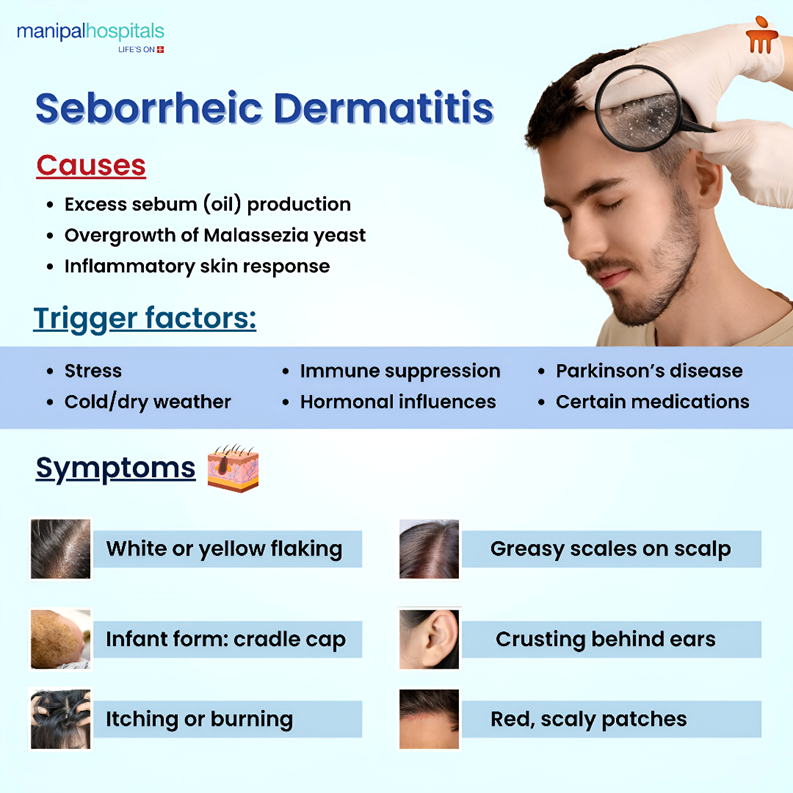
Understanding the seborrheic dermatitis causes helps explain why outbreaks recur and why treatment often needs ongoing maintenance. The main contributors include increased sebum production, colonisation by Malassezia yeasts, and an inflammatory response in people who are susceptible.
Other factors that influence flares include cold, dry weather; stress; certain neurological conditions such as Parkinson's disease; immune suppression; and some medications. Hormonal factors and individual skin sensitivity also play a role. Addressing both local skin factors and triggers improves control.
Typical Seborrheic Dermatitis Symptoms
Knowing the common seborrheic dermatitis symptoms helps you describe the problem to a clinician. Typical signs include flaky scaling on the scalp that ranges from fine dandruff to thick, greasy scales; redness and scaling around the eyebrows and nasolabial folds; itching that varies from mild to persistent; and crusting behind the ears. Infants develop cradle cap with yellowish crusts on the scalp, which is usually not painful.
Symptoms often worsen in winter and improve with appropriate treatment. If you experience widespread redness, pain, pus, fever, or rapid worsening, seek medical assessment because these findings suggest infection or another diagnosis.
Symptoms and Recommended Home Care
|
Symptom |
What it suggests |
Home care actions |
|
Fine scalp flaking |
Mild seborrheic scalp involvement |
Use medicated shampoo containing ketoconazole, zinc pyrithione, or selenium sulfide two to three times weekly |
|
Thick, greasy scalp scales |
More marked disease with adherent scale |
Apply oil to soften scales, follow with shampooing and gentle removal; avoid forceful scraping |
|
Red, scaly patches on the face |
Facial seborrheic dermatitis |
Cleanse with mild non-soap cleansers, apply topical antifungal or mild anti-inflammatory creams as directed |
|
Itching without visible redness |
Early or mild flare |
Increase cleansing frequency and use medicated shampoo; avoid irritants and harsh soaps |
|
Crusting in infants (cradle cap) |
Non-painful scaling in babies |
Gently wash scalp with baby shampoo, use light oil massage to loosen scales, seek paediatric advice if infected |
Initial Self-Care Steps That Help
Start with gentle daily care that reduces irritation and limits yeast overgrowth.
-
Wash the affected areas with a mild cleanser and lukewarm water.
-
Avoid aggressive scrubbing and harsh soaps that strip the skin and worsen inflammation.
-
On the scalp, use medicated shampoos containing ketoconazole, zinc pyrithione, selenium sulfide, or coal tar according to product instructions.
-
For face involvement, use a gentle non-soap cleanser twice daily and avoid alcohol-based toners.
-
Maintain skin hydration with a non-comedogenic moisturizer when needed.
-
Limit the use of heavy hair products that trap oil on the scalp.
These steps often reduce symptoms and create a foundation for any prescribed seborrheic dermatitis treatment.
Over-the-Counter and Prescription Treatments
Managing seborrheic dermatitis often requires topical antifungal and anti-inflammatory therapies.
-
Ketoconazole shampoo or cream reduces Malassezia yeast and commonly improves scaling and itching. Use it two to three times weekly and continue a maintenance schedule once controlled.
-
Topical corticosteroids reduce redness and itching quickly during flares, but they should be used for short courses and with medical guidance to avoid skin thinning or other side effects.
-
Topical calcineurin inhibitors such as tacrolimus or pimecrolimus are effective steroid-sparing options for facial areas and sensitive skin.
For severe or widespread disease, a dermatologist may prescribe oral antifungal medication or consider other systemic options. Discuss risks and benefits with a clinician, especially if you are pregnant, breastfeeding, or have other medical conditions.
Managing Infant Cradle Cap
In infants, seborrheic dermatitis symptoms often present as cradle caps. This typically responds to gentle measures.
-
Wash the scalp daily with a mild baby shampoo and massage it to loosen the scales.
-
Apply a small amount of mineral oil or olive oil briefly to soften thick scales and then shampoo to remove them.
-
Avoid forceful picking or scratching.
-
If scales persist, spread, are inflamed, or show signs of infection, seek paediatric assessment for possible topical prescription treatment.
When to See a Dermatologist?
Consult a dermatologist if over-the-counter measures and basic home care do not control symptoms, if the rash spreads beyond typical sites, if signs are severe, or if there is concern about infection. A dermatologist will confirm the diagnosis and may perform targeted treatments such as prescription topical antifungals, low-potency steroids for short courses, or topical calcineurin inhibitors for facial disease. Dermatologists assess underlying conditions that may worsen seborrheic dermatitis, such as immune suppression or neurological disease, and recommend maintenance plans to reduce relapse.
Maintenance Strategies to Reduce Relapses
Because seborrheic dermatitis is chronic, maintenance care reduces the frequency and severity of flares. Continue medicated shampoo on a maintenance schedule once control is achieved, for example, once weekly or every 10 days, depending on symptoms. Maintain a gentle skin care routine with mild cleansers and moisturizers. Avoid known triggers such as extreme changes in temperature, excessive alcohol-based products, and strong fragrances. Manage stress and ensure adequate sleep because these factors may influence flare frequency. Regular follow-up with a clinician helps adjust maintenance therapy as needed.
Special Considerations
-
People with Parkinson's disease, HIV infection, or other conditions that affect the immune or nervous system often have more severe or persistent seborrheic dermatitis and need closer follow-up.
-
If you are on immunosuppressive medications, discuss skin symptoms with your prescribing clinician and a dermatologist.
-
Pregnant and breastfeeding individuals should consult a clinician before starting prescription topical therapies to ensure safety.
-
If secondary infection is suspected, such as increasing pain, pus, spreading redness, or fever, seek medical care promptly.
Conclusion
Seborrheic dermatitis causes recurring redness, scaling, and itching in oil-rich areas. Effective seborrheic dermatitis treatment combines topical antifungal therapy with targeted anti-inflammatory agents during flares and a consistent home care routine for maintenance. Identify triggers, avoid harsh skin products, and follow a medicated schedule to reduce relapses. If symptoms persist or worsen, seek dermatology care to confirm the diagnosis and obtain stronger or alternative treatments. For personalised assessment, prescription options, and follow-up in Bhubaneswar, consider consulting the dermatology team at Manipal Hospital Bhubaneswar, where clinicians offer evidence-based treatment plans and ongoing skin care support.
Book a dermatology appointment at Manipal Hospital Bhubaneswar for a tailored seborrheic dermatitis treatment plan and follow-up.
FAQ's
Most people notice reduced flaking and itching within one to two weeks, and clearer skin usually follows several weeks of regular use; if there is no improvement, consult a dermatologist for alternative seborrheic dermatitis treatment.
No, most people do not achieve a permanent cure, but maintenance strategies and periodic treatment control symptoms and reduce flare frequency.
No, seborrheic dermatitis is not contagious. It involves individual skin factors and common skin yeasts that do not spread through casual contact.
Some over-the-counter medicated shampoos and gentle cleansers help, but unregulated natural remedies lack consistent evidence and may irritate the skin; discuss new products with your clinician.
Seek urgent care if the rash spreads rapidly, becomes painful, produces pus, or is accompanied by fever, because these signs suggest infection or another serious condition requiring prompt treatment.
Share this article on:


9.png)