8 Min Read
_need_Surgery__Expert_Guide_.webp "Expert guide on gallbladder polyps and treatment options")
What if you had an ultrasound and were told that you have a ‘gallbladder polyp'?
You may wonder, ‘Do I need surgery?’
Gallbladder polyps are lumps that form on the inside of the gallbladder. Most of these polyps are not harmful and DO NOT need surgery. But the size, symptoms, and growth pattern of the polyps will help doctors decide if surgery is the best option.
This blog walks you through what a gallbladder polyp is, what causes gallbladder polyps, how they behave, when doctors watch them, and when removal becomes the right choice.
Synopsis
- What Are Gallbladder Polyps?
- What Causes Gallbladder Polyps?
- Gallbladder Polyp Symptoms
- Diagnostic Evaluation of Gallbladder Polyps
- Do All Gallbladder Polyps Need Surgery?
- Gallbladder Polyp Treatment Options
- Risks and Complications if Left Untreated
- Lifestyle Changes to Manage Gallbladder Health
- When Should You Consult a Doctor?
- Conclusion
What Are Gallbladder Polyps?
Gallbladder polyps are growths on the lining of the gallbladder. They are typically identified incidentally during abdominal ultrasound examinations conducted for unrelated symptoms. These polyps are often cholesterol polyps, which are non-cancerous deposits of cholesterol in the wall of the gallbladder. There are several kinds of gallbladder polyps:
-
Cholesterol polyps: The commonest; deposits of cholesterol in the gallbladder wall (benign)
-
Inflammatory polyps: Associated with chronic inflammation
-
Hyperplastic polyps: From cell overgrowth in the lining
-
Adenomas: Less common, these are true tumours with a small potential to become cancerous
It's important to know what causes gallbladder polyps because not all polyps act the same way. Some stay stable for years, while others may grow or, in rare cases, become cancerous. So, instead of surgery right away, treatment choices should be made after careful consideration.
What Causes Gallbladder Polyps?
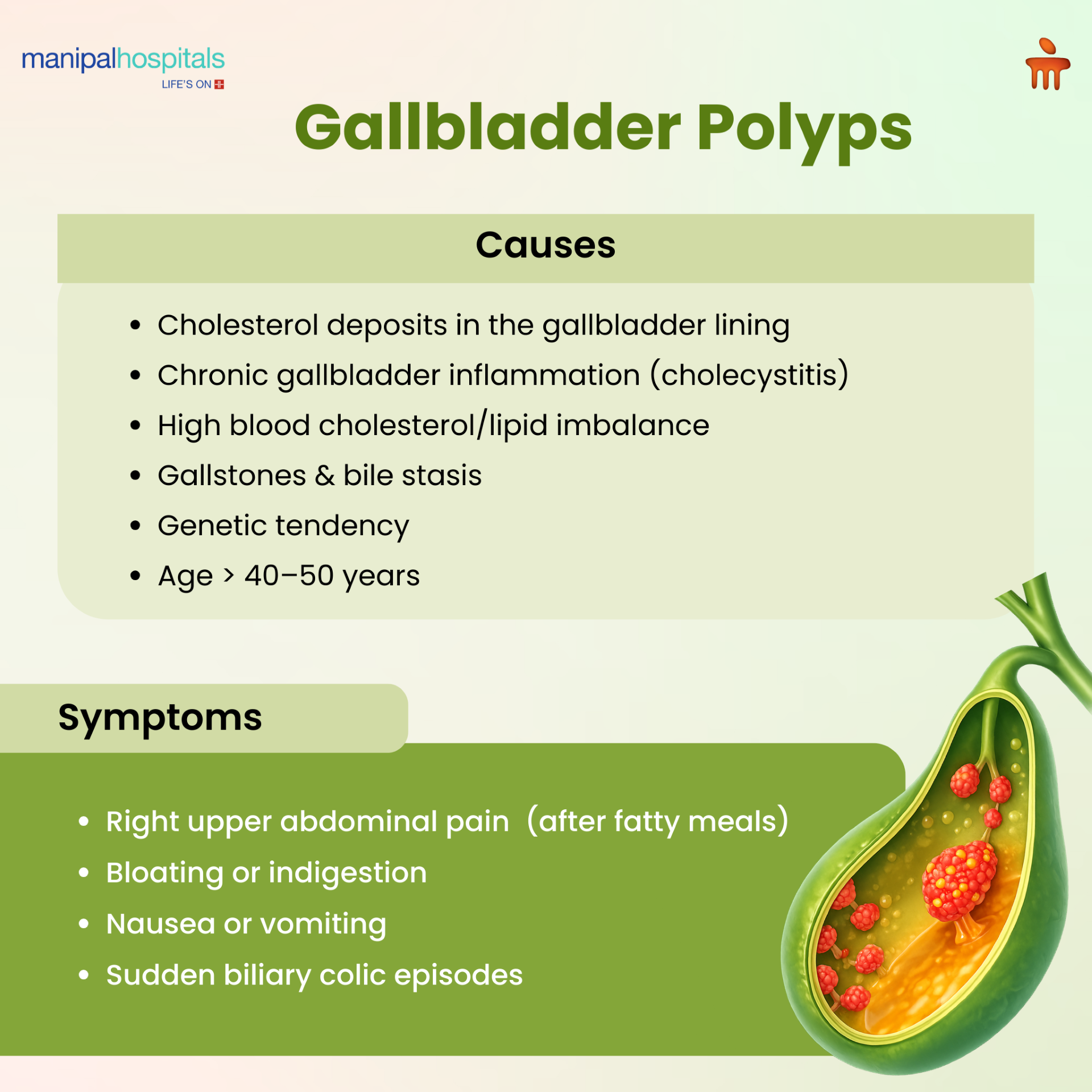
People with gallbladder polyps often want to know what the risk factors are and if their diet or lifestyle has anything to do with it. The precise mechanism is not always evident, but various factors contribute to the aetiology of gallbladder polyps. Common gallbladder polyp causes are:
-
Cholesterol deposits in the gallbladder lining (cholesterol polyps).
-
Long-standing inflammation of the gallbladder (cholecystitis).
-
Abnormal lipid metabolism or high blood cholesterol.
-
Gallstones and impaired bile flow (stasis).
-
Genetic predisposition in some families.
-
With increasing age. Polyps become more common after 40–50 years.
These gallbladder polyps affect how polyps grow and whether they stay harmless or need medical attention.
Gallbladder Polyp Symptoms
Most gallbladder polyps don't cause any symptoms and are found by accident. Some patients, however, may have symptoms depending on the size of the gallbladder disease and the size of the gallbladder.
Common Gallbladder Polyp Symptoms Include:
-
Dull or sharp pain in the right upper abdomen (especially after fatty meals)
-
Indigestion, bloating, or intolerance of fatty foods
-
Occasional nausea or vomiting
-
Episodes of biliary colic (sudden, intense pain when a stone or sludge blocks the bile duct)
These symptoms are usually associated with gallbladder disease rather than the polyp itself. That's why it's important to get the right imaging and clinical evaluation before deciding on treatment for gallbladder polyps.
Diagnostic Evaluation of Gallbladder Polyps
Diagnosis usually starts with an abdominal ultrasound. If a polyp is seen, further tests are sometimes needed to characterise it:
|
Test |
Medical Term |
Purpose |
|
Abdominal Ultrasound |
Sonography |
Detects the size and number of polyps |
| Endoscopic Ultrasound |
EUS |
Provides detailed polyp characterisation |
|
CT Scan or MRI |
Cross-sectional imaging |
Evaluates suspicious or large lesions |
|
Blood Tests |
Liver function tests |
Detects associated biliary disease |
These tests help surgeons figure out whether surgery to remove gallbladder polyps or monitoring is the safest choice.
Do All Gallbladder Polyps Need Surgery?
Not all polyps need removal. The common strategy is risk stratification, deciding who needs surgery now and who can be safely observed.
When Surgery is Not Required
-
The polyp is less than 6 mm in size.
-
No gallstones or symptoms that go along with them
-
No rapid growth on follow-up imaging
-
The patient is young and in good health otherwise.
In these situations, regular ultrasound scans help keep an eye on changes and help doctors decide what to do next with gallbladder polyps.
When Surgery is Usually Recommended
-
Polyp size is greater than or equal to 10 mm.
-
Quickly getting bigger during follow-up
-
Gallstones or chronic inflammation that are linked to each other
-
Over 50 years old and having polyps
-
Features that make you think of cancer
For these situations, laparoscopic cholecystectomy (removal of the gallbladder with as little damage as possible) is the usual way to do surgery. This procedure is safe and common and has a quick recovery time.
Gallbladder Polyp Treatment Options
The treatment is based on the size of the polyp, visible symptoms, and the risk of cancer. The goal of treating gallbladder polyps is to stop problems from happening and avoid surgery that isn't needed.
-
Keeping an eye on things and waiting
Every 6 to 12 months, small polyps that don't cause any symptoms are checked with ultrasound scans. This method makes sure that growth or changes that look suspicious are found early.
2. Medical Management
There are no specific medications that can dissolve polyps, but treating underlying issues like high cholesterol and inflammation of the gallbladder may help with symptoms and slow the disease down.
3. Surgery
If there are risk factors, doctors usually recommend a laparoscopic cholecystectomy for gallbladder polyps. This surgery removes the gallbladder using less invasive methods, helping you recover faster and reducing the chance of complications.
Risks and Complications if Left Untreated
Ignoring polyps that cause symptoms or are considered high-risk can lead to problems. In rare cases, some polyps may become abnormal and develop into gallbladder cancer.
Possible complications include:
-
Inflammation of the gallbladder that lasts a long time
-
Pain in the abdomen that comes back
-
Blocked bile flow
-
Risk of malignant transformation (rare but significant)
Lifestyle Changes to Manage Gallbladder Health
Patients who are being watched can help their gallbladder work better and keep their symptoms from coming back by making healthy choices.
Suggested Lifestyle Measures
-
Eat a balanced diet that is low in fat.
-
Stay away from too much fried and fatty food.
-
Keep your body weight at a healthy level.
-
Keep moving around.
-
Keep your cholesterol levels in check.
-
Drink enough water and eat foods high in fibre.
These measures are commonsense and support broader digestive health, part of conservative gallbladder polyp treatment.
When Should You Consult a Doctor?
Seek medical advice if you have:
-
New or persistent right upper abdominal pain
-
Recurrent biliary colic (sudden severe pain after fatty meals)
-
Unexplained weight loss, jaundice, or rising LFTs (liver tests)
-
An ultrasound report that mentions a polyp larger than 6 mm
Early discussion prevents anxiety and ensures the correct gallbladder polyp treatment plan. Patients with larger polyps or risk factors should seek counsel from hepatobiliary specialists proficient in gallbladder polyp surgery for tailored guidance.
Conclusion
Not every gallbladder polyp needs removal. Most small cholesterol polyps are safe to watch, and thoughtful gallbladder polyp treatment centres on size, symptoms, growth, and patient risk factors. If there is any doubt or new symptoms, prompt specialist review is the right course. For personalised advice, you can consult our gastroenterologists at Manipal Hospital Bhubaneswar for detailed evaluation, follow-up imaging, and expert recommendation on gallbladder polyp treatment in Bhubaneswar.
FAQ's
Upper abdominal pain, nausea, indigestion, and an inability to eat fatty foods are all common signs of gallbladder polyps. Some people don’t show any sign.
Cholesterol deposits, chronic inflammation, gallbladder stones, abnormal lipid metabolism, and changes that happen with age can all cause gallbladder polyps.
No, most small polyps don't need surgery on the gallbladder and can be safely watched with regular imaging follow-ups.
The size and symptoms of gallbladder polyps determine the best treatment. Some options are watching them, making lifestyle changes, and a laparoscopic cholecystectomy when there are high-risk features.
At Manipal Hospital Bhubaneswar, patients can get specialised treatment for gallbladder polyps, including accurate diagnosis, monitoring, and, if necessary, advanced surgical management.
Share this article on:


7.png)