7.png)
 7 Min Read
We don’t always consider our gut. Not until it starts to complain. Maybe it’s a heavy feeling after lunch, a few extra burps, or that slow digestion that makes you feel dull all day. Our digestive system does so much in the background. It quietly breaks down everything we eat, provides us energy, and even keeps our mood steady.
The food we eat can help or hurt this system. Some choices keep the gut contented. Others make it sluggish. Learning about foods for digestion isn’t complicated. It’s just about picking what feels right for your body and letting your gut do what it’s built for.
Let’s discuss the kind of food that can make digestion smoother, lighter, and kinder to your system.
Synopsis
- How the Gut Works
- Food Really Does Matter
- Fibre: The Unsung Hero
- Prebiotics and Probiotics
- Water: The Silent Helper
- Fermented Foods: Small But Mighty
- Fruits and Vegetables That Help
- Whole Grains and Legumes
- Healthy Fats: The Good Kind
- Eating Habits That Matter
- Learning to Listen to Your Gut
- When to See a Doctor
- Building a Gut-Friendly Plate
- Simple Gut-Friendly Meal Ideas
- A Calm Gut, A Happier You
- A Warm Invitation to Better Gut Health
How the Gut Works
The gut isn’t just the stomach. It’s a long, hard-working network that turns every bite into something useful. When it’s healthy, you feel light, energetic, and focused. When it’s not, you feel the difference.
The beneficial bacteria inside your intestines do a big part of the job. They help absorb nutrients, fight off harmful bacteria, and keep things balanced. But when the balance goes off, your body tells you. You might feel bloated, tired, or uncomfortable after meals. That’s when foods for digestion come into play. The right ones help the gut repair and reset. Simple prebiotic foods and gut-friendly foods can bring back the comfort your stomach has been missing.
Food Really Does Matter
Every meal sends a message to your gut. Processed snacks, fried foods, and sugary treats can slow it down. Whole, natural foods for digestion do the opposite. They keep things moving at the right pace.
Think of your gut like a garden. If you feed it right, it flourishes. Prebiotic foods are like the fertiliser that helps this garden grow strong. They feed the good bacteria that make digestion easy.
Some of the best foods for gut health don’t shout for attention. They just quietly do their job, helping your system stay calm and regular day after day.
Fibre: The Unsung Hero
Soluble and Insoluble Fibre
Fibre keeps everything moving smoothly. It helps prevent constipation and gives the gut something to work with.
There are two kinds of fibre:
-
Soluble fibre holds water and turns into a soft gel. It helps slow digestion and makes nutrient absorption easier.
-
Insoluble fibre adds bulk to stool and helps clear waste naturally.
You’ll find these fibres in oats, beans, apples, and bananas. They’re simple, everyday foods that aid digestion. When you eat them often, your gut stays happier. But don’t load up all at once. Add fibre slowly and drink plenty of water. That’s how gut-friendly foods work best.
Prebiotics and Probiotics
Two Sides of the Same Team
It’s easy to mix up prebiotics and probiotics, but they do different things. Prebiotic foods are what feed your beneficial gut bacteria. Probiotics are those friendly bacteria themselves.
Garlic, leeks, and bananas are rich in prebiotic foods. Yoghurt, kefir, and pickled vegetables carry probiotics. When both work together, your gut finds balance again. Regularly eating this mix of foods for digestion strengthens your system. It helps you digest meals better and feel lighter.
Water: The Silent Helper
We often forget that water is a part of digestion too. Staying hydrated helps your stomach break down food and keeps things moving along. Without enough fluids, stool hardens, and that’s when discomfort begins. Water, soups, herbal teas, and watery fruits like cucumber and melon count too. Peppermint or ginger tea are classic foods that aid digestion, especially after a heavy meal.
Hydration may seem basic, but it keeps your digestive engine running quietly and smoothly.
Fermented Foods: Small But Mighty
A spoonful of curd, a bit of pickle, or a glass of buttermilk can do more for your gut than you think. Fermented foods bring live bacteria that help digestion. They’re simple, tasty, and powerful gut-friendly foods.
Yoghurt, miso, and sauerkraut are great examples of foods for digestion that help your gut recover after stress, travel, or illness. Even a small serving daily makes a real difference over time.
Fruits and Vegetables That Help
Nature offers some of the best digestion boosters.
Try these easy options:
-
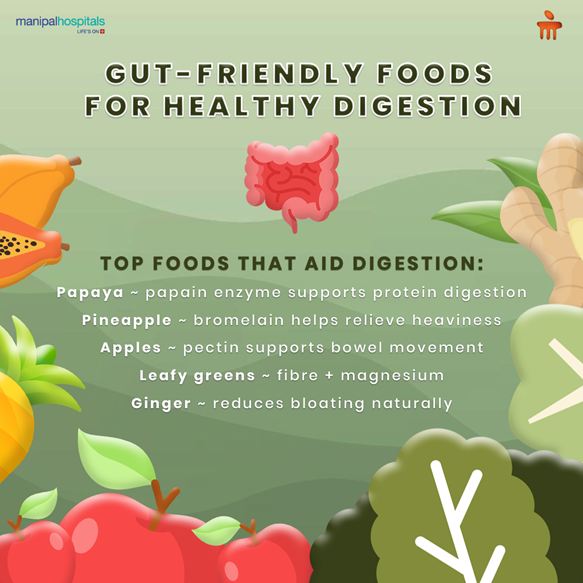
Papaya: It has papain, a natural enzyme that breaks down proteins.
-
Pineapple: Contains bromelain, great for smoother digestion.
-
Apple: The pectin in it supports bowel movement.
-
Leafy greens: Spinach, kale, and others are rich in fibre and magnesium.
-
Ginger: Calms bloating and helps with food digestion naturally.
These foods that aid digestion aren’t fancy or expensive. They’re everyday foods that simply work. Add a few to each meal and see how your body feels after a week or two.
Whole Grains and Legumes
Whole grains like brown rice and millets are long-lasting foods for digestion. They keep you full and steady without making you sluggish. Lentils, chickpeas, and beans are another excellent option. They’re gentle on the stomach when soaked and cooked well.
If you feel gassy after eating legumes, rinse and soak them before cooking. That one small step can make all the difference.
Balanced meals with grains and legumes are reliable foods that aid digestion and are a must for good gut care.
Healthy Fats: The Good Kind
The gut needs some healthy fat to function well. Fats from nuts, seeds, olive oil, and avocados help absorb vitamins and reduce inflammation. These are gentle, gut-friendly foods that support smoother digestion.
A drizzle of olive oil on salads or a handful of nuts as a snack keeps things balanced. It’s an easy and natural way to include foods for digestion in your day.
Eating Habits That Matter
What we eat is important, but how we eat matters too.
Here are a few things to remember:
-
Eat slowly and give your body time to respond.
-
Avoid stuffing yourself. Stop when you’re satisfied, not full.
-
Chew properly. It’s the first step of digestion.
-
Move a little after meals. Even a 10-minute walk helps foods that aid digestion work better.
-
Sleep enough. Tiredness affects how your gut functions.
Good habits make every bite count. When you treat your gut kindly, it rewards you with comfort and energy.
Learning to Listen to Your Gut
Your gut talks, quietly. It lets you know when something’s not right. Maybe you feel bloated after a certain food or sluggish after a big meal. Paying attention helps you figure out which foods for digestion work for you and which don’t.
Try noting down what you eat and how you feel after. Over time, you’ll see patterns. You’ll learn which gut-friendly foods make your body happy. It’s simple awareness that leads to lasting change.
When to See a Doctor
Mild acidity or bloating happens to everyone, but if it keeps coming back or lasts for days, it’s better to talk to a specialist. Digestive problems can also cause lower abdominal pain, often linked to gas, constipation, or irregular digestion. Continuous pain, changes in bowel habits, or persistent heartburn may signal an underlying issue and need medical attention.
A doctor can help you find what’s behind the discomfort and guide you on prebiotic foods and best foods for gut health suited to your condition.
Getting the right advice early means you can manage problems before they grow.
Building a Gut-Friendly Plate
You don’t need complicated meal plans. Just balance.
A good plate has:
-
A mix of high-fibre foods for digestion like fruits and vegetables.
-
A protein source such as lentils or eggs.
-
A touch of healthy fat.
-
A serving of prebiotic foods or something fermented.
This keeps your meals satisfying and gentle on your stomach. Over time, you’ll notice your body feeling lighter, your skin clearer, and your energy steadier.
Simple Gut-Friendly Meal Ideas
|
Meal |
Items |
|
Breakfast |
|
|
Lunch |
|
|
Dinner |
|
Small, mindful meals like these are loaded with foods that aid digestion and support a calm, steady gut rhythm.
A Calm Gut, A Happier You
Caring for your gut isn’t about rules or diets. It’s about kindness. It’s giving your system the right kind of foods for digestion, being mindful about how you eat, and listening when your body speaks.
Simple steps, like eating prebiotic foods, staying hydrated, and getting enough rest, can reset your gut in powerful ways. Over time, you’ll notice the change: lighter meals, better moods, smoother days.
A Warm Invitation to Better Gut Health
If your stomach has been feeling off lately, or you’ve been struggling with digestion, it might be time to get a clearer picture. The Department of Gastrointestinal Sciences at Manipal Hospitals Bhubaneswar has a team of specialists who understand what your gut needs. With the right care, your digestive health can feel peaceful again. You’re always welcome to visit us and begin that journey toward a calmer, stronger gut.
FAQ's
The best foods for digestion are those rich in fibre, water, and natural enzymes. Think of fruits like papaya, vegetables, whole grains, and curd. They help your gut work smoothly and make you feel lighter after meals.
Prebiotic foods feed the good bacteria in your gut. When these bacteria thrive, digestion becomes easier and smoother. Garlic, onions, and bananas are simple ways to support this balance.
Yes, fermented foods are great for your gut. They bring in friendly bacteria that support digestion and help reduce bloating. Yoghurt, pickles, and kefir are classic gut-friendly foods to add daily.
Go for light foods for digestion like cooked vegetables, rice, curd, and ginger tea. Avoid processed or fried food that slows down your system. Small, frequent meals work better than heavy plates
A healthy gut usually feels calm and regular. You have smooth digestion, steady energy, and fewer stomach upsets. Eating foods that aid digestion and staying hydrated are simple ways to keep it that way.
A healthy gut usually feels calm and regular. You have smooth digestion, steady energy, and fewer stomach upsets. Eating foods that aid digestion and staying hydrated are simple ways to keep it that way.
A healthy gut usually feels calm and regular. You have smooth digestion, steady energy, and fewer stomach upsets. Eating foods that aid digestion and staying hydrated are simple ways to keep it that way.
Share this article on:


_need_Surgery__Expert_Guide_.webp "Expert guide on gallbladder polyps and treatment options")