8 Min Read
The Union Budget 2026 marks a pivotal moment - a forward-looking blueprint for a healthier India, ushering in a new era of investment and strategic initiatives designed to accelerate medical innovation and make advanced care more accessible to all. This budget isn't just about numbers; it's about people, promising enhanced well-being and a healthier India.
As a leading healthcare provider, Manipal Hospitals Bangalore is committed to keeping you informed about the developments shaping the future of healthcare in India.
Synopsis
Union Budget 2026: Transforming Healthcare Accessibility and Affordability
The Union Budget 2026 has laid a strong foundation for a more equitable and robust healthcare system. With targeted allocations, the government aims to address some of the most critical challenges faced by patients, particularly in specialized areas like cancer care and rare diseases. At Manipal Hospitals Bangalore, we are optimistic that these initiatives will lead to improved health outcomes for millions in coming years.
Cancer Care: Relief on Medicines
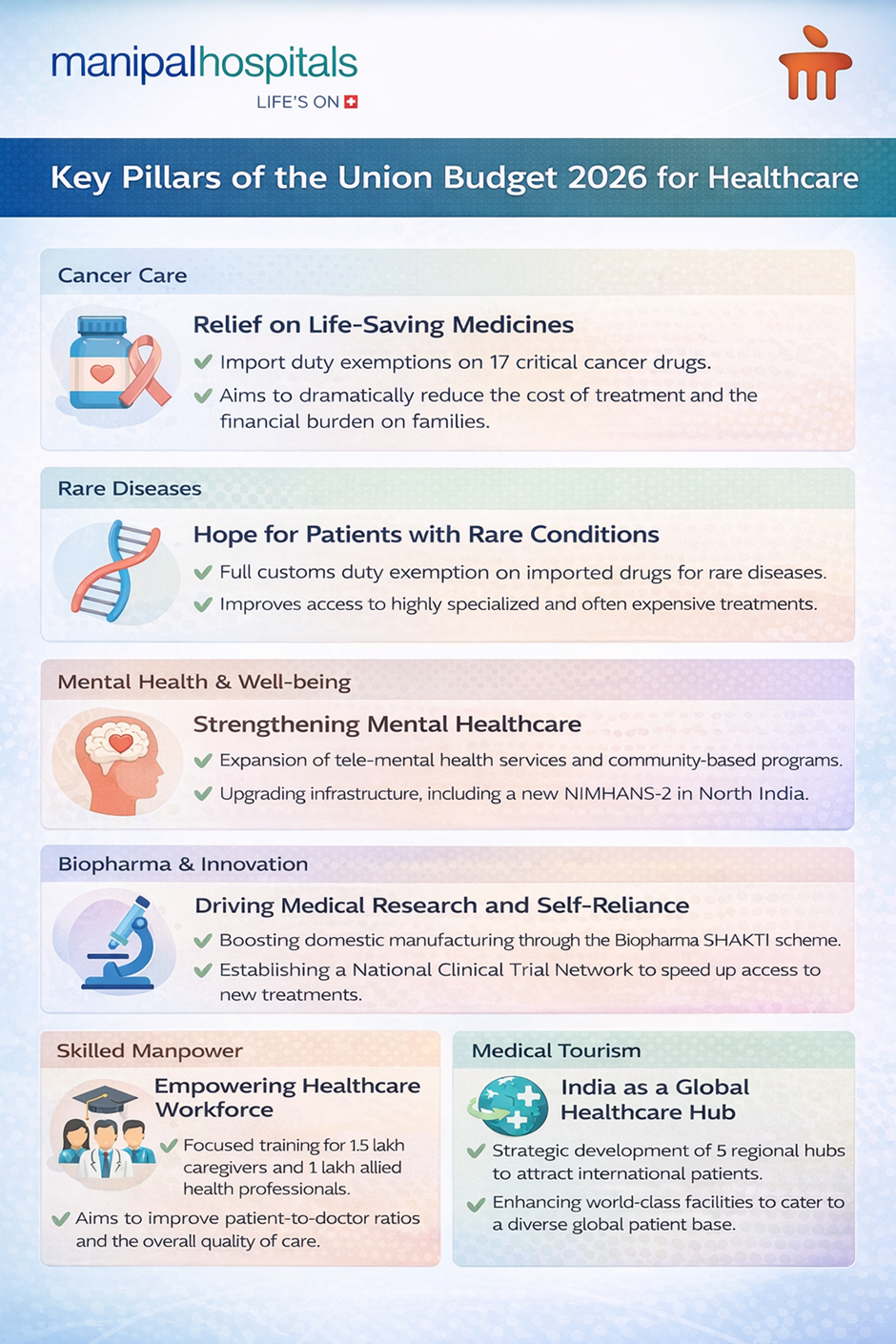
One of the most significant announcements is the provision of import duty exemptions on 17 cancer drugs. This strategic move is anticipated to dramatically reduce the cost of life-saving cancer treatments - an important step toward reducing the financial burden of cancer care in India. Historically, the high cost of imported cancer medicines has been a major barrier for many Indian families, making them unaffordable for a large number of patients. As a result, some patients are unable to complete their full course of treatment, which can directly impact outcomes.
This exemption could lead to a reduction of up to 15-20% in the cost of crucial cancer therapies, making advanced treatments accessible to an estimated 1 million additional patients annually. With continued efforts to lower costs and expand availability, there is hope that advanced, life-saving cancer treatments will no longer remain out of reach for patients who need them the most.
Rare Diseases
Another monumental step is the introduction of customs duty exemptions on rare disease drugs. Rare diseases often require highly specialized and expensive treatments, many of which are imported. This exemption will be a game-changer for patients suffering from these conditions, who often face immense financial strain.
This measure is expected to improve access to essential medications for over 50,000 patients with rare diseases across India, offering them a renewed hope for better quality of life and extended survival.
Mental Health and Well-being
Recognizing the growing importance of mental health, the Union Budget 2026 has made substantial allocations to strengthen mental healthcare services nationwide.
1. Expanding Mental Health Programmes
The budget emphasizes the expansion of comprehensive mental health programmes, focusing on increasing awareness, early detection, and accessible treatment options. This includes dedicated funding for tele-mental health services and community-based interventions.
With this increased investment, the government aims to expand mental health support to reach a wider audience, particularly in rural and underserved areas where diagnosis itself is very poor.
2. Strengthening Mental Health Infrastructure
Some funds are allocated for upgrading and building new mental health infrastructure. This includes establishing more dedicated mental health centers, including NIMHANS-2 in North India, modeled on the existing NIMHANS in Bengaluru.
The budget also introduces a nationwide 50% expansion of new emergency and trauma care centers in every district hospital. These facilities will ensure 24/7 access to critical medical services for all citizens.
Biopharma and Clinical Innovation
Under the scheme of Biopharma SHAKTI, allocations of ₹10,000 crores for over five years have been directed towards biopharma manufacturing, increasing domestic capabilities in biologics/biosimilars and building a vibrant ecosystem for medical research, development, and manufacturing. This will reduce reliance on imported drugs and critical medical supplies.
A National Clinical Trial Network
A core part of the budget's innovation push includes establishing a network of 1,000+ accredited clinical trial sites, streamlining regulatory processes and providing funding for research, and encouraging public-private partnerships in clinical research across the country.
For patients, it translates into earlier access to cutting-edge treatments through clinical trials and a more robust pipeline of innovative medicines becoming available in the market sooner.
India as a Global Medical Tourism Hub
The budget also acknowledges the immense potential of India in the global healthcare landscape. Strategic investments are planned to develop five regional hubs in partnership with states and the private sector to promote medical tourism and integrated care.
As a preferred destination for medical tourists, Manipal Hospitals Bangalore is poised to leverage these initiatives, further enhancing our world-class facilities and specialized services to cater to a diverse global patient base.
Empowering Skilled Healthcare Manpower
No healthcare system can thrive without a competent and dedicated workforce. The budget also makes it clear that training and upskilling skilled healthcare manpower plays a major role in achieving the goal of making India a global healthcare leader. This focus aims to train 1.5 lakh caregivers (specifically for geriatric and allied care) and 1 lakh allied health professionals to address the current demand-supply gap and improve patient-to-doctor ratios.
At Manipal Hospitals Bangalore, we believe in a holistic approach to health. The improved infrastructure will allow us to offer state-of-the-art facilities and a more integrated approach to mental health care, ensuring patients receive comprehensive support.
FAQ's
We anticipate a significant reduction in the cost of many imported cancer medications. Manipal Hospitals Bangalore will ensure these savings are passed on to our patients, making high-quality cancer care more accessible to all. For a better understanding, please discuss specific treatment plans and costs with our best oncologists in Bangalore.
The budget aims to expand access to mental health support. There will be more community-based initiatives, tele-mental health services, and improved facilities, including increased availability of specialized staff.
Absolutely. The customs duty exemptions on rare disease drugs are a major step towards making life-saving treatments more accessible for patients with rare non-communicable conditions.
Increased biopharma manufacturing within India means a greater supply of domestically produced drugs. This can lead to more competitive pricing, reduced reliance on imported drugs, and better availability of medicines, ultimately making treatments more accessible for all patients.
Investing in skilled healthcare manpower means more qualified doctors, nurses, and allied health professionals. This will lead to better patient-to-doctor ratios, reduced waiting times, enhanced quality of care, and access to a broader range of specialized services, ultimately improving the overall healthcare experience.
Share this article on: