7 Min Read
Stomach discomfort is common. Acidity, bloating, loss of appetite, most of us have experienced these at some point and ignored them. But what if persistent digestive symptoms are trying to tell you something more serious? In India, stomach cancer ranks as the fifth most common malignancy with over 70,000 new cases yearly. Stomach cancer does not usually begin with dramatic signs. It develops quietly over time, which is why awareness and timely medical evaluation matter.
In this blog, we will explore whether it is possible to prevent stomach cancer, the importance of screening for stomach cancer, and practical steps you can take to reduce your risk.
Synopsis
- What is Stomach Cancer?
- Can You Prevent Stomach Cancer Completely?
- Understanding the Risk Factors
- Practical Steps to Reduce Your Risk
- Why Screening Matters
- What Does Screening for Stomach Cancer Involve?
- Early Symptoms You Should Not Ignore
- Who Should Consider Regular Screening?
- The Role of Early Detection in Treatment Outcomes
- Is Prevention Really Possible?
- Conclusion
What is Stomach Cancer?
Stomach cancer, also known as gastric cancer, develops when the cells lining the inner wall of the stomach begin to grow abnormally and uncontrollably. The stomach plays a key role in digestion. It breaks down food and prepares it for absorption. When cancer develops here, it can gradually interfere with digestion and overall health. Most stomach cancers begin in the innermost lining of the stomach. Over time, if left untreated, the disease can grow deeper into the stomach wall and may spread to nearby lymph nodes or other organs.
The challenge is that the early stages often cause vague symptoms. You may notice mild indigestion, feel full after small meals, or have occasional nausea. Those are easy to shrug off. Because of that, diagnosis sometimes happens later than ideal. The good news is that with awareness, risk reduction, and appropriate screening for stomach cancer, early detection is possible.
Can You Prevent Stomach Cancer Completely?
This is one of the most common questions people ask. The answer is more nuanced. Some risk factors, such as age, family history, or certain inherited genetic conditions, can’t be changed. Many other risks, though, are in your control. That means you can take practical steps now to lower the chances of disease later.
While no single action guarantees you will prevent stomach cancer, a combination of lifestyle changes and medical care can substantially reduce risk. Think of prevention as stacking small protections rather than searching for a single magic fix.
Prevention is not about fear. It’s about making informed choices and getting timely medical guidance.
Understanding the Risk Factors
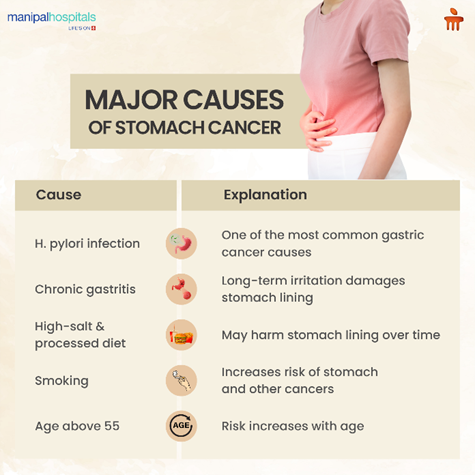
To reduce risk, you first need to know what increases it. Stomach cancer usually develops because of long-term irritation, inflammation, and gradual genetic changes in the stomach lining. Here are some known risk factors:
|
Risk Factor |
Explanation |
|
Helicobacter pylori (H. pylori) Infection |
This bacterial infection is one of the strongest risk factors. It causes chronic inflammation of the stomach lining and, over many years, may lead to precancerous changes. The important part is that H. pylori can be detected and treated with antibiotics. |
|
Diet High in Salted and Processed Foods |
Eating a lot of heavily salted, smoked, or preserved foods can damage the stomach lining over time. Diets low in fresh fruit and vegetables are also linked with a higher risk. |
|
Tobacco Use |
Smoking affects more than your lungs. It raises the risk of several cancers, including stomach cancer. |
|
Family History |
If a close relative has had stomach cancer, your risk may be higher. In those situations, medical guidance about stomach cancer screening becomes especially important. |
|
Chronic Gastritis or Stomach Conditions |
Long-standing inflammation or other chronic stomach conditions can slowly cause changes that increase cancer risk. |
Knowing these factors helps you focus on the steps that matter.
Practical Steps to Reduce Your Risk
Reducing risk does not require drastic measures. Small, consistent changes can make a meaningful difference. Below are some of the steps you can take to reduce your risk:
-
Treat H. pylori Promptly
If indigestion or other symptoms don’t settle, ask your doctor about testing for H. pylori. Treating this infection early can lower the chance of long-term complications.
-
Improve Dietary Habits
Aim for more fresh fruits, leafy vegetables, and fibre-rich foods. Try to cut back on smoked, pickled, and heavily processed items. Over time, these shifts support a healthier stomach environment.
-
Quit Smoking
Stopping tobacco reduces the risk of many cancers, and the benefits start sooner than you might think. Even people who have smoked for years gain from quitting.
-
Moderate Alcohol Consumption
Heavy alcohol use irritates the stomach lining. Keeping intake moderate helps overall digestive health.
-
Regular Medical Check-Ups
If you notice unexplained weight loss, persistent indigestion, early fullness, dark stools, or any symptom that won’t go away, don’t wait. Early evaluation improves the chances of finding problems when they’re easiest to treat.
While these steps can’t promise you will completely prevent stomach cancer, they substantially lower the odds and help with earlier detection if something does develop.
Why Screening Matters
Screening means checking for disease before symptoms become severe. In stomach cancer, early detection dramatically improves outcomes.
In countries where regular stomach cancer screening is widely practised, survival rates are better because cancers are often found at an earlier stage. Early-stage disease usually needs less extensive treatment and carries a better long-term outlook. Detecting cancer early doesn’t just improve survival statistics. It often means gentler treatment and a quicker recovery.
What Does Screening for Stomach Cancer Involve?
The most common and reliable method is an upper gastrointestinal endoscopy.
During this procedure:
-
A thin, flexible tube with a camera is passed gently through the mouth into the stomach.
-
The doctor looks directly at the stomach lining.
-
If something suspicious is seen, a small biopsy sample can be taken.
The test is usually done under sedation so you’re comfortable, and most people go home the same day. Depending on your situation, imaging scans or other specialised tests may be recommended as well.
Early Symptoms You Should Not Ignore
Even when screening is available, being symptom-aware matters. Early stomach cancer might cause:
-
Persistent indigestion
-
Feeling full quickly after small meals
-
Mild but ongoing stomach discomfort
-
Unexplained fatigue
-
Loss of appetite
Later signs can include weight loss, vomiting, difficulty swallowing, or blood in stools. If symptoms persist for more than two weeks, a medical check-up is sensible. Don’t wait for dramatic pain — stomach cancer doesn’t always present loudly.
Who Should Consider Regular Screening?
Not everyone needs routine stomach cancer screening. It’s usually advised for higher-risk people. Discuss screening with your doctor if you:
-
Have a strong family history of stomach cancer
-
Are over 50 with persistent digestive complaints
-
Were previously found to have precancerous stomach changes
-
Have chronic H. pylori infection
The Role of Early Detection in Treatment Outcomes
When stomach cancer is found early, it’s often limited to the inner lining of the stomach. In those cases:
-
Surgery may be less extensive
-
Recovery tends to be smoother
-
Long-term outcomes are significantly better
If diagnosis is delayed, treatment typically becomes more complex and may combine surgery with chemotherapy or radiation. That’s why risk reduction and timely screening for stomach cancer go hand in hand. Consult top gastro specialists in Bangalore and schedule your screening and preventive care.
Is Prevention Really Possible?
You may not be able to control every risk factor. But you can control many of them. By addressing infections early, maintaining a balanced diet, avoiding tobacco, and seeking medical advice for persistent symptoms, you move closer to reducing your overall risk.
While no strategy can guarantee you will completely prevent stomach cancer, informed action gives you the best chance of protecting your health. Prevention is not about anxiety. It is about paying attention to your body and responding wisely.
Conclusion
Stomach cancer often develops silently, which makes awareness and early evaluation crucial. Understanding what stomach cancer is, recognising risk factors, and knowing when to consider stomach cancer screening empowers you to take control of your health. You may not be able to eliminate the risk entirely. But through healthy lifestyle choices, prompt treatment of infections, and appropriate screening for stomach cancer, early detection becomes possible.
If you have persistent digestive symptoms and are considering stomach cancer screening in Bangalore, consult Manipal Hospitals Bangalore. We can advise whether screening is right for you based on your history and risk profile.
FAQ's
Yes, lifestyle modifications such as quitting smoking, reducing processed foods, treating H. pylori infection (a type of bacteria linked to stomach issues), and maintaining a balanced diet can significantly lower risk, although they may not completely prevent stomach cancer in every case.
Upper gastrointestinal endoscopy is the most reliable test. It allows direct visual examination of the stomach lining and enables biopsy if required.
There is no single age for everyone. Screening is usually advised for high-risk individuals, especially those above 50 or with a strong family history.
The procedure is generally done under sedation. Most patients feel minimal discomfort and recover quickly.
Individuals with persistent digestive symptoms, a family history, or known risk factors should consult a specialist to determine if screening is appropriate for them.
Share this article on: