9 Min Read
Most people experience stomach discomfort at some point. A heavy meal, spicy food, irregular eating hours, stress, or simple acidity can all leave you feeling bloated or uneasy. Because these symptoms are so common, they are often ignored. But when discomfort becomes frequent or starts changing in pattern, it deserves attention.
Understanding the causes of stomach cancer does not necessitate a pessimistic outlook. It is about recognising patterns that may increase risk over time. Stomach cancer, also called gastric cancer, develops when the cells lining the stomach begin to grow in an uncontrolled way. The growth usually happens gradually. In many cases, the stomach lining undergoes years of irritation or inflammation before cancer develops.
In this blog, we will look at the most important risk factors for stomach cancer, explore whether genetics plays a role, and understand what might increase your chances of developing this condition in Bangalore.
Synopsis
What Exactly Happens in Stomach Cancer?
The stomach has a specialised inner lining designed to protect it from strong digestive acids while helping break down food. Under normal circumstances, the cells in this lining grow, repair themselves, and function in a highly controlled way. However, if infection, inflammation, or environmental influences repeatedly irritate the lining, these cells may undergo changes. Over time, the usual repair processes can go awry, and abnormal cells may multiply.
For many people, stomach cancer follows a gradual path:
-
Long-standing inflammation can lead to chronic gastritis, a persistent irritation of the stomach lining.
-
That may progress to intestinal metaplasia, where stomach cells begin to take on features of intestinal cells.
-
Further abnormal changes, called dysplasia, can eventually turn into cancer.
Because this process often takes years, identifying risk factors early provides an opportunity to intervene and reduce the likelihood of disease progression. This is why identifying the causes of stomach cancer early can help reduce risk and improve outcomes.
Common Causes and Risk Factors
There is rarely a single reason why someone develops stomach cancer. Instead, it is usually a combination of factors that slowly increase risk.
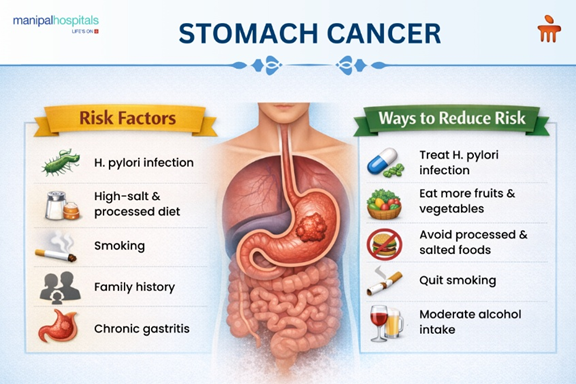
1. Helicobacter pylori Infection
One of the most recognised gastric cancer causes is infection with a bacterium called Helicobacter pylori (H. pylori). This organism lives in the stomach lining and can cause chronic inflammation.
Many people with H. pylori infection have no symptoms. However, over time, persistent inflammation can damage the stomach lining and increase cancer risk. Treating this infection early significantly lowers the chances of complications.
2. Long-Term Gastritis
Chronic irritation of the stomach lining can lead to cellular changes. Conditions that cause ongoing inflammation, including untreated H. pylori infection or autoimmune gastritis, may gradually increase the risk factors for stomach cancer.
3. Diet and Eating Habits
What you eat regularly matters more than occasional indulgence. Diets high in:
-
Salted and smoked foods
-
Processed meats
-
Pickled items
-
Preserved foods
have been linked to higher rates of stomach cancer. These foods may damage the stomach lining over time.
On the other hand, diets rich in fresh fruits, vegetables, and fibre appear protective. The balance in your everyday meals plays a bigger role than you may realise when it comes to the causes of stomach cancer.
4. Smoking
Smoking does not only affect the lungs. Harmful chemicals from tobacco enter the bloodstream and can damage multiple organs, including the stomach.
Smokers have a significantly higher risk compared to non-smokers. The longer and heavier the smoking history, the greater the risk.
5. Family History and Genetics
A common concern people have: Is stomach cancer hereditary? In most cases, stomach cancer is not directly inherited. However, having a close family member with the disease can increase your risk. Certain rare genetic syndromes, such as hereditary diffuse gastric cancer, can run in families.
So while not all cases are inherited, genetics can play a role in specific situations. If multiple family members have had stomach or related cancers, it is wise to discuss screening with your doctor.
6. Previous Stomach Surgery
People who have had partial stomach removal surgery in the past may have a slightly higher risk many years later. Changes in stomach acid and bile flow can affect the lining over time.
7. Pernicious Anaemia
This condition affects vitamin B12 absorption and leads to long-term inflammation of the stomach lining. Chronic changes like this may increase susceptibility.
8. Age and Gender
Stomach cancer becomes more common after about age 55, and it is generally more common in men than in women. Age itself isn’t the cause, but the longer someone is exposed to risk factors, inflammation, dietary patterns, and smoking, the greater the chance of developing the disease.
Early Warning Signs to Watch For
One of the challenges with stomach cancer is that early symptoms are often subtle. They do not usually announce themselves dramatically. Instead, they blend into everyday digestive complaints. In the beginning, you might notice:
-
Persistent indigestion
-
Feeling unusually full after small meals
-
Mild discomfort in the upper abdomen
-
Reduced appetite
-
Unexplained tiredness
Indigestion and bloating are so common that many people ignore them. And in most cases, these symptoms are caused by harmless issues. The difficulty lies in recognising when something feels different, when symptoms linger, slowly intensify, or stop responding to usual remedies.
As the disease progresses, signs may become harder to overlook. These can include:
-
Vomiting
-
Difficulty swallowing
-
Black or tarry stools
-
Persistent abdominal pain
The goal is not to panic over every episode of acidity. It is to notice patterns. If something persists, evolves, or feels out of character for your body, it deserves attention.
Who Should Be More Careful?
Some individuals carry a higher risk of developing stomach cancer and may benefit from closer medical monitoring. You may need to be more cautious if you:
-
have a strong family history of stomach cancer
-
have long-standing H. pylori infection
-
experience chronic gastritis
-
smoke regularly
-
frequently consume highly salted or processed foods
-
have previously undergone stomach surgery
For individuals asking if stomach cancer is hereditary, the answer depends on family patterns. A single relative with stomach cancer does not automatically mean you will develop it. But multiple affected family members may require closer monitoring.
To know more about Stomach Cancer Click Here
How Doctors Assess Risk
If someone has ongoing symptoms or known risk factors for stomach cancer, doctors may recommend:
-
Endoscopy: A thin, flexible tube with a camera is used to examine the stomach lining directly.
-
Biopsy: Small tissue samples may be taken during endoscopy to check for abnormal cells.
-
H. pylori testing: Breath, blood, or stool tests can detect infection.
Endoscopy is particularly valuable because it allows doctors to detect early changes in the stomach lining before cancer becomes advanced.
Is Stomach Cancer Always Preventable?
Not entirely. Some risk factors for stomach cancer cannot be changed, such as age or inherited genetic conditions. But many others can be managed.
You can lower your risk by:
-
Treating H. pylori infection promptly
-
Avoiding tobacco use
-
Limiting heavily processed and smoked foods
-
Maintaining a balanced diet
-
Seeking medical advice for persistent digestive symptoms
Understanding the causes of stomach cancer gives you an opportunity to take control where possible.
Conclusion
Stomach cancer develops slowly, often over many years. The causes of stomach cancer usually involve a combination of infection, chronic inflammation, dietary patterns, lifestyle factors, and sometimes genetics. While some risks cannot be changed, many can be reduced through practical steps and timely medical care. If you have persistent digestive symptoms, a strong family history, or concerns about is stomach cancer hereditary in your case, it is best to seek medical guidance. Book a consultation with Manipal Hospital Bangalore today for any concerns. Early evaluation can make a meaningful difference.
FAQ's
Occasional acidity is very common and usually mild. But if your symptoms keep returning, change in intensity, or do not improve with basic treatment, it is wise to consult a doctor. Persistent patterns matter more than isolated episodes.
Not necessarily. Most cases are not purely genetic. Lifestyle, infection, and long-term inflammation play a larger role. Even without a family history, persistent symptoms should not be ignored.
No. Many people with H. pylori never develop cancer. However, leaving it untreated for years can increase the risk of developing stomach cancer or other serious gastrointestinal issues. Early diagnosis and proper treatment significantly reduce complications and protect the stomach lining from long-term damage.
You do not need drastic changes overnight. But gradually reducing heavily salted, smoked, and processed foods can help lower long-term risk of stomach-related issues, such as hypertension and digestive disorders. Small, steady improvements in your diet can positively influence your overall stomach health.
If you notice ongoing indigestion, early fullness, unexplained weight loss, vomiting, or discomfort that lasts several weeks, do not delay evaluation. Getting checked does not mean something is wrong. It simply gives you clarity and peace of mind.
Share this article on: