8 Min Read
Been ignoring a slight change in your body because you thought it was just stress or ageing? Many people do, and those tiny changes can sometimes be early cancer warning signs. In this blog, we look at the triggers linked to the modern Indian lifestyle, show the warning signs to watch for, and offer practical steps for cancer prevention that are realistic and evidence-based.
Synopsis
Cancer Rate Increases in India: Why Lifestyle Matters Now
India is changing fast. Urban living, round-the-clock work schedules, more processed food, and widespread tobacco and alcohol use mean that lifestyle plays a big role in cancer rates. Some risks are familiar, such as smoking and chewing tobacco. Others are emerging or less obvious, such as obesity, poor diet, air pollution, and delayed childbearing. When we talk about tobacco and cancer, we mean the many cancers, not only lung cancer, that tobacco and smokeless forms cause.
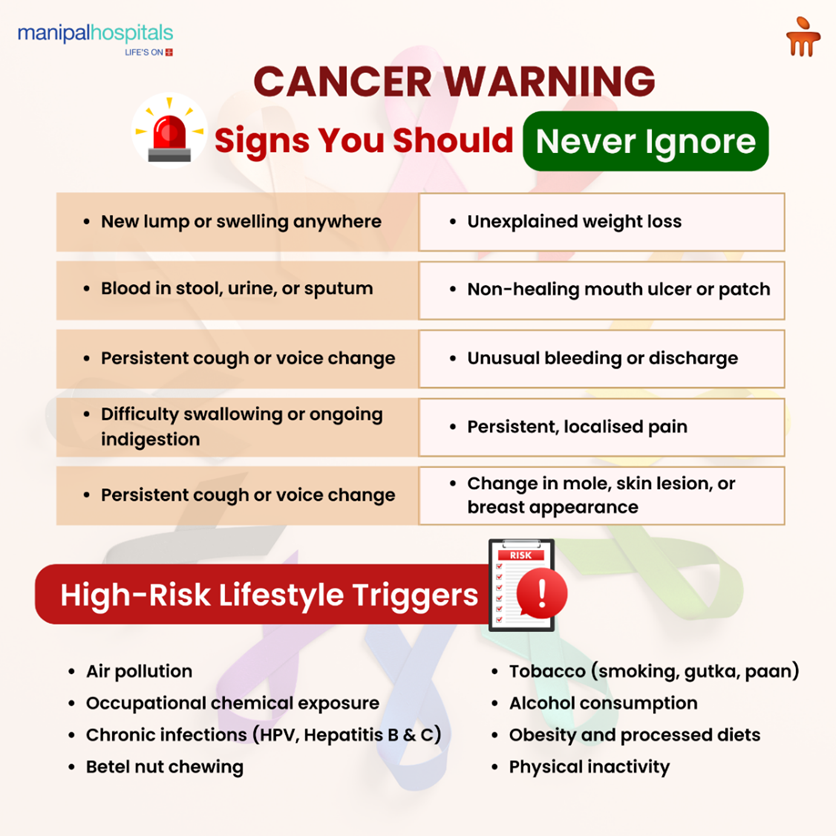
When we mention alcohol and cancer risk, we include liver cancer and several other cancers where alcohol plays a clear part. The good news is that many risks are preventable or modifiable.
Common Early Cancer Warning Signs to Watch For
Early detection saves lives. These cancer warning signs are not proof of cancer, but they are signals you should not ignore. See a doctor promptly if any persist for more than two weeks.
|
Warning Sign |
What It Indicates |
What To Do |
|
A new lump or swelling |
Breast, thyroid, lymph nodes, soft tissue tumours |
Get it examined by a clinician and imaged if needed |
|
Many cancers, especially stomach, pancreatic, and lung |
Urgent evaluation and basic tests |
|
|
Persistent change in bowel habit or blood in stool |
Colorectal cancer |
Stool test, colonoscopy referral |
|
Blood in urine |
Bladder, kidney cancers |
Urine test and imaging |
|
Persistent cough or hoarseness |
Lung, laryngeal cancer |
Chest X-ray, ENT, and pulmonary review |
|
Nonhealing mouth ulcer or change in mouth tissue |
Oral cancer, especially with tobacco and paan use |
Dental or ENT evaluation, biopsy if needed |
|
Unexplained bleeding or discharge |
Cervical, endometrial, and gastrointestinal cancers |
Gynaecology or gastroenterology review |
|
New difficulty swallowing or persistent indigestion |
Oesophageal, stomach cancers |
Endoscopy referral |
|
Persistent bone pain or unusual localized pain |
Bone metastasis or primary bone lesions |
Orthopaedic or oncology evaluation |
If any of the cancer warning signs persist for more than 2 weeks, seek medical advice. Early tests are usually simple blood tests, imaging, followed by a consultation with a cancer specialist in Bangalore. If you have a strong family history of cancer or known exposure risks, talk to your doctor about earlier or more frequent screening.
Modern Indian Triggers: What Raises Your Risk of Cancer
Below are lifestyle and environmental factors common in India that raise cancer risk. Understanding them helps with practical cancer prevention.
|
Trigger |
How It Raises Cancer Risk |
Practical Prevention |
|
Tobacco (smoked and smokeless) |
Direct carcinogens that cause mouth, throat, lung, oesophagus, bladder, and other cancers. This is the central cause of tobacco cancer. |
Quit tobacco. Seek counselling, nicotine replacement, or medical support. Avoid passively inhaled smoke. |
|
Alcohol use |
Alcohol contributes to cancers of the mouth, throat, liver, breast, and colon. Quantity and frequency matter. This is what we mean by alcohol and cancer risk. |
Reduce or avoid alcohol. Prefer alcohol-free social options. |
|
Poor diet and obesity |
High-calorie, low-fibre diets and excess weight raise the risk of colorectal, breast (postmenopausal), endometrial, and other cancers. |
Eat more vegetables, fruit, whole grains, and reduce processed foods and sugary drinks. Maintain a healthy weight. |
|
Air pollution |
Fine particles and pollution are linked to lung cancer and may worsen overall risk. |
Reduce exposure where possible, use masks on high-pollution days, and support clean-air initiatives. |
|
Occupational exposures |
Certain chemicals, asbestos, and industrial fumes are carcinogenic. |
Use workplace safety, protective gear, and follow regulations. |
|
Infections |
HPV causes cervical and some head and neck cancers; Hepatitis B and C cause liver cancer; H. pylori raises gastric cancer risk. |
Vaccination (HPV, Hep B), safe practices, and treatment of infections. |
|
Sedentary lifestyle |
Low physical activity increases risk for several cancers. |
Aim for at least 150 minutes of moderate activity a week. |
|
Betel nut and paan |
Strongly linked to oral and oropharyngeal cancers. |
Avoid chewing betel nut, paan with tobacco. |
Why Tobacco and Alcohol Deserve Special Attention?
Tobacco remains the single largest preventable cause of cancer globally and in India. Smokeless tobacco, such as gutka and paan with tobacco, is particularly associated with oral cancers. That link is the heart of the phrase tobacco cancer. Quitting tobacco reduces the risk of many cancers over time.
Alcohol acts as a carcinogen in multiple ways. It increases estrogen levels, damages DNA during metabolism, and works with tobacco to multiply cancer risk. The expression alcohol and cancer risk reflects that even moderate levels increase risk for certain cancers. Cutting down or quitting lowers those risks.
Cancer Screening and Early Detection
Screening finds disease early, when it is most treatable. Recommended approaches relevant to India include:
-
Oral screening for people who use tobacco or betel nut, with regular dental checks.
-
Cervical screening with Pap smear or HPV testing for women. HPV vaccination for adolescents reduces future cancer risk.
-
Breast awareness and mammography for women according to age guidelines.
-
Colorectal screening for adults over a certain age, using stool tests or colonoscopy when indicated.
-
Lung screening (low-dose CT) in high-risk heavy smokers, where available and appropriate.
Screening is just one piece of cancer prevention. It must be combined with risk reduction.
Practical Steps You Can Start Today
-
Stop tobacco in all forms. Get help from a doctor or cessation service.
-
Drink less alcohol. If you drink, keep it occasional and limited.
-
Keep a healthy weight, move regularly, and choose whole foods.
-
Protect against infections: HPV and Hepatitis B vaccination, where eligible. Practice safe eating and hygiene.
-
Know the cancer warning signs in the table above and do not delay seeing a doctor.
-
Attend recommended screening programmes for your age and risk group.
-
Limit exposure to polluted air where possible and advocate for safer work conditions.
Conclusion
In the modern Indian lifestyle, small habits add up. Tobacco cancer and alcohol and cancer risk are preventable contributors to a large share of cancers. Being aware of cancer warning signs, getting screened at the right time, and making achievable lifestyle changes are the most powerful strategies for cancer prevention. Timely action starts with awareness, and awareness starts with noticing the small changes in your body that matter. For expert guidance and comprehensive screening, visit Manipal Hospitals Bangalore to take proactive steps towards your health.