




 7 Min Read
Knee pain is a common problem that can affect people of all ages and lifestyles. The knee, being the largest and most complex joint of the body, supports your weight, absorbs shock, and lets you walk, climb stairs, bend, and run. Because of its constant use in daily activities, the knee is highly susceptible to injury, degeneration, and inflammation. Spotting symptoms early, getting the right treatment, and doing specific exercises can help you move better and improve your quality of life. This blog will educate you on common causes of knee pain, symptoms to watch for, and the various treatment options available.
Synopsis
What Makes Your Knees Hurt?
The knee is a complex joint made up of bones, cartilage, ligaments, tendons, and fluid-filled sacs. Injury or inflammation in any of these parts can lead to pain. Identifying the cause of your knee pain is the first step to effective treatment.
Common Reasons for Knee Pain
Some of the most common reasons are:
|
Causes |
Description |
|
Osteoarthritis |
Age‑related wear and tear of cartilage leads to pain, swelling, and stiffness. |
|
Ligament Injuries |
Sports injuries to the ACL, PCL, or MCL cause instability and sharp pain. |
|
Meniscus Tears |
Twisting movements damage cartilage between the thigh and shin bones. |
|
Tendinitis |
Repetitive strain inflames tendons around the knee. |
|
Bursitis |
Bursitis is the inflammation of fluid-filled sacs (bursae) in the joint. |
|
Patellofemoral Pain Syndrome |
Pain originating from abnormal tracking or overload of the kneecap against the femur is commonly seen in runners and young adults. |
How is Knee Pain Diagnosed?
Diagnosis combines a careful history, focused physical examination, and targeted investigations. The following are some of the common diagnostic tests:
|
Test |
Purpose |
|
X-ray |
Detects arthritis, fractures, and joint space narrowing |
|
MRI |
Detailed view of ligaments, menisci, cartilage, and bone marrow |
|
Ultrasound |
Dynamic assessment of tendons, bursae, and effusions |
|
Blood tests |
Screen for infection, gout, and inflammatory arthritis |
|
Joint aspiration |
Fluid analysis for infection or crystal disease |
A structured clinical exam often points to the problem and the correct imaging study, avoiding unnecessary tests.
Identifying Knee Pain Symptoms
Recognising knee pain symptoms early can help prevent the progression of joint damage and guide timely medical care. Common signs patients may experience include:
Swelling and joint stiffness.
-
Warmth or redness around the knee.
-
Popping, clicking, or grinding sensations during movement.
-
A feeling of instability or weakness.
-
Difficulty fully straightening or bending the knee.
-
Pain while walking, climbing stairs, or bearing weight.
Home Remedies for Knee Pain
-
Mild knee discomfort caused by minor strain, overuse, or temporary inflammation may improve with conservative measures at home. These strategies can support recovery and relieve symptoms in the early stages.
-
R.I.C.E. Protocol: Resting the joint, applying ice for 15–20 minutes at a time, using compression, and keeping the knee elevated can help control pain and swelling. This is often recommended as an initial step in care.
-
Over-the-counter Medications: Short-term use of paracetamol or NSAIDs may relieve pain, but they should be taken under medical advice.
-
Weight Optimisation: Maintaining an appropriate body weight reduces load across the knee joint and may lessen ongoing stress and discomfort.
-
Supportive Footwear: Shoes with adequate cushioning and alignment support can improve posture and reduce pressure transmitted to the knees.
Knee Pain Exercises for Quick Recovery
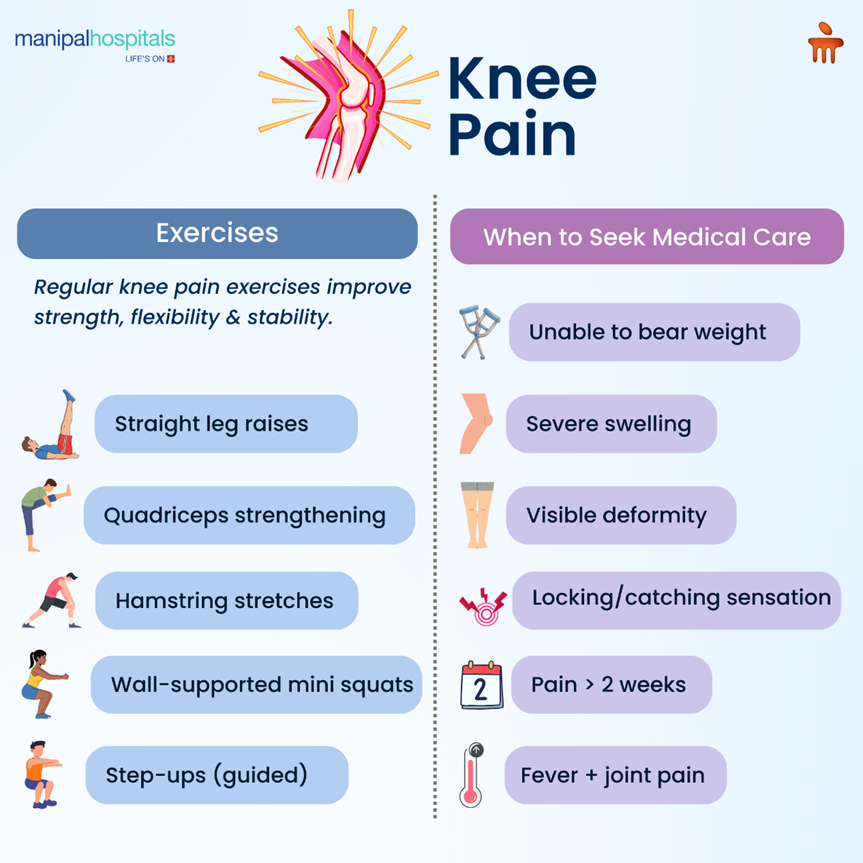
Structured knee pain exercises are very important for both rehabilitation and long-term treatment, as they help restore joint motion, strengthen supporting muscles, and reduce pain. Recommended knee pain exercises include:
-
Straight leg raises: Improves mobility and strengthens thigh muscles.
-
Quadriceps strengthening: Supports the knee and reduces pain while standing or walking.
-
Hamstring stretches: Reduce stiffness and improve flexibility of muscles.
-
Mini squats with wall support: These partial squats strengthen leg and hip muscles.
-
Step-ups (guided by a physiotherapist): Step up and down on a raised platform, improving everyday mobility.
Do these exercises slowly and regularly as guided by a physiotherapist. Avoid exercises if severe swelling, instability, or suspected ligament injury is present without medical evaluation.
Common Treatment Options
Management is guided by the underlying diagnosis, severity of symptoms, and the patient’s functional goals. After a detailed evaluation, knee pain treatment may include the following approaches.
|
Category |
Details |
|
Medications |
Pain relievers (analgesics), anti‑inflammatory medicines (NSAIDs) |
|
Physiotherapy |
Supervised rehabilitation to improve movement, muscle balance, and joint stability. |
|
Injections |
Corticosteroid and Viscosupplementation (hyaluronic acid) |
|
Regenerative Therapy |
Platelet-Rich Plasma (PRP) therapy |
|
Arthroscopic Surgery |
Minimally invasive procedure to repair ligaments or the meniscus |
|
Knee Replacement Surgery |
Partial or total knee replacement is considered when advanced arthritis causes severe pain and functional limitation despite conservative treatment |
We aim to provide step-by-step, evidence-based knee pain treatment in Bangalore, starting with conservative care before considering surgery.
Comprehensive Care Starts with Early Detection
Early recognition of knee problems allows doctors to intervene before joint damage progresses. Identifying risk factors and subtle warning signs can improve recovery, protect mobility, and reduce the risk of chronic limitations.
Several factors increase the likelihood of developing knee pain:
-
Advancing age and gradual degeneration of joint cartilage.
-
Excess body weight, which increases the mechanical load across the knee.
-
Physical inactivity that weakens muscles supporting the joint.
-
Participation in high-impact sports or repetitive stress activities.
-
Previous trauma, ligament injury, or surgery.
When to Seek Medical Attention
While minor discomfort may improve with rest and self-care, certain symptoms require prompt medical evaluation. Seek professional attention if you experience:
-
Inability to bear weight on the affected limb
-
Marked swelling or rapidly increasing inflammation
-
Visible deformity of the joint
-
Locking, catching, or mechanical restriction of movement
-
Pain that persists beyond two weeks despite conservative care
-
Fever occurring along with joint pain.
-
Sudden severe pain after injury
-
Suspected fracture
-
Signs of infection (high fever, chills)
Early assessment supports accurate diagnosis and timely initiation of appropriate knee pain treatment.
Conclusion
Knee pain can make daily activities, movement, and independence difficult. Start by learning the common causes, recognising early signs, and using appropriate home measures to manage knee pain. If your symptoms last a long time or are severe, you should see a doctor. At Manipal Hospitals Bangalore, we provide advanced, personalised knee pain treatment in Bangalore with expert diagnosis, the latest technology, and patient-focused care. Our goal is to help every patient feel better, get stronger, and move with confidence.
FAQ's
Osteoarthritis, ligament injuries, meniscus tears, tendinitis, and bursitis are often the common causes of knee joint pain. These conditions affect flexibility and cause discomfort while doing daily chores.
Swelling, stiffness, instability, and trouble walking are all common signs of knee pain. Some patients experience redness, warmth, or a clicking sound in their knee, affecting everyday tasks.
Home remedies for knee pain include ice packs, moderate stretching, and supportive braces that could help mild cases. However, if your knee pain keeps recurring, you need to consult a doctor to undergo therapies and treatment to avoid the recurrence of the symptoms.
The exercises usually help, such as leg raises, stretching of hamstrings, strengthening of quadriceps, and mini squats, which enhance muscle support and joint stability. These should be done under expert guidance to avoid injury.
Our orthopaedic doctors at Manipal Hospitals Bangalore will attend to all kinds of knee pain you may suffer from. We have advanced diagnostic and treatment facilities supported by robotics and AI navigation to restore mobility with minimum muscular discomfort.
Share this article on:




