7 Min Read
.webp "How Sleep Deprivation Affects Blood Sugar and Increases Diabetes Risk")
Have you ever stayed up late to finish work, watched just one more episode, or been kept awake, and the next day felt foggy, cranky, and unusually hungry? Those familiar experiences are more than a short-term nuisance. Over weeks and months, sleep deprivation changes how your body handles glucose, nudges your appetite toward unhealthy choices, and shifts hormones in ways that raise your long-term risk of type 2 diabetes. This article explains that skimping on sleep is not just tiring; it is a measurable diabetes risk factor that deserves attention if you care about lifelong health.
Synopsis
- How Does Poor Sleep Affect Blood Sugar?
- The Evidence: Short Sleep, Bigger Risk
- Who Is Most Vulnerable?
- How Sleep Patterns Affect Diabetes Risk
- Practical Ways Sleep Deficit Drives Diabetes Risk
- What You Can Do: Sleep Strategies That Help Prevent Diabetes
- Integrate Sleep into Your Diabetes Prevention Plan
- When to See a Doctor?
- Conclusion
How Does Poor Sleep Affect Blood Sugar?
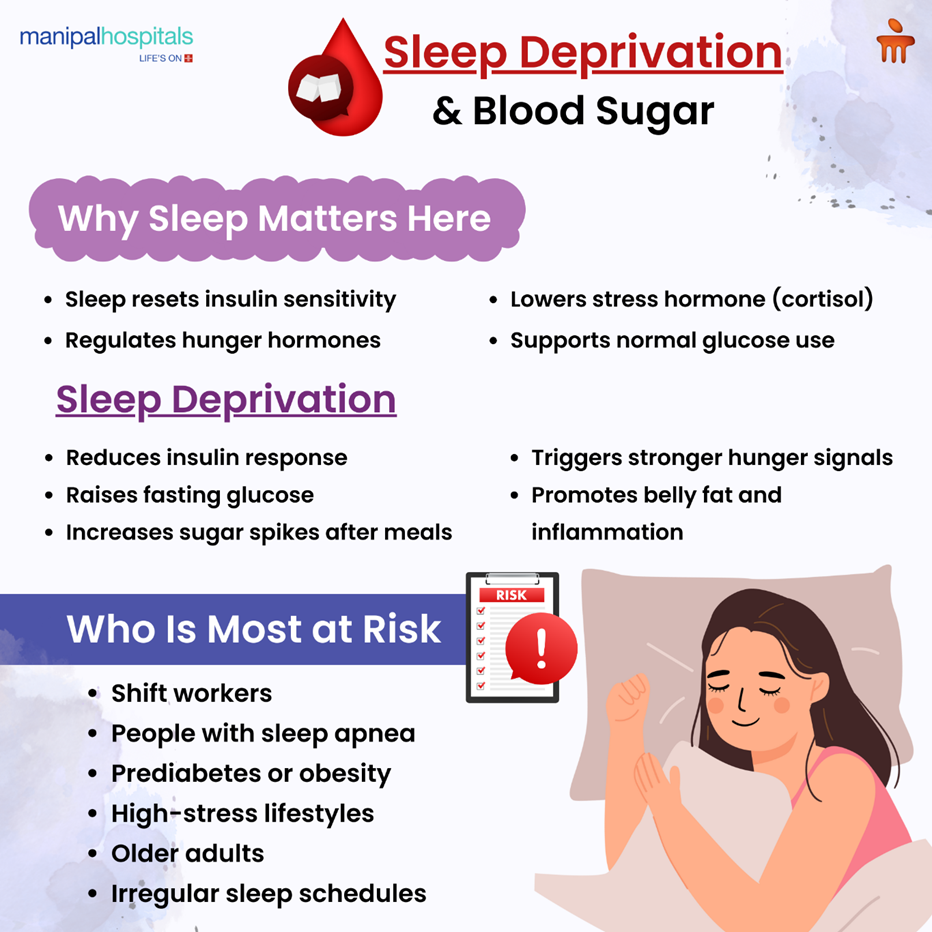
Sleep and metabolism are intimate partners. When you sleep, your body clears metabolic “noise”: it balances insulin sensitivity, repairs tissues, and regulates appetite hormones. When you miss sleep, this housekeeping falters. Research shows that even a few nights of poor sleep reduce insulin sensitivity, which means your cells respond less well to the hormone insulin that normally clears glucose from the bloodstream. This condition leads to higher fasting glucose, bigger post-meal blood sugar spikes, and a steady drift toward insulin resistance.
Beyond the immediate metabolic effects, sleep deprivation raises cortisol, the stress hormone, which pushes the liver to produce more glucose. It also alters the balance of ghrelin and leptin, hormones that increase hunger and reduce satiety.
The combined effect is a biological nudge to eat more, crave high-calorie foods, and store more fat, all processes that feed into the cluster of diabetes risk factors.
The Evidence: Short Sleep, Bigger Risk
Multiple studies show a consistent pattern: people who average less than six hours of sleep a night have higher rates of impaired glucose tolerance and type 2 diabetes compared with those who sleep seven to eight hours. The risk rises when poor sleep coexists with other risks such as obesity, a family history of diabetes, or a sedentary lifestyle. In other words, sleep deprivation multiplies other vulnerabilities rather than acting alone.
Who Is Most Vulnerable?
Some people tolerate short nights better than others, but certain groups are particularly at risk when sleep is poor:
-
Shift workers whose circadian rhythms are disrupted
-
People with obstructive sleep apnea, which fragments sleep and raises overnight blood sugar
-
Older adults with lighter, more fragmented sleep
-
Individuals with prediabetes or metabolic syndrome
If you recognise any of these situations, pay special attention to sleep as part of a plan for preventing diabetes.
How Sleep Patterns Affect Diabetes Risk
|
Sleep Pattern |
Typical Metabolic Change |
|
Regular 7–8 hours, good quality |
Normal insulin sensitivity, stable appetite |
|
Short sleep (≤6 hours) |
Reduced insulin sensitivity, higher cortisol, increased appetite |
|
Fragmented sleep (apnea, frequent wakings) |
Impaired glucose regulation overnight, inflammation |
|
Shift work / irregular sleep timing |
Misaligned circadian rhythm, poor glucose control |
Practical Ways Sleep Deficit Drives Diabetes Risk
It helps to picture how a week of poor sleep turns into a metabolic problem. Fewer hours of restorative sleep mean your brain signals hunger more loudly the next day. You are more likely to choose quick-energy foods and to skip planned exercise because you feel too tired. Over time, calories pile on as visceral fat, the kind that releases inflammatory chemicals and worsens insulin resistance. Meanwhile, your pancreas works harder to pump insulin, and at some point, blood sugar control falters. That is the path from sleep deprivation to measurable risk.
What You Can Do: Sleep Strategies That Help Prevent Diabetes
There is good news: improving sleep is one of the modifiable pillars of preventing diabetes, and it often pairs well with diet and physical activity changes. Here are practical steps that work together and feel realistic in a busy life.
-
Prioritise regular sleep timing. Go to bed and wake at roughly the same time every day to support your circadian rhythm.
-
Treat sleep disorders. If you snore heavily, wake gasping, or feel exhausted despite a long time in bed, seek assessment for sleep apnea. Treating apnea improves sleep and blood sugar control.
-
Create a sleep-friendly bedroom. Dim evening light, cool temperature, and minimal screens in the hour before bed help melatonin rise naturally.
-
Watch late-night eating. Heavy, carb-rich meals just before bed worsen overnight glucose and insulin patterns. Aim to finish large meals at least two to three hours before sleep.
-
Use short naps wisely. A 20- to 30-minute nap can refresh you without disrupting night sleep for many people.
-
Keep moving. Regular physical activity improves insulin sensitivity and also deepens sleep. Even brisk walking most days helps.
-
Limit alcohol and caffeine late in the day. Both interfere with sleep architecture, even if they allow sleep onset.
-
Manage stress with routines. Mindful breathing, brief evening walks, or gentle reading reduce sympathetic overdrive and help improve sleep quality.
Each of these steps supports sleep and blood sugar regulation in different ways, and together they make a measurable difference.
Integrate Sleep into Your Diabetes Prevention Plan
When clinicians assess diabetes risk factors, they increasingly ask about sleep alongside weight, family history, and activity. Good sleep strengthens the benefits of a healthy diet and exercise. For people with prediabetes, improving sleep can translate into lower fasting glucose and better responses to lifestyle interventions. Think of sleep as an amplifying partner: the better you sleep, the more your other efforts pay off.
When to See a Doctor?
If you struggle to get consistent restorative sleep despite sensible sleep habits, or if you have loud snoring, pauses in breathing, excessive daytime sleepiness, or unexplained weight gain, talk to your healthcare provider in Bangalore. A short evaluation can identify sleep apnea, restless legs, or other conditions that fragment sleep and drive metabolic harm. Addressing those conditions often improves both sleep and blood sugar.
Conclusion
We tend to treat sleep as the easiest thing to sacrifice when life gets busy, but persistent sleep deprivation quietly shifts your metabolism toward higher diabetes risk. The biological pathways are clear: reduced insulin sensitivity, hormonal changes that boost appetite and weight gain, and sleep fragmentation that raises inflammation. The good news is that many of these effects are reversible, and improving sleep is a practical, powerful part of preventing diabetes.
If you are concerned about how your sleep affects your health, speak with a clinician who can assess sleep quality and metabolic risk and help you build a personalised plan. For expert evaluation and a coordinated approach to metabolic and sleep health, consider visiting Manipal Hospitals Bangalore.
FAQ's
You can see changes after just a few nights of restricted sleep: insulin sensitivity drops, and post-meal blood sugar spikes become larger. With persistent poor sleep, these effects become more entrenched and contribute to long-term diabetes risk factors.
A single rough night will not cause diabetes by itself, but repeated nights of poor sleep add up. Chronic patterns increase risk, especially when combined with poor diet, inactivity, and other risk factors.
Short naps of 20 to 30 minutes can be restorative and generally do not harm nightly sleep or glucose control. Long or late naps, however, can disrupt nighttime sleep and are best avoided if they interfere with your main sleep period.
Yes. Improving sleep quality and duration improves insulin sensitivity and enhances the benefits of diet and exercise interventions used to reverse prediabetes.
Sleep apnea causes repeated oxygen drops and fragmented sleep, both of which increase inflammation and insulin resistance. Treating sleep apnea with CPAP or other measures often improves sleep and blood sugar management and reduces cardiovascular risk.
Share this article on: