7 Min Read
Does your knee pain make you less active than people of your age? Osteoarthritis is the most common joint disorder, affecting about 16% of adults worldwide. Knee pain can affect a young athlete, a busy professional, or an older adult. Knowing the root cause helps one get faster relief. The knee, being the largest and most complex joint in your body, supports your weight and helps you move. Home care might help with some minor aches, but if your pain gets worse with time, it's time to see a doctor. In this blog, you will learn about common causes of knee pain, useful exercises, practical ways to manage discomfort, and when to see a doctor in Bangalore.
Synopsis
What Makes Your Knees Hurt?
To manage knee pain effectively, you need to understand its possible causes. The knee is a complex structure made of bones, cartilage, ligaments, tendons, and muscles. Injury, degeneration, or inflammation in any of these components can result in pain.
Some of the most common reasons for knee pain include:
-
Osteoarthritis: Breakdown of cartilage that occurs with age.
-
Ligament injuries: Tears in the ACL, PCL, or MCL are frequently seen in sports-related trauma.
-
Meniscus tears: Cartilage damage that may occur during twisting or sudden movements.
-
Tendinitis: Inflammation caused by repetitive strain or overuse.
-
Bursitis: Inflammation of the fluid-filled sacs that cushion the joint.
-
Overweight stress: Excess body weight increases pressure on the knee joint.
Finding the real cause of knee pain is important to decide if home care will be enough or if you need a formal medical check-up and treatment.
Common Symptoms Associated with Knee Pain
Before beginning home treatment for knee pain, it is essential to recognise symptoms that may indicate the need for medical evaluation. Persistent, progressive, or severe complaints can be associated with structural damage, inflammation, or degenerative joint disease.
Commonly reported symptoms include:
-
Knee swelling, which may occur due to fluid accumulation or inflammation.
-
Stiffness, especially in the morning or after periods of inactivity.
-
Leg pain when bending or straightening the knee.
-
Sensations of clicking, popping, or grinding during movement.
-
A feeling that the knee is unstable, weak, or unable to bear weight.
-
Redness or warmth around the joint, suggesting active inflammation.
If these symptoms persist, worsen, or begin to limit mobility, seeking timely consultation with a doctor is advisable to prevent further complications.
Home Remedies That May Help Relieve Knee Pain
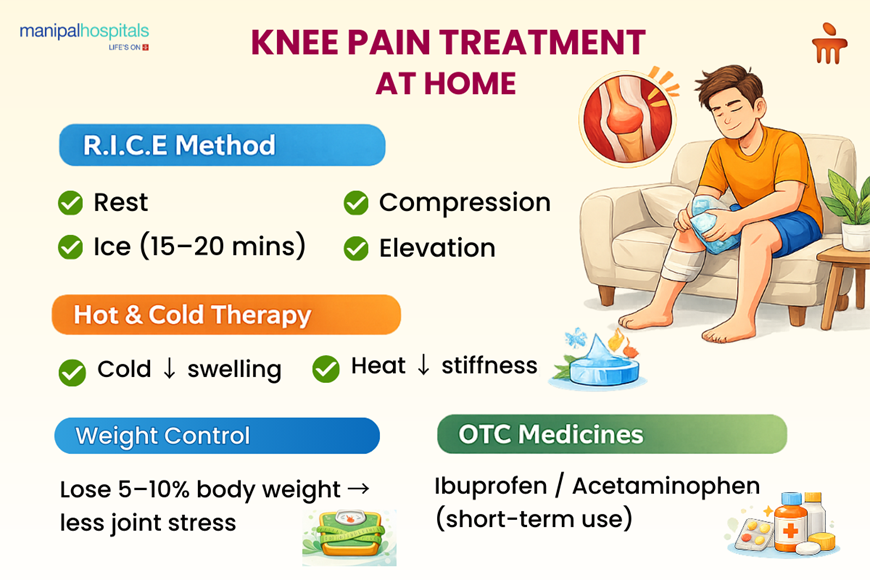
Several home-based measures can provide meaningful relief for mild to moderate knee discomfort. When applied early, these strategies may reduce inflammation, support joint function, and improve day-to-day mobility.
|
Method |
Description |
|
R.I.C.E Method |
|
|
Hot and Cold Therapy |
Cold packs reduce swelling, while warm compresses improve blood flow and ease stiffness. Alternating between them can relieve pain from strains or mild arthritis. |
|
Gentle Knee Pain Relief Exercises |
Strengthens muscles around the knee and improves stability. Examples:
|
|
Weight Management |
Extra weight adds stress to knee joints. Losing 5–10% of body weight can significantly reduce pain. |
|
Over-the-Counter Medications |
Painkillers and anti-inflammatory drugs (like ibuprofen or acetaminophen) can ease mild pain. |
Exercises to Help with Knee Pain
Building up the muscles around your knee helps make it more stable and reduces stress on the joint. Doing exercises for knee pain relief is important for both home care and rehab programmes. Some safe exercises to help with knee pain are:
-
Raising Your Straight Leg: This exercise strengthens your quadriceps without putting extra stress on your knee.
-
Stretches for the hamstrings: These stretches help you become more flexible and reduce muscle tension.
-
Mini Squats with a Wall Support: This move builds strength while keeping your knee in a safe range of motion.
-
Step-Ups: When done with supervision, they make joints more stable.
Doing exercises for knee pain relief regularly can reduce pain, help you move better, and lower the chance of pain coming back.
Advanced Evaluation and Treatment for Knee Pain
When home remedies fail to provide adequate relief, a detailed medical assessment becomes essential. At Manipal Hospitals Bangalore, specialists provide comprehensive knee pain treatment supported by advanced diagnostic and therapeutic facilities.
Doctors may recommend the following tests to determine the exact cause of knee pain:
-
Computerised X-rays
-
Magnetic resonance imaging
-
Ultrasound imaging
-
Laboratory tests, particularly if infection or inflammatory disease is suspected
An accurate diagnosis ensures that treatment is targeted and effective.
Treatment Choices
Depending on the diagnosis, knee pain treatment may include:
-
Physiotherapy and guided knee pain relief exercises
-
Injections, such as corticosteroids or viscosupplementation
-
Therapy with platelet-rich plasma (PRP)
-
Arthroscopic surgery
-
Knee replacement surgery for severe arthritis
Our experts focus on recommending the least invasive options whenever possible, helping patients recover safely, regain mobility, and return to daily activities sooner.
When Should You Consult a Knee Specialist?
Knee pain that interferes with routine activities, mobility, or quality of life should never be ignored. Seeking timely professional help in Bangalore allows early identification of underlying structural or degenerative problems and reduces the risk of long-term complications.
Early specialist evaluation supports:
-
Faster and more structured recovery
-
Prevention of progressive joint damage
-
Improved strength, stability, and long-term mobility
Conclusion
Knee pain can make it hard to move, work, and enjoy life. Home remedies can help with mild pain, but don’t ignore ongoing symptoms. To keep your joints healthy, you should know what causes knee pain, do the right exercises, and see a doctor when needed. At Manipal Hospitals Bangalore, we provide advanced, personalised knee pain treatment in Bangalore. Every patient gets a precise diagnosis and a treatment plan tailored to their needs.
FAQ's
Common causes include arthritis, ligament injuries, meniscus tears, tendinitis, and overuse. Identifying the precise cause helps clinicians choose the most appropriate and effective treatment approach.
For mild pain, home remedies for knee pain, like rest, ice therapy, and knee pain relief exercises, can work. If symptoms last for a long time, you should see a doctor.
Straight leg raises, hamstring stretches, and quadriceps exercises are highly effective for improving strength and stability. Consult a physiotherapist to ensure correct technique and safe, supervised practice.
If knee pain is severe, lasts a long time, or comes with swelling or instability, see an orthopaedic specialist in Bangalore for a proper diagnosis and treatment.
In many mild to moderate cases, at-home care and physiotherapy may delay or prevent surgery. Severe injuries or advanced arthritis, however, often require surgical intervention.
Share this article on: