7 Min Read
Do you want to know what foods actually help your baby grow and keep you feeling strong through pregnancy? Choosing the right foods matters because healthy foods for pregnancy supply the nutrients a growing fetus needs while supporting your changing body, and thoughtful choices reduce the risk of complications such as anaemia, preterm birth, and poor fetal growth. This blog explains the essential nutrients, practical food choices, simple meal ideas, and safety steps so you can apply clear, evidence-based pregnancy nutrition advice every day.
Synopsis
- Pregnancy Nutrition: How Important Is It?
- Key Nutrients: Best Foods to Provide Them
- Practical Daily Meal Ideas That Deliver Nutrition During Pregnancy
- Foods to Avoid or Limit for Safety and Better Outcomes
- Managing Common Challenges: Nausea, Appetite Changes, And Gestational Diabetes
- Food Safety and Preparation Tips
- Adjusting Nutrition for Special Dietary Preferences
- When to Seek Professional Advice?
- Recommended Portion Chart for Pregnant Women
- Conclusion
Pregnancy Nutrition: How Important Is It?
Good nutrition during pregnancy supports fetal organ development, builds placental function, and helps the mother maintain energy, muscle, and blood volume needed for delivery and recovery. Inadequate maternal nutrition can increase risks for low birth weight, developmental problems, and maternal exhaustion, while balanced nutrition contributes to better labour outcomes and faster postpartum recovery. Clinicians use routine screening of haemoglobin, blood sugar, and weight gain to tailor dietary advice, because pregnancy health foods work best when they match each woman’s health status and local dietary context.
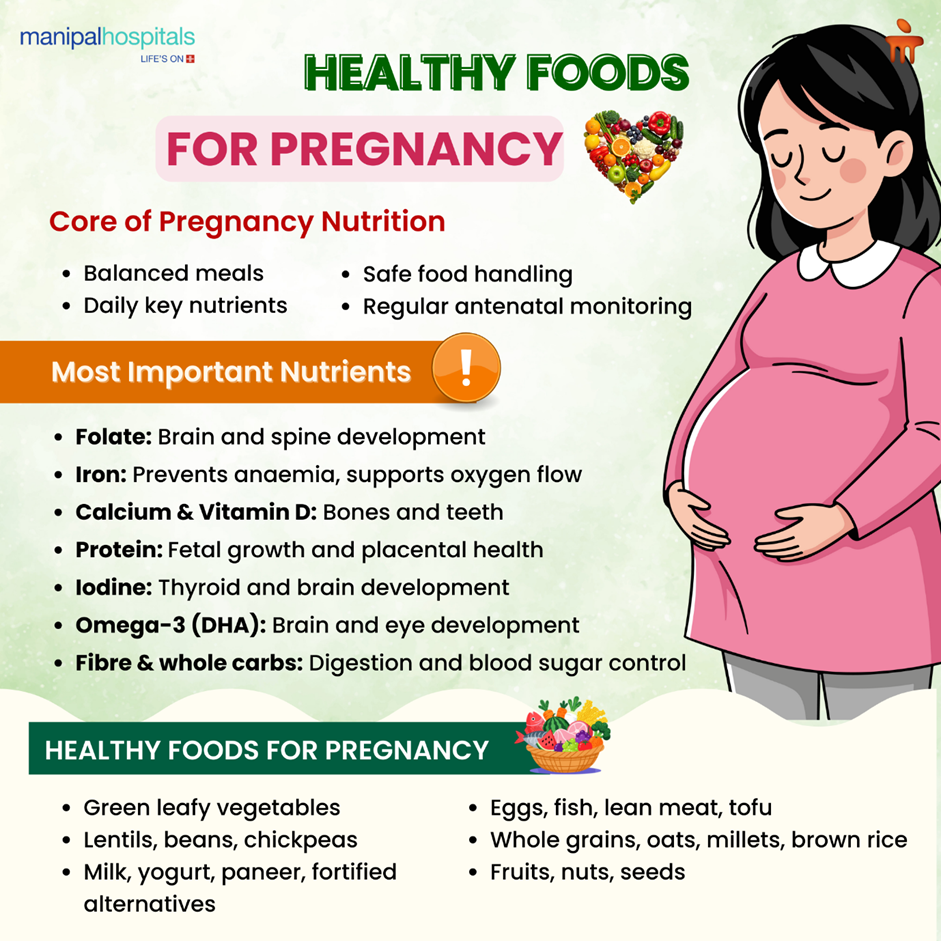
Key Nutrients: Best Foods to Provide Them
Below are the nutrients most strongly linked to healthy pregnancy outcomes, what they do, and the reliable pregnancy health foods that deliver them.
|
Nutrient |
Why It Matters |
Good food sources (practical choices) |
|
Folic acid (folate) |
Prevents neural tube defects and supports early fetal development |
Dark leafy greens, fortified cereals, chickpeas, lentils, oranges, and a folic acid supplement as advised |
|
Iron |
Supports increased maternal blood volume and prevents anaemia |
Lean red meat, poultry, lentils, spinach, fortified cereals; combine with vitamin C for absorption |
|
Calcium |
Builds fetal bones and preserves maternal bone stores |
Milk, yogurt, paneer, fortified plant milks, and small oily fish with bones |
|
Protein |
Essential for fetal tissue and placental growth |
Eggs, fish, lean meat, dal, tofu, Greek yogurt, nuts, and seeds |
|
Iodine |
Required for fetal brain development and thyroid function |
Iodised salt, dairy, eggs, seafood (observe local advisories) |
|
Omega-3 fatty acids (DHA) |
Supports fetal brain and eye development |
Fatty fish such as salmon or safe alternatives, walnuts, flaxseeds, algae-based supplements if vegetarian |
|
Vitamin D |
Aids calcium absorption and immune health |
Safe sun exposure, fortified milk, eggs; supplements where recommended |
|
Fiber and complex carbs |
Regulates blood sugar and prevents constipation |
Whole grains, oats, brown rice, vegetables, fruit, legumes |
Use fortified foods and prescribed supplements where dietary intake may fall short, and follow clinician guidance on dosing for pregnancy nutrition needs.
Practical Daily Meal Ideas That Deliver Nutrition During Pregnancy
Clear meal patterns are easier to follow than counting nutrients. Aim for three balanced meals and two light snacks each day, combining protein, whole grains, healthy fats, and vegetables.
-
Breakfast: A bowl of fortified oats made with milk, a spoonful of ground flaxseed, and sliced banana, plus an egg or a serving of lentils for extra protein.
-
Midmorning snack: Yogurt with chopped fruit and a small handful of nuts.
-
Lunch: A whole-grain roti or brown rice with a generous serving of dal or chicken curry, a side of sautéed leafy greens, and a bowl of salad with lemon dressing to boost iron absorption.
-
Afternoon snack: Hummus with raw vegetables or a piece of fruit with roasted chickpeas.
-
Dinner: Steamed fish or paneer with mixed vegetables and a quinoa or millet pilaf, followed by a small glass of milk if desired.
These healthy foods for pregnancy provide balanced calories and key micronutrients, and following consistent meal timing helps stabilise blood sugar.
Foods to Avoid or Limit for Safety and Better Outcomes
Certain foods raise infection risk, contain high levels of contaminants, or create avoidable complications.
-
Avoid raw or undercooked meats and eggs, unpasteurised dairy products, and raw shellfish to reduce the risk of listeria and other infections.
-
Limit high-mercury fish and follow local advisories about seafood.
-
Avoid excessive intake of caffeine, and do not drink alcohol while pregnant.
-
Also, be cautious with large quantities of processed foods and sugary snacks because they increase weight gain without delivering maternal nutrition benefits.
Managing Common Challenges: Nausea, Appetite Changes, And Gestational Diabetes
Many pregnant women face nausea in the first trimester, reduced appetite at times, or the opposite, increased hunger. For nausea, small, frequent meals, bland starchy foods, and ginger can help; if vomiting is severe, seek medical advice for hydration and potential medications. If you have gestational diabetes, your care team will recommend a diet plan focusing on complex carbohydrates, regular meals, and controlled portions to manage sleep and blood sugar, but the core principle remains balanced pregnancy nutrition that emphasises whole foods and consistent timing.
Food Safety and Preparation Tips
Good pregnancy health foods must also be prepared safely. Wash all fruits and vegetables thoroughly, avoid cross-contamination of raw meats and ready-to-eat foods, cook food to safe temperatures, refrigerate perishable items promptly, and discard food that has been left at room temperature for extended periods. When buying packaged or canned products, check labels for fortified nutrients and follow storage instructions to maintain quality.
Adjusting Nutrition for Special Dietary Preferences
Vegetarian and vegan diets can meet pregnancy needs with deliberate planning: include varied legumes, tofu, dairy or fortified plant milks, nuts and seeds, and consider supplements for vitamin B12, iron, and DHA where needed. Work with a clinician to meet micronutrient needs and select appropriate supplements for women with food allergies or intolerances.
When to Seek Professional Advice?
Regular antenatal visits include checks that help evaluate maternal nutrition, including weight gain tracking, haemoglobin testing for anaemia, screening for gestational diabetes, and assessment of dietary adequacy. Consult a dietitian when weight gain is inadequate or excessive, when vegetarian choices require planning, or when medical conditions such as thyroid disease, kidney disease, or prior bariatric surgery complicate nutrition. Prompt advice prevents small problems from becoming clinical issues.
Recommended Portion Chart for Pregnant Women
|
Food group |
Daily servings (example) |
Why this matters |
|
Whole grains |
6–8 small portions (e.g., 1 chapati or ½ cup cooked rice) |
steady energy and fiber for digestion |
|
Protein-rich foods |
2–3 portions (e.g., 1 egg, ½ cup dal, 100 g meat/fish) |
supports fetal tissue growth and maternal blood volume |
|
Dairy or fortified alternatives |
2–3 portions (e.g., 1 cup milk/yogurt or 100 g paneer) |
calcium and vitamin D for bones and teeth |
|
Vegetables |
3–5 servings |
micronutrients, folate, fibre |
|
Fruit |
2–4 servings |
vitamins and natural sugars with fiber |
|
Healthy fats |
small amounts daily (e.g., 1 tablespoon oil, a handful of nuts) |
essential fatty acids and calorie density |
Use these portions as a flexible guide rather than rigid rules. Individual energy needs vary by body size, activity level, and stage of pregnancy; hence, we recommend you visit your gynecologist and discuss your concerns for a well-suited dietary plan during pregnancy.
Conclusion
Choosing healthy foods for pregnancy and following reliable pregnancy nutrition advice protects both mother and baby by supplying essential vitamins, minerals, and energy and by reducing risks linked to poor maternal nutrition. Practical steps include regular antenatal monitoring, a balanced plate at each meal, safe food handling, and tailored advice for special dietary needs, all of which make nutrition during pregnancy manageable and effective.
If you want a personalised pregnancy nutrition plan, screening for deficiencies, or support for complex conditions during pregnancy, book an appointment with the maternal health specialists at Manipal Hospitals Bangalore, who provide coordinated obstetric, nutritional, and antenatal services to support mothers at every stage.
FAQ's
Most women need folic acid before conception and in early pregnancy, daily iron to prevent anaemia, and calcium and vitamin D as advised; your clinician may recommend additional supplements such as iodine or omega-3 (DHA) based on dietary intake and screening results.
Yes, a well-planned vegetarian diet can meet pregnancy needs if it includes varied legumes, whole grains, dairy or fortified alternatives, nuts, and seeds; attention to iron, vitamin B12, and omega-3 status is important, and supplements may be recommended.
Recommended weight gain depends on pre-pregnancy BMI; clinicians provide personalised targets, but typical guidance ranges from about 11.5 to 16 kg for women with a healthy pre-pregnancy BMI, with smaller or larger ranges advised for underweight or overweight women, respectively.
Moderate caffeine intake (usually quantified as up to 200 mg per day, roughly one to two cups of coffee depending on strength) is commonly advised as a safe limit, but avoid high caffeine consumption and follow your clinician’s recommendation.
If nausea and vomiting prevent adequate intake, contact your healthcare provider for assessment; treatments range from dietary adjustments and oral antiemetics to rehydration and, in severe cases, intravenous fluids to maintain maternal and fetal well-being.
Share this article on: