




 9 Min Read
Have you considered how cervical cancer develops and why regular screening is so strongly recommended for women’s health? Cervical cancer begins in the cervix, the lower part of the uterus that connects to the vagina. Over time, abnormal cells may grow and progress, which can be classified into different stages of cervical cancer, before becoming invasive.
Cervical cancer is one of the most preventable types of cancer if it is caught early, but many women don't know what the early signs and risk factors are. Understanding what is cervical cancer, possible causes, and recognising early symptom patterns can improve outcomes. This blog explains everything from cervical cancer types and common risks to prevention strategies and comprehensive cervical cancer treatment in Bangalore. By understanding the disease and its progression, women can take practical steps towards early detection and prevention.
Synopsis
What is Cervical Cancer?
Cervical cancer emerges when cells in the cervix change in strange ways and start to grow out of control. Over time, these abnormal cells form tumours and may spread to nearby tissues or other organs. In most cases, cervical cancer develops gradually. At first, nearby cells in the cervix start to change or grow abnormally, indicating malignancy. These cells that aren't normal could turn into cancer if screening doesn't find them. A cervical cancer test can help doctors find conditions that could lead to cancer early on, so they can treat them before they become invasive.
Human papillomavirus (HPV) infection is linked to cervical cancer development. Persistent infection with high-risk HPV strains can cause cellular changes that eventually lead to malignancy. Understanding what is cervical cancer helps women recognise the importance of routine screening and vaccination for prevention.
Cervical Cancer Causes
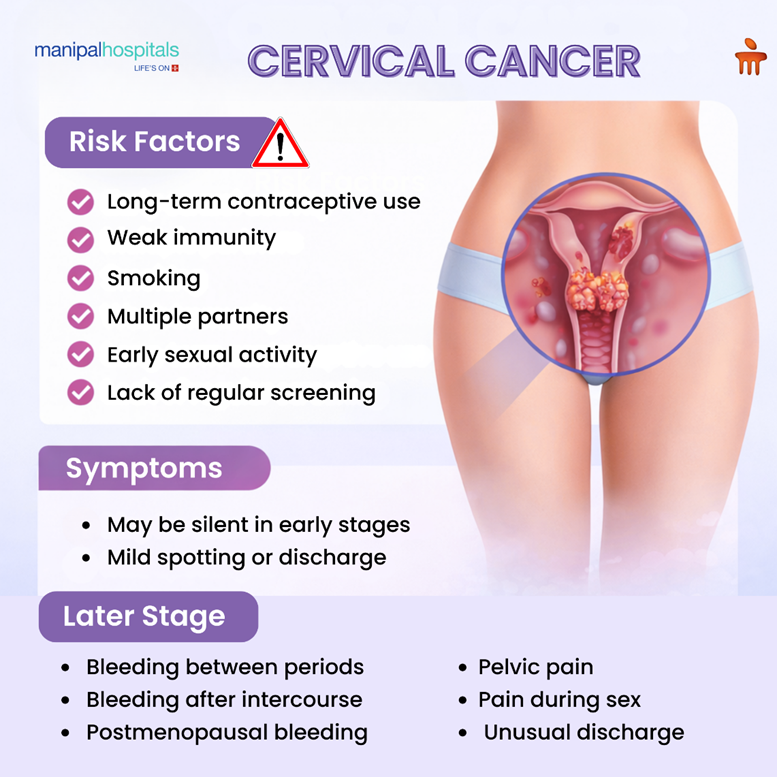
There are a number of things that can cause cervical cancer. Among the major cervical cancer causes, constant infection due to HPV is the most significant. HPV is a common virus transmitted through intimate contact, and while many infections clear naturally, some can lead to cancerous changes.
Other common causes of cervical cancer include:
-
Long-term HPV infection that causes abnormal cervical cell growth
-
Early onset of sexual activity
-
Multiple sexual partners
-
Smoking, which weakens the immune response
-
Weakened immune system due to medicine or illness
-
Continuing use of oral contraceptives without medical supervision
-
Poor screening history or lack of regular Pap tests
These factors often work with other triggers that make it more likely to happen. Getting screenings at intervals and the HPV vaccine lowers the risk of getting cervical cancer.
Cervical Cancer Symptoms
In its early cervical cancer stages, there may not be noticeable symptoms. For example, stage 1 cervical cancer symptoms may not show up as the cancer is confined to the cervix. This is why screening through a cervical cancer test is essential. However, as the disease progresses, several cervical cancer symptom patterns may appear.
Common cervical cancer symptom indicators include:
-
Abnormal vaginal bleeding between periods
-
Bleeding after intercourse
-
Postmenopausal bleeding
-
Persistent pelvic pain
-
Pain during intercourse
-
Unusual vaginal discharge
In the early stage, stage 1 cervical cancer symptoms are often not noticeable. Some women may only observe slight spotting or mild vaginal discharge, which many people may not pay attention to.
Recognising these early cervical cancer symptoms and getting checked out by a doctor can help you get diagnosed and treated sooner.
Cervical Cancer Types
Understanding the different cervical cancer types helps in choosing the appropriate treatment approach. The type of cervical cancer depends on the specific cells in which the disease begins.
The most common cervical cancer types include:
-
Squamous Cell Carcinoma: This is the most typical type of cervical cancer. The squamous cells that line the outside of the cervix are where it starts.
-
Adenocarcinoma: This kind of cancer starts in glandular cells that generate mucus in the cervical canal.
-
Adenosquamous Carcinoma: A rarer cervical cancer type that contains features of both squamous and glandular cancer cells.
Different cervical cancer types may respond differently to treatment. This is why it is important to get an accurate diagnosis through screening and biopsy.
Cervical Cancer Stages
Doctors classify the progression of the disease into different stages of cervical cancer based on tumour size and spread. Understanding cervical cancer stages helps guide treatment decisions and prognosis.
-
Stage 0
-
Also called carcinoma in situ, this stage involves abnormal cells that have not spread beyond the surface layer of the cervix.
-
-
Stage 1
-
Cancer is confined to the cervix. Many patients with early-stage 1 cervical cancer symptoms may not experience obvious signs.
-
-
Stage 2
-
Cancer has spread beyond the cervix to nearby tissues, such as the upper vagina or surrounding structures, but not to distant organs.
-
-
Stage 3
-
Cancer reaches the pelvic wall or lower vagina and may affect kidney function.
-
-
Stage 4
-
The disease spreads to other organs, like the bladder or rectum, or to organs that are far away.
-
Identifying the disease early, within the first cervical cancer stages, significantly improves treatment success.
Cervical Cancer Test and Screening
A cervical cancer test detects abnormal cells that have the potential to become cancerous. Some common ways to screen are:
-
Pap Smear Test: Examines cervical cells under a microscope to detect abnormalities.
-
HPV Test: Detects high-risk HPV strains responsible for most cervical cancers.
-
Colposcopy: Allows detailed examination of cervical tissue if abnormalities are found
Regular screening allows doctors to detect precancerous changes early and initiate treatment promptly. For early screening of cervical cancer, visit the best cancer hospital in Bangalore.
Cervical Cancer Treatment Options
Treatment depends on the specific cervical cancer stages, tumour size, and overall health of the patient. Early-stage disease is often highly treatable. The first step is getting a timely cervical cancer test. Common treatment approaches include:
|
Surgery |
Surgery may involve removing precancerous tissue, part of the cervix, or the uterus, depending on the disease stage. |
|
Radiation Therapy |
It destroys cancer cells using targeted radiation beams into the affected cells directly. |
|
Chemotherapy |
It uses medicines to destroy cancer cells or stop their growth. |
|
Targeted Therapy and Immunotherapy |
Advanced therapies can help the immune system get stronger or kill specific cancer cells. |
When to See a Doctor?
Women should seek medical advice if they notice possible cervical cancer symptoms or any unusual changes. Furthermore, women within the recommended screening age should also schedule regular cervical cancer screenings, even if no symptoms are present, as early detection helps prevent progression to advanced stages. To ensure timely care, consider booking an appointment with the best cancer specialists in Bangalore.
Conclusion
Cervical cancer is a preventable ailment if detected early through regular screening and awareness. Listen to your body, pay attention to early symptom patterns, and be aware of your cancer risk factors and reproductive health. For expert consultation, screening, and personalised care, reach out to Manipal Hospital, Bangalore, where experienced cancer specialists provide comprehensive cancer care and advanced treatment options.
FAQ's
Cervical cancer takes place when cells in the cervix grow out of control. Persistent infection with high-risk HPV strains is the most common factor linked to its development.
Different stages can cause different warning signs. Early-stage 1 cervical cancer symptoms may include mild vaginal bleeding between periods, bleeding after intercourse, or unusual discharge. However, many women may not notice symptoms in the earliest stage.
The Pap smear is the most common cervical cancer test used to detect abnormal cervical cells. HPV testing is also used to identify high-risk virus strains.
Women with persistent HPV infection, smoking habits, multiple pregnancies, or weak immune systems face higher cervical cancer risks.
At Manipal Hospitals Bangalore, comprehensive cervical cancer treatment is offered at specialised oncology centres. These facilities boast multidisciplinary teams, ensuring patients receive end-to-end care. They focus on early diagnosis and tailor treatment plans to each individual's needs.
Share this article on:




