




 8 Min Read
During the menstrual cycle, many women notice changes in the vaginal discharge. Brown vaginal discharge, which can be light brown, dark brown, or even brown spotting, is a common worry among women.
In many cases, brown vaginal discharge simply means that a small amount of old blood is leaving the uterus. However, if brown discharge happens without any period signs, it could be due to hormonal fluctuations, infection, or other underlying gynaecological conditions. Therefore, it is important to understand what causes this condition and when it is necessary to seek medical help.
This blog explains the common causes of brown discharge, associated symptoms, and when it is important to consult a doctor.
Synopsis
What is Brown Vaginal Discharge?
Brown vaginal discharge usually occurs when a small amount of blood mixes with normal vaginal secretions. When blood takes longer to leave the body, it oxidises and changes colour from red to brown. This is why some women notice light brown discharge at the beginning or end of their menstrual period.
In most situations, brown-coloured spotting or brown mucus discharge is harmless. However, when discharge with no signs of a period appears unexpectedly or is accompanied by other symptoms, it may indicate a hormonal imbalance or infection.
The colour and consistency can vary. Some women may notice dark brownish discharge, while others may experience brownish-white discharge when blood mixes with cervical mucus.
Common Causes of Brown Vaginal Discharge
A number of reasons can cause brown-coloured discharge from the vagina. Normal changes in the menstrual cycle or medical problems that require investigation can cause these symptoms.
1. Start or End of Menstruation
One of the most common causes of brown discharge is the start or end of a period. At these times, the blood flow is slower and lighter, and it takes longer for the body to get rid of it.
This can appear as light brown coloured discharge or brown spotting. Many women also notice brown discharge with no period a day or two before their cycle begins.
2. Ovulation
Some women get brown spots in the middle of their cycle, which is when they ovulate. Hormonal changes during ovulation can cause slight bleeding. When mixed with cervical mucus, it may appear as brown mucus discharge or brownish white discharge. This type of discharge usually lasts only a short time and resolves on its own.
3. Hormonal Fluctuations
Changes in hormones can affect the way vaginal discharge looks. These changes may happen because of:
-
Beginning or discontinuing contraceptive pills
-
Using hormonal IUDs
-
Stress or changes in lifestyle
-
Problems with the thyroid
In these cases, women may notice brown discharge with no period, light coloured discharge, or occasional spotting between cycles.
4. Pregnancy-Related Changes
Pregnancy can sometimes cause brown discharge. Such changes can happen early in pregnancy. Implantation bleeding occurs when the fertilised egg attaches to the uterine lining. The bleeding may appear as light brown discharge or spotting, rather than a full menstrual period. In early pregnancy, some women may observe brown mucus discharge due to heightened cervical secretions. However, any persistent dark brown or brown-whitish discharge during pregnancy should always be evaluated by a doctor.
5. Infections
Certain infections of the cervix or vagina can cause discharge that is not normal. In these cases, discharge may also come with other symptoms, such as itching, burning, or a bad smell.
Infections that may cause brown and white discharge include:
-
Bacterial vaginosis
-
Yeast infections
-
Sexually transmitted infections
These conditions can also cause brown or dark brown mucus to come out, especially if irritation causes some bleeding.
6. Polycystic Ovary Syndrome (PCOS)
The hormonal imbalance associated with PCOS can lead to menstrual cycle irregularities. Women with PCOS generally have abnormal bleeding, causing instances of brown discharge with no period, spotting, or brown colour discharge interspersed between cycles. These irregularities arise from the inconsistent occurrence of ovulation, which, in turn, leads to the shedding of the uterine lining in an unpredictable manner.
7. Cervical or Uterine Conditions
Certain gynaecological conditions can also lead to brown vaginal discharge, such as:
-
Cervical polyps
-
Uterine fibroids
-
Endometrial polyps
-
Cervical inflammation
These conditions may produce dark brown colour discharge, persistent spotting, or brown mucus discharge after intercourse or between periods.
Symptoms Accompanying Brown Discharge
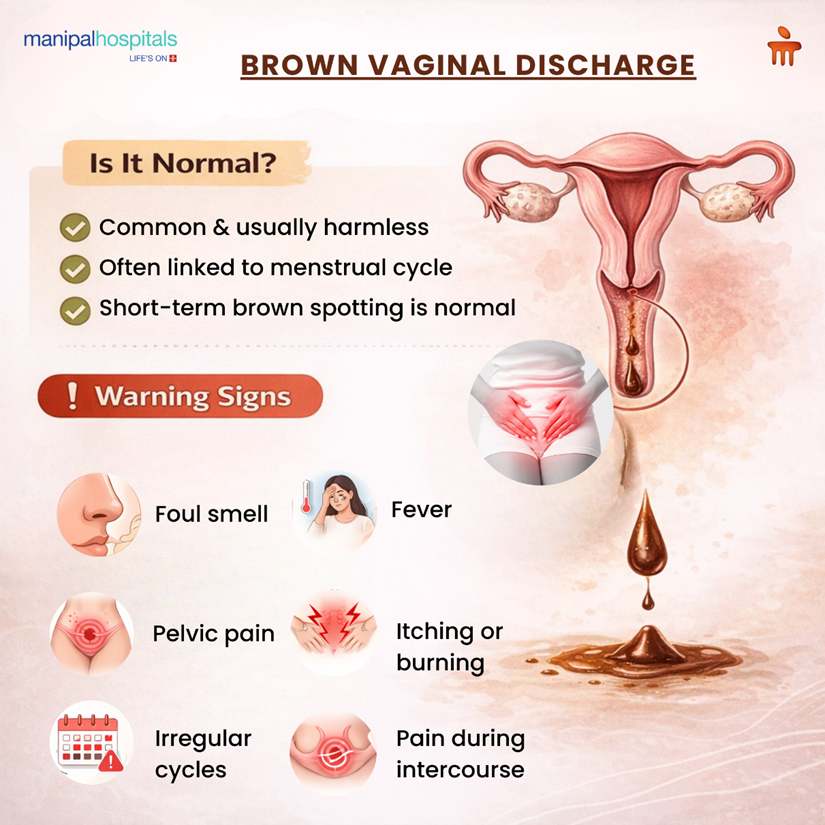
Although brown discharge is often harmless, it is important to observe associated symptoms. When discharge occurs alongside other changes, it may signal a health issue.
Some signs that might go along with brown colour discharge are:
-
Pain in the pelvis or abdomen
-
Itching or irritation in the vagina
-
Discharge that smells bad
-
Tiredness or fever
-
Menstrual cycles that aren't regular
Some women may notice brown and white discharge with itching, which can indicate infection. Others may observe brownish white discharge or dark brown discharge along with cramps. Monitoring these symptoms helps determine whether a medical evaluation is necessary.
How is Brown Vaginal Discharge Diagnosed?
If discharge becomes persistent or concerning, doctors may perform several evaluations. These may include:
-
Detailed medical history and menstrual cycle review
-
Pelvic examination
-
Vaginal swab tests for infections
-
Ultrasound imaging of the uterus and ovaries
-
Hormone level tests in case of irregular cycles
These investigations help identify whether brown spotting, brownish-white discharge, or dark brown colour discharge is related to hormonal imbalance, infection, or structural conditions.
Treatment Options
Treatment for brown vaginal discharge relies on the underlying cause. Possible approaches include:
|
Hormonal Regulation |
If discharge with no period is due to a hormonal imbalance, doctors may prescribe hormonal therapy or adjust contraceptive methods. |
|
Infection Treatment |
Bacterial or fungal infections causing brown and white discharge or brown mucus discharge are treated with appropriate antibiotics. |
|
Management of Underlying Issues |
Conditions such as fibroids or polyps that cause spotting or dark brown discharge may require medical or surgical management. |
|
Lifestyle Adjustments |
Maintaining a healthy weight, managing stress, and ensuring proper hygiene can help prevent abnormal brown colour discharge associated with hormonal fluctuations or infections. |
When Should You See a Doctor?
While brown discharge is often normal, certain situations require medical attention. Consulting a gynaecologist is important if:
-
Dark brown colour discharge continues for several days.
-
Brownish discharge with no period occurs repeatedly.
-
The discharge has a strong or unusual smell.
-
Brown spotting happens after menopause.
-
There is pelvic pain or fever.
-
Brown and white discharge is accompanied by itching or burning.
Persistent brown-coloured vaginal discharge may indicate infections or underlying gynaecological conditions that need treatment. Early diagnosis helps prevent complications and ensures proper reproductive health.
Conclusion
Experiencing brown vaginal discharge can be worrying, but in many cases, it is a natural part of the menstrual cycle. Light brown discharge, brown spotting, or brown mucus discharge often occurs when old blood leaves the uterus. However, persistent discharge, or symptoms such as pain, odour, or itching, should not be ignored. Understanding the possible causes of brown and white discharge help women recognise when to seek medical advice. Early evaluation ensures timely diagnosis and appropriate treatment.
If you are facing persistent or concerning symptoms, consult the specialists at Manipal Hospitals in Bangalore for expert care in obstetrics and gynaecology and personalised guidance for your reproductive health.
FAQ's
Yes, brown-coloured discharge is often normal, especially at the beginning or end of menstruation. It usually occurs when old blood mixes with vaginal secretions, producing light brown discharge or mild brown spotting. However, persistent discharge without a regular menstrual cycle should be evaluated by a doctor.
Light brownish coloured discharge usually means that there is a small amount of old blood mixed with cervical mucus. When blood stays in the uterus longer before leaving the body, it can cause dark brown-coloured discharge.
Yes. Some sexually transmitted infections and bacterial vaginosis can make your vagina discharge brown, brownish-white, or brown and white mucus. It may be associated with odour, itching, or irritation.
In some cases, early pregnancy may cause brown spotting due to implantation bleeding. However, persistent dark brown discharge during pregnancy should be checked by a doctor.
You should seek medical advice if you have persistent discharge and irregular or no period. If brown spotting lasts several days or is accompanied by pain, fever, or foul odour, it indicates an underlying issue that needs medical attention.
Share this article on:




