6 Min Read
Have you ever thought about how your food choices today can affect your health in the future? Many people eat many processed foods, skip meals, or eat at odd hours, which can lower their energy and weaken their immune system. Picking foods that are rich in nutrients, like fruits, vegetables, whole grains, lean proteins, and healthy fats, helps your body grow and promotes a healthy life. Using a diet chart can help you make better food choices every day, as it helps individuals across age groups plan nutritionally balanced meals more effectively. This blog will explain what a balanced diet is, why it is important, and offer a simple chart for every age group.
Synopsis
What is a Balanced Diet?
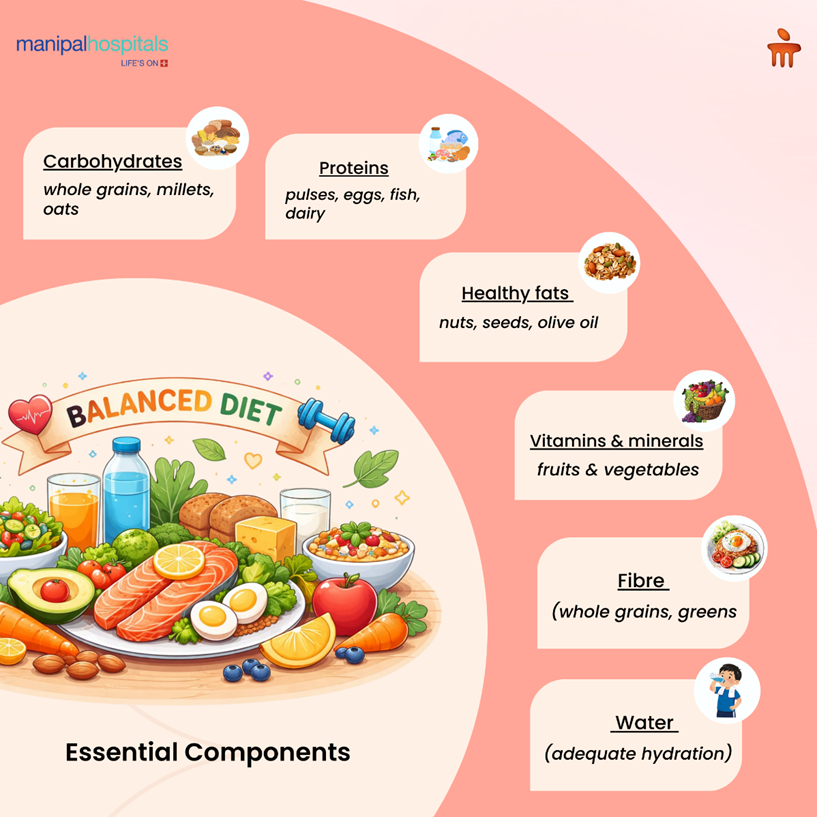
A balanced diet/food integrates multiple food groups in the right proportions to support everyday activity, recovery, and overall well-being. It typically includes the following components:
-
Carbohydrates provide sustained fuel for physical and mental performance.
-
Proteins support muscle maintenance, repair, and immune function.
-
Healthy fats aid hormone balance and nutrient absorption.
-
Vitamins and minerals regulate metabolism and protect the body.
-
Fibre promotes gut health and regular digestion.
-
Adequate hydration supports circulation, temperature control, and detoxification.
Most balanced meals follow the healthy plate model, with half the plate vegetables and fruits, one-quarter protein, and one-quarter whole grains.
Essential Components of a Balanced Diet
A clear understanding of these components explains how dietary balance contributes to optimal body function, disease prevention, and sustained well-being.
1. Carbs
Whole grains such as brown rice, millets, oats, and whole wheat are recommended as primary carbohydrate sources of a healthy diet.
2. Proteins
Pulses, beans, eggs, dairy, fish, and lean meats serve as rich sources of protein. Adequate protein intake supports tissue repair, immune function, and maintenance of lean body mass.
3. Good Fats
Healthy fats are obtained from nuts, seeds, olive oil, and fatty fish. It’s important to eat these in moderation.
4. Minerals and vitamins
Fruits and vegetables are packed with important vitamins and minerals. A varied colour profile typically reflects nutrient diversity; you’re likely getting a good mix of nutrients.
5. Water and fibre
Fibre helps with digestion, and drinking enough water keeps your metabolism working well.
Sample Diet Chart
The following sample plan shows how different food groups can be arranged throughout the day to create a practical and sustainable routine.
|
Time of Day |
Suggested Food & Drink |
Portion Guidance |
|
Early Morning |
Warm water + 4-5 soaked almonds |
Small handful |
|
Breakfast |
Vegetable upma with yoghurt OR 2 boiled eggs + 2 slices whole‑wheat toast |
Approximately 250 - 300 calories per serving (1 bowl upma + ½ cup yogurt or 2 eggs + toast) |
|
Mid‑Morning Snack |
Seasonal fruit (apple, orange, banana, papaya, etc.) |
1 medium fruit |
|
Lunch |
2 chapatis OR 1 cup brown rice + dal or grilled chicken + vegetable curry + salad + 1 glass buttermilk |
Balanced plate (½ grains, ¼ protein, ¼ vegetables) |
|
Evening Snack |
Sprouts salad OR roasted chana |
1 small bowl |
|
Dinner |
2 chapatis + sabzi (vegetable curry) + clear soup |
Light portion, avoid heavy/oily foods |
|
Optional Add‑Ons |
Green tea (afternoon), fresh coconut water (midday) |
1 cup / 1 glass |
Portion sizes and food choices should be modified based on age, activity level, metabolic conditions, and medical advice.
Diet Plan for People Living in Bangalore
Urban living patterns often influence dietary routines. A good diet plan for people in Bangalore should consider local food options and busy work routines.
-
Nutritious regional options include:
-
Ragi mudde is rich in calcium and fibre, supporting bone health and digestion.
-
Fermented foods such as idlis and dosa improve gut health and nutrient absorption.
-
Fresh coconut in small amounts
-
Fruits that are in season and grown nearby
-
Dishes made with millet
Urban residents with sedentary jobs and pollution exposure must choose immunity-boosting foods.
Nutrition Diet Chart Vs Fad Diets
A scientifically structured nutrition diet chart focuses on balance instead of cutting out foods, unlike restrictive plans. Fad diets may promise quick weight loss, but they often fail to provide comprehensive nutritional adequacy. Examples include extreme low-carbohydrate diets, juice-only cleanses, or highly restrictive elimination diets that may cause nutritional imbalance.
Sticking to a balanced diet chart is safer and better for your long-term health. It proves you can eat well without too many restrictions.
Benefits of a Balanced Diet
A well-planned dietary pattern supports metabolic efficiency, strengthens immunity, and reduces the risk of chronic disease. Consistent nutritional balance contributes to measurable improvements in overall health outcomes, including:
-
Supporting healthy body weight management
-
Lowering the risk of type 2 diabetes
-
Helping maintain optimal blood pressure levels
-
Promoting cardiovascular protection
A balanced diet also supports gut microbiome diversity, improves cognitive performance, and helps maintain hormonal stability.
Steps to Maintain Consistent Nutritional Health
Maintaining healthy eating habits requires structure and consistency. A nutrition food chart can guide everyday choices and support long-term well-being.
-
Follow a diet chart that aligns with your health goals and daily schedule.
-
Incorporate balanced diet foods consistently across all meals.
-
Maintain regular meal timings to support stable energy levels.
-
Practise appropriate portion regulation.
-
Ensure adequate hydration throughout the day.
Reading nutrition labels and limiting ultra-processed packaged foods further support long-term dietary balance.
Conclusion
A properly planned diet chart guides portion balance and nutrient intake for overall well-being. It strengthens your immune system, supports mental health, and helps prevent illness. Even with busy city life, families in Bangalore can stay healthy by following a diet plan that fits their local needs. Manipal Hospitals Bangalore remains committed to helping people make smart food choices and focus on preventive health care.
FAQ's
A balanced diet provides the essential nutrients your body needs. It is important because it supports energy, immunity, and a healthy weight, lowers disease risk, and helps you feel well over time.
Adults should include adequate hydration along with proteins, healthy fats, fruits, vegetables, and whole grains. Using a nutrition diet chart can make meal planning easier and help you feel more energetic, improve digestion, and support your health.
Kids need foods like milk, eggs, whole grains, fruits, vegetables, and nuts. A balanced diet chart for kids helps them grow, supports their brains, keeps their immune systems strong, and gives them energy for learning, playing, and daily activities.
Yes. A healthy diet chart for women typically emphasises higher iron and calcium intake to maintain bone strength, prevent anaemia, and support hormonal health.
A diet plan in Bangalore often includes local foods like ragi, idli, dosa, and fresh fruits and vegetables. This approach fits busy city life and helps you stay energetic, healthy, and strong.
Share this article on: