7 Min Read
As we move through different stages of life, we often focus on things we can see, like the health of our skin or the strength of our muscles. However, there is an entire internal support system that requires just as much attention: our skeleton. For many people, the realisation that their bones need extra care only happens after a fall or a minor fracture. By that time, the loss of bone strength may have been progressing silently for years.
While it is true that our bones are at their strongest in our late 20s, they are living tissues that constantly break down and rebuild themselves. This means you have the opportunity to influence their strength at any age. This blog explores what is bone density, the physiological changes that occur as we age, and the most effective natural methods to improve bone density.
Synopsis
Understanding the Basics: What Is Bone Density?
Before we look at strategies for improvement, it is helpful to understand the science of your skeleton. Simply put, bone density is a measurement of the amount of minerals, mostly calcium and phosphorus, contained in a certain volume of bone. You can consider it to be a measure of how "packed" or solid the bone tissue is.
Bones are not static objects; they are dynamic. Your body constantly performs a process called "remodeling," where old bone is removed and new bone is formed. In our younger years, the body creates new bone faster than it breaks down the old stuff, leading to an increase in total mass.
Most people reach their ‘peak bone mass’ by the age of 30. After this point, the remodelling process continues, but the body may begin to lose slightly more bone than it replaces. This is why knowing how to increase bone density after 30 becomes a vital part of long-term health management.
If the mineral content becomes too low, the bones become porous and fragile, a condition known as osteoporosis. This increases the risk of fractures from even minor trips or stumbles.
The Shift in Your 30s: Why the Strategy Changes
For many, the age of 30 marks a transition in physical health. During your childhood and teenage years, your body is in a ‘building phase.' Once you cross 30, your focus must shift from building mass to preserving and optimising it.
-
In women, the drop in estrogen during and after menopause can lead to a rapid loss of bone minerals.
-
In men, a gradual decline in testosterone can have a similar, though usually slower, effect. Because of these biological shifts, the standard advice of "just being active" is often not enough.
Learning how to increase bone density after 30 requires a more deliberate approach because the natural hormonal and metabolic environment of the body changes.
Strategies for Bone Health
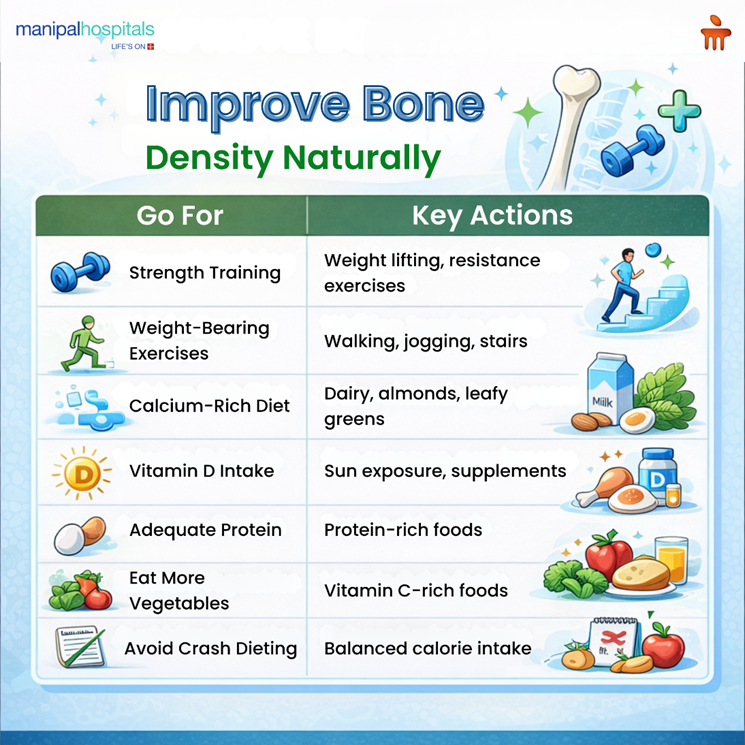
Maintaining strong bones requires a multifaceted approach that combines what you eat with how you move. The following strategies focus on the most reliable ways to improve bone density and protect your skeletal health throughout your life.
1. Incorporate Weight-Bearing and Resistance Exercises
The single most effective way to increase bone density is to put a healthy amount of stress on the bones. When you lift weights or perform high-impact activities, the tension on the bone signals specialised cells called "osteoblasts" to create more bone tissue.
For the best results, you should focus on:
-
Strength Training: Using dumbbells, barbells, or machines helps improve bone density by challenging the skeleton.
-
Walking and Jogging: These are "weight-bearing" because your bones have to carry your full body weight against gravity.
-
Functional Movements: Squats and lunges help protect the hips and spine, which are common areas for bone loss.
2. Prioritise Calcium-Rich Foods
Calcium is the most important mineral for bone health. To improve bone density, you must ensure your daily diet provides enough calcium so your body doesn't have to deplete its stores. Dairy products are well-known sources, but sardines, almonds, and kale are also excellent options.
3. Ensure Adequate Vitamin D Levels
You could eat all the calcium in the world, but without vitamin D, your body cannot absorb it. This vitamin serves as the key that allows calcium to enter your bloodstream. Many people are deficient because they spend most of their time indoors. Safe sun exposure or a supplement can make a significant difference.
4. Maintain a Healthy Protein Intake
About half of your bone volume is made of protein. Research indicates that people who do not eat enough protein are at a higher risk of fractures. Protein helps form the flexible structure that minerals attach to. By eating enough lean protein, you provide the structural framework needed to improve bone density and maintain muscle mass, which protects the skeleton from falls.
5. Eat Plenty of Vegetables
Vegetables are some of the best sources of vitamin C, which stimulates the production of bone-forming cells. Additionally, some studies suggest that the antioxidant effects of vegetables protect bone cells from damage.
6. Avoid Very Low-Calorie Diets
When you eat too few calories, your metabolism slows down, and your body may stop prioritising bone health. Diets that provide fewer than 1,000 calories a day can lead to a significant drop in bone mass. If you are losing weight, do it slowly and ensure you are still getting the nutrients required to improve bone density.
7. Consider Collagen Supplements
Collagen is the primary protein found in bones. While the body produces it naturally, production slows down as we age. Some early evidence suggests that taking collagen supplements may help protect bone health, though the decision should always be discussed with a doctor first as part of a plan on how to increase bone density.
8. Maintain a Stable, Healthy Weight
Being either underweight or overweight can be harmful to your bones. Being underweight increases the risk of osteopenia and osteoporosis, especially in women. Conversely, carrying excess body weight puts a different type of stress on the joints and can lead to increased inflammation.
9. Focus on Magnesium and Zinc
While calcium gets all the attention, magnesium and zinc play supporting roles. Magnesium helps convert vitamin D into its active form, and zinc is required for the mineralisation of the bone. You can find these in seeds, nuts, and whole grains.
10. Limit Alcohol and Smoking
Smoking is directly linked to lower bone mass and a higher risk of fractures. Alcohol can interfere with the body's ability to absorb calcium and can disrupt the hormone levels that keep bones strong. Avoiding these habits is one of the most effective lifestyle changes you can make to protect your frame.
Diagnostic Steps: How to Check Bone Density
If you are concerned about your bone health, you don't have to guess. There is a very specific medical test used to provide an answer. When patients ask how to check bone density, doctors usually refer to a DEXA scan (dual-energy X-ray absorptiometry).
A DEXA scan is a quick, painless, and non-invasive test that uses low-level X-rays to measure the mineral content in specific areas of the spine, hip, and forearm. The result is given as a "T-score," which compares your bone density to that of a healthy young adult.
-
A T-score of -1.0 or higher is considered normal.
-
A T-score between -1.0 and -2.5 indicates osteopenia (low bone mass).
-
A T-score of -2.5 or lower indicates osteoporosis.
Knowing how to check bone density is especially important for women over 50, men over 70, or anyone who has suffered a fracture from a minor fall. Early detection through a DEXA scan allows you to start a treatment plan before a serious injury occurs.
Conclusion
Your bones are the silent support system for everything you do. While we cannot stop the passage of time, we have a significant amount of control over the strength of our skeleton. By understanding what bone density is and how it responds to our daily choices, we can take proactive steps to stay mobile and independent. Bone health doesn't change overnight, but with steady effort, you can maintain a resilient frame.
If you are looking to improve bone density in Bangalore, consult with our orthopaedic specialist in Bangalore at Manipal Hospitals, who can provide a comprehensive screening.
FAQ's
It is never too late. While you may not build as much new mass as a teenager, you can certainly improve bone density and prevent further loss through resistance training and proper nutrition.
Yes. You can follow a plan on how to increase bone density by eating fortified cereals, almond milk, tofu, and dark leafy greens like sardines with bones.
Heavy caffeine consumption can slightly interfere with calcium absorption. However, as long as you are getting enough calcium in your diet, moderate coffee or tea drinking is generally not a problem when trying to improve bone density.
If you have been diagnosed with low bone mass, your doctor might suggest a scan every two years to monitor the effectiveness of your plan. For healthy adults, the frequency depends on your individual risk factors.
During menopause, the rapid drop in estrogen leads to an increase in bone breakdown. This is why it is critical for women in this stage of life to talk to their doctor about how to check bone density regularly.
Share this article on: