

-
Centre of
Excellence
Centre of Excellence
- Accident and Emergency Care
- Bariatric Surgery | Weight loss surgery
- Bone Marrow Transplantation
- Cancer Care/Oncology
- Cardiology
- Cardiothoracic Vascular Surgery
- Clinical Haematology
- Ear Nose Throat
- Fetal Medicine
- Gastrointestinal Science
- General Surgery
- Gynaec Oncology
- Interventional Neurology
- Kidney Transplant
- Liver Transplantation Surgery
- Medical Gastroenterology
- Medical Oncology
- Nephrology
- Neurology
- Neurosurgery
- Obstetrics and Gynaecology
- Organ Transplant
- Orthopaedics
- Paediatric And Child Care
- Paediatric Cardiology
- Paediatric Surgery
- Plastic And Cosmetic Surgery
- Plastic and Reconstructive Surgery
- Radiotherapy (Oncology Radiation)
- Renal Sciences
- Robotic Assisted Surgery
- Shoulder, Arthroscopy And Sports Injury
- Spine Care
- Sports Medicine
- Stroke Care
- Surgical Gastro
- Surgical Oncology
- Urology
- Vascular and Endovascular Surgery
Other Specialities
- Anesthesiology
- Audiology
- Aviation and Travel Medicine
- Child Life Services - Psychology
- Dental Medicine
- Dermatology
- Endocrinology
- HBOT
- ICU and Critical Care
- Internal Medicine
- Interventional Radiology
- IVF and Infertility
- Neonatology & NICU
- Nutrition And Dietetics
- Ophthalmology
- Oral Maxillo Facial Surgery
- Paediatric Allergy
- Paediatric Emergency Care
- Paediatric Endocrinology
- Paediatric Gastroenterology
- Paediatric Immunology
- Paediatric Infectious Disease
- Paediatric Intensive Care Unit
- Paediatric Neonatology
- Paediatric Neurology
- Paediatric Oncology and BMT
- Paediatric Orthopaedics
- Paediatric Pulmonology
- Physical Medicine and Rehabilitation
- Physiotherapy
- Podiatric Surgery
- Psychiatry
- Pulmonology (Respiratory and Sleep Medicine)
- Radiology
- Rheumatology
Speciality Clinics
- Doctors
- Yelahanka
- International Patients


Clinics


 Search
- Self Registration
- In-Patient Deposit
- Mars - Ambulance
- Home Care
- Organ Donation
- Corporate & PSU
- Insurance Helpdesk
- Awards And Achievements
- Manipal Insider
- Careers
- Contact Us


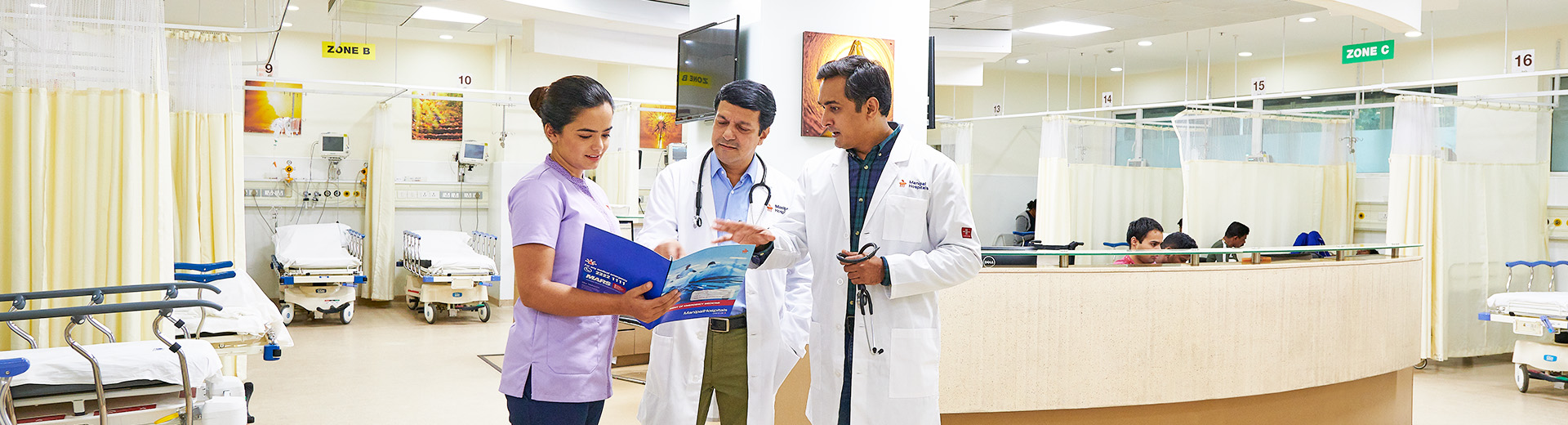
Spine Trauma Management
Spine Trauma Management in Yelahanka
A serious fall or accident can change how you move, feel, or function in an instant. Back or neck pain after trauma is never something to ignore. Manipal Hospital Yelahanka, is a trusted centre for advanced spine trauma management in Yelahanka, focusing on urgent stabilisation, accurate diagnosis, and structured recovery planning. From emergency response to surgical repair and rehabilitation, every step is designed to protect the spinal cord and restore mobility safely.
How It Works
Spine trauma care begins with one critical goal: protect the spinal cord from further damage. When a patient arrives after a fall, collision, or sports injury, the emergency team immediately immobilises the spine to prevent additional movement. Airway, breathing, and circulation are stabilised first because oxygen supply is essential to protect neurological tissue.
Clinical examination assesses limb strength, sensation, reflexes, and bladder control. These findings help determine whether the injury involves only bone structures or also affects the spinal cord or nerve roots. Urgent imaging, typically X-rays, CT scans, or MRI, provides clarity about fractures, dislocations, ligament injuries, or spinal cord compression.
For an unstable spine of compressed nerves, surgical intervention may be necessary. We deliver specialised spinal injury treatment in Yelahanka, ranging from decompression of the spinal cord, fracture fixation with rods and screws, or stabilisation using minimally invasive techniques.
For complex cases, we offer coordinated spine surgery in Yelahanka, performed by experienced neurosurgeons or orthopaedic spine specialists. Post-operative care focuses on neurological monitoring, pain management, and early rehabilitation to optimise recovery and independence.
Benefits
In spinal trauma, swift and precise intervention makes a lasting difference. Key benefits include:
-
Rapid immobilisation to prevent further spinal cord damage
-
Advanced imaging for accurate fracture and nerve assessment
-
Timely surgical stabilisation when required
-
Integrated neurological and orthopaedic expertise
-
Early rehabilitation planning to support mobility and independence
What to Expect
Spinal injuries can feel overwhelming, but a clear plan helps patients and families regain control.
-
Emergency stabilisation: On arrival, the spine is immobilised. Vital signs are secured, and pain is managed promptly.
-
Diagnostic evaluation: Imaging tests confirm fracture location, spinal alignment, and nerve involvement. Doctors explain findings in straightforward language.
-
Treatment planning: Stable fractures may be managed conservatively with bracing and monitoring. Unstable injuries or nerve compression may require surgery.
-
Surgical care, if indicated: Procedures focus on decompressing nerves and stabilising the spine using implants or minimally invasive techniques.
-
Recovery and rehabilitation: Physiotherapy begins early, even during a hospital stay, to improve strength and prevent complications.
From admission through discharge, care remains structured, transparent, and recovery-focused.
Why Manipal Hospitals
Spine trauma demands more than surgical skill, it requires coordinated emergency response, advanced imaging, precise operative technique, and long-term rehabilitation planning. At Manipal Hospital Yelahanka, every spinal injury is approached with structured protocols designed to protect neurological function and restore stability safely. Our teams collaborate closely from the emergency department through rehabilitation, ensuring no gap in care. Patients benefit from a system built for complex spinal emergencies, including:
-
24/7 emergency response teams trained in acute spine injury stabilisation
-
Immediate access to CT and MRI imaging for rapid fracture and cord assessment
-
Experienced neurosurgeons and orthopaedic spine surgeons are available round the clock
-
Advanced operating theatres equipped for minimally invasive and complex open spine procedures
-
Structured neurological monitoring after surgery
-
Multidisciplinary decision-making between trauma, neurosurgery, orthopaedics, and rehabilitation specialists
-
Dedicated pain management protocols for early mobilisation
-
Transparent communication with families during critical treatment decisions
-
Coordinated discharge planning with physiotherapy and follow-up scheduling
-
Comprehensive spinal injury treatment in Yelahanka under one roof
Here, spine care is organised, proactive, and designed to reduce complications while supporting long-term recovery.
Specialty – Neurosciences and Spine Surgery
The Neurosciences and Spine Surgery departments at Manipal Hospital Yelahanka combine neurosurgery, orthopaedic spine expertise, trauma care, and rehabilitation. The focus is on stabilising spinal injuries, preserving neurological function, and restoring mobility through evidence-based surgical and non-surgical treatment pathways.
Services Offered
Services include emergency spine assessment, fracture stabilisation, decompression procedures, instrumentation and fixation, minimally invasive spinal techniques, bracing protocols, post-trauma rehabilitation, and comprehensive spine surgery in Yelahanka, supported by structured neurological monitoring and multidisciplinary recovery planning.
Facilities and Services
Our spine trauma unit is built to handle both urgent intervention and structured rehabilitation. The infrastructure supports safe, precise, and comprehensive spinal care:
-
Dedicated trauma resuscitation bays with spinal immobilisation equipment
-
Advanced 3D CT imaging and high-resolution MRI for detailed spinal cord and ligament evaluation
-
Fully equipped spine operating theatres with intraoperative imaging guidance
-
Neuromonitoring systems during surgery to track nerve function in real time
-
High-precision spinal instrumentation sets for complex fracture fixation
-
Minimally invasive spine surgery tools reduce tissue trauma and recovery time
-
Dedicated intensive care beds for post-operative neurological monitoring
-
Specialised spine nursing teams trained in log-rolling, pressure care, and early mobilisation
-
Physiotherapy units focusing on gait training, strengthening, and posture correction
-
Occupational therapy support to assist patients in regaining daily functional independence
-
Pain management services, including nerve blocks and multimodal analgesia
-
Structured rehabilitation planning following spine trauma management in Yelahanka
-
Long-term follow-up clinics to monitor implant stability and neurological recovery
This integrated setup ensures that emergency care transitions smoothly into rehabilitation without fragmentation.
FAQ's
Severe back or neck pain, numbness, tingling, weakness, or loss of bladder control requires immediate evaluation at Manipal Hospital Yelahanka to prevent permanent neurological damage.
Yes, stable fractures may heal with bracing and monitoring. Surgery is recommended only if instability, deformity, or nerve compression threatens spinal cord function.
Hospital stay varies depending on injury severity and surgical complexity. Many patients remain admitted for several days for monitoring and early physiotherapy before discharge.
Recovery depends on the extent of nerve involvement. Early intervention and structured rehabilitation significantly improve functional outcomes and mobility.
Yes. Comprehensive spine trauma management in Yelahanka is available at Manipal Hospitals, combining surgical expertise, critical care monitoring, and rehabilitation under one coordinated program.
Home Yelahanka Specialities Neurosurgery Spine-trauma-management



You’re on Our Indian Website
Visit the Global site for International patient services
