

-
Centre of
Excellence
Centre of Excellence
- Accident and Emergency Care
- Bariatric Surgery | Weight loss surgery
- Bone Marrow Transplantation
- Cancer Care/Oncology
- Cardiology
- Cardiothoracic Vascular Surgery
- Clinical Haematology
- Ear Nose Throat
- Fetal Medicine
- Gastrointestinal Science
- General Surgery
- Gynaec Oncology
- Interventional Neurology
- Kidney Transplant
- Liver Transplantation Surgery
- Medical Gastroenterology
- Medical Oncology
- Nephrology
- Neurology
- Neurosurgery
- Obstetrics and Gynaecology
- Organ Transplant
- Orthopaedics
- Paediatric And Child Care
- Paediatric Cardiology
- Paediatric Surgery
- Plastic And Cosmetic Surgery
- Plastic and Reconstructive Surgery
- Radiotherapy (Oncology Radiation)
- Renal Sciences
- Robotic Assisted Surgery
- Shoulder, Arthroscopy And Sports Injury
- Spine Care
- Sports Medicine
- Stroke Care
- Surgical Gastro
- Surgical Oncology
- Urology
- Vascular and Endovascular Surgery
Other Specialities
- Anesthesiology
- Audiology
- Aviation and Travel Medicine
- Child Life Services - Psychology
- Dental Medicine
- Dermatology
- Endocrinology
- HBOT
- ICU and Critical Care
- Internal Medicine
- Interventional Radiology
- IVF and Infertility
- Neonatology & NICU
- Nutrition And Dietetics
- Ophthalmology
- Oral Maxillo Facial Surgery
- Paediatric Allergy
- Paediatric Emergency Care
- Paediatric Endocrinology
- Paediatric Gastroenterology
- Paediatric Immunology
- Paediatric Infectious Disease
- Paediatric Intensive Care Unit
- Paediatric Neonatology
- Paediatric Neurology
- Paediatric Oncology and BMT
- Paediatric Orthopaedics
- Paediatric Pulmonology
- Physical Medicine and Rehabilitation
- Physiotherapy
- Podiatric Surgery
- Psychiatry
- Pulmonology (Respiratory and Sleep Medicine)
- Radiology
- Rheumatology
Speciality Clinics
- Doctors
- Yelahanka
- International Patients


Clinics


 Search
- Self Registration
- In-Patient Deposit
- Mars - Ambulance
- Home Care
- Organ Donation
- Corporate & PSU
- Insurance Helpdesk
- Awards And Achievements
- Manipal Insider
- Careers
- Contact Us


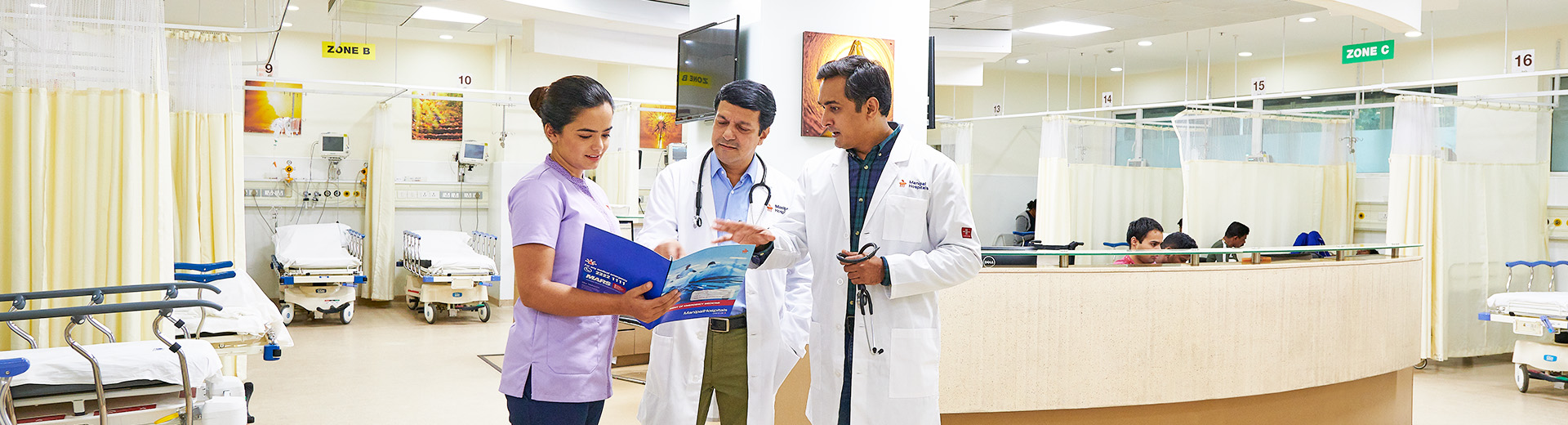
Brain Trauma Management
Brain Trauma Management in Yelahanka
A sudden blow to the head can change the course of a day in an instant. When that happens, speed, coordination, and clinical judgement determine outcomes. At Manipal Hospital Yelahanka, our response to severe head injury is designed for those critical moments, combining rapid triage, focused resuscitation, and advanced neurosurgical capability. Our dedicated brain trauma management in Yelahanka team ensures every patient receives immediate life-saving attention, precise diagnostic imaging, and a clear plan for medical or surgical care, all delivered with calm, practical communication for families.
How It Works
Effective brain trauma management begins the moment a patient arrives, following a highly coordinated and time-sensitive protocol. The process is divided into immediate stabilisation and definitive care, ensuring no time is lost in addressing life-threatening conditions.
Upon arrival in the emergency department, the trauma team, led by neurosurgeons and emergency physicians, performs a rapid primary survey. This focuses on stabilising the patient's airway, breathing, and circulation (ABCs), which are often compromised in severe head trauma. Simultaneously, a brief neurological assessment using the Glasgow Coma Scale (GCS) is conducted to determine the patient's level of consciousness and the initial severity of the injury. Once the patient is stable, the focus shifts to rapid diagnostic imaging. A high-resolution CT scan of the brain is performed immediately to identify the specific nature of the injury, such as epidural or subdural haematomas, brain contusions, or skull fractures.
Traumatic brain injury treatment in Yelahanka often requires multidisciplinary coordination. Neurosurgeons, neurologists, intensivists, and rehabilitation specialists collaborate to monitor intracranial pressure, maintain cerebral perfusion, and prevent complications such as infection or prolonged unconsciousness.
For less severe injuries, the patient is admitted to the intensive care unit (ICU) for close neurological monitoring, management of brain swelling, and medical optimization to prevent secondary brain damage. Patients requiring intensive monitoring are managed in dedicated units offering neurocritical care in Yelahanka, where continuous neurological assessments and advanced life-support systems ensure stability.
Benefits
When facing a traumatic brain injury, a structured and rapid response can be the difference between recovery and long-term disability. The key benefits of our approach include:
-
Immediate stabilisation by a multidisciplinary trauma team in the "golden hour."
-
Rapid diagnosis of intracranial bleeding or fractures through on-demand CT imaging.
-
Timely surgical intervention for haematoma evacuation or skull fracture elevation.
-
Intensive neurological monitoring to manage brain swelling and prevent secondary injury.
What to Expect
From the emergency bay to recovery, we ensure that patients and their families are supported with clarity and compassion at every stage.
-
Initial Emergency Response
-
Upon arrival, the patient is immediately received by our trauma and neurosurgery teams. The focus is on stabilising vital functions and performing an initial neurological assessment to gauge the severity of the head trauma.
-
-
Rapid Diagnostic Imaging
-
Following stabilisation, the patient undergoes an urgent CT scan of the brain. This imaging provides a detailed map of any internal injuries, allowing our neurosurgeons to make swift, informed decisions about the need for surgery.
-
-
Critical Care or Surgical Intervention
-
Depending on the diagnosis, the patient will either be moved to the operating theatre for emergency neurosurgery or admitted to the Neuro ICU. Here, we focus on controlling intracranial pressure, ensuring adequate brain oxygenation, and preventing complications.
-
-
Ongoing Monitoring and Recovery
-
In the ICU, patients are monitored around the clock by specialised critical care nurses. As they stabilise, the focus shifts to neurological recovery, nutrition, and preventing secondary complications like infections.
-
-
Family Communication and Rehabilitation Planning
-
Throughout the process, our team provides regular updates to the family. Once the patient is out of immediate danger, we begin planning for the next phase, which may include physiotherapy and neuro-rehabilitation.
-
Why Manipal Hospitals
Multidisciplinary collaboration. Emergency physicians, neurosurgeons, neurologists, anaesthetists, and rehabilitation experts work together from the first moment of arrival. Advanced imaging facilities and operating theatres allow rapid surgical response when needed. Our structured intensive care protocols prioritise cerebral perfusion, oxygenation, and complication prevention. Families are guided through every decision with clear communication and compassionate support. Patients requiring advanced monitoring benefit from comprehensive neurocritical care in Yelahanka, delivered by experienced critical care teams. Our integrated approach includes:
-
24/7 emergency response teams trained specifically in acute head injury management
-
Immediate access to advanced CT and MRI imaging without transfer delays
-
On-site neurosurgical operating theatres are prepared for emergency interventions
-
Structured intracranial pressure monitoring protocols in severe cases
-
Dedicated intensive care specialists trained in complex neurological stabilisation
-
Comprehensive neurocritical care in Kanakapura Road with round-the-clock monitoring
-
Multidisciplinary coordination between neurosurgery, neurology, anaesthesia, and rehabilitation services
-
Early physiotherapy and speech therapy integration to begin recovery planning sooner
-
Clear, compassionate communication with families during critical decision-making
-
Transparent treatment pathways and structured follow-up planning after discharge
Recovery extends beyond the hospital stay. We collaborate with rehabilitation experts to create a tailored recovery plan aimed at restoring function and quality of life.
Specialty – Neurosurgery
Our neurosurgery department is the clinical hub for brain trauma care. The team specialises in managing complex cranial and spinal injuries, performing emergency life-saving procedures, and delivering meticulous post-operative care. Surgeons focus on preserving neurological function while planning staged rehabilitation to maximise long-term outcomes and independence.
Services Offered
Our comprehensive brain trauma services encompass every aspect of emergency neurosurgical care. We provide rapid assessment and management for all types of severe head trauma, including surgical evacuation of intracranial haematomas, decompressive craniectomies, skull fracture repair, and intensive medical management of brain oedema, all aimed at preserving neurological function and saving lives.
Facilities and Services
We maintain infrastructure designed for speed, precision, and safety in brain trauma care:
-
Advanced CT and MRI imaging for immediate, accurate diagnosis.
-
Fully equipped neurosurgical operating theatres ready for emergency procedures.
-
Dedicated intensive-care beds with intracranial pressure monitoring capability.
-
Continuous cardiac and respiratory monitoring systems integrated with neurological observation.
-
Specialised neurological nursing staff trained in high-acuity brain injury care.
-
Early physiotherapy, speech therapy, and cognitive rehabilitation should be coordinated to start recovery sooner.
-
On-site imaging and laboratory support for repeated assessments and urgent decisions.
This infrastructure supports effective brain trauma management in Yelahanka from emergency stabilisation through rehabilitation.
FAQ's
Immediate evaluation is essential. The first hour after injury, the “golden hour”, is critical for preventing secondary brain damage. Any loss of consciousness, confusion, repeated vomiting, seizure, or worsening headache after a head injury warrants urgent emergency assessment.
A concussion is a functional disturbance of the brain without overt structural damage; it may cause confusion, headache, and transient memory loss. A brain bleed (intracranial haematoma) is a collection of blood that physically compresses brain tissue and usually requires urgent imaging and often surgical treatment.
Outcomes vary with injury severity, timing of treatment, and the rehabilitation pathway. With prompt, specialised trauma management and comprehensive rehabilitation, many patients make substantial recoveries and regain meaningful independence.
Rehabilitation is personalised and may include physiotherapy to restore movement, occupational therapy for daily living skills, speech and language therapy for communication and swallowing, and cognitive rehabilitation to address memory and attention. We coordinate these services early to support recovery goals.
At Manipal Hospital Yelahanka, we manage severe injuries using structured protocols, continuous monitoring, and specialist neurocritical teams. Our specialized care plan and efficiency ensure every patient receives high-acuity neurocritical care, including intracranial pressure monitoring and coordinated multidisciplinary rehabilitation planning, delivering comprehensive brain trauma management in Yelahanka.
Home Yelahanka Specialities Neurosurgery Brain-trauma-management



You’re on Our Indian Website
Visit the Global site for International patient services
