7 Min Read
Do you wake up in the morning with a dull pain that starts in your neck and spreads to your shoulder blade? At first, you might blame your pillow or sleeping position. But if the pain sticks around for a few days, it can make turning your head, using your laptop, or even driving uncomfortable. Shoulder and neck pain is a common complaints among working professionals, homemakers, and even young adults. While many cases are caused by simple muscle strain or poor posture, some may signal underlying cervical spine problems or nerve compression.
Understanding what is causing your pain is essential. In this blog, a top orthopaedic specialist in Vijayawada explains the possible causes, symptoms, warning signs, and treatment options. You’ll also learn when to see a doctor and how to manage the pain effectively.
Synopsis
Understanding Shoulder and Neck Pain
Neck pain refers to stiffness, discomfort, or aching in the muscles, joints, nerves, or ligaments connecting the neck and shoulder. Because the neck and shoulder share nerves and muscles, a problem in one area can often affect the other.
The pain can feel sharp, burning, throbbing, or dull. It may get worse when you move, sit for long periods, or sleep in certain positions. Some people notice symptoms suddenly, while others develop them slowly from repeated strain or poor posture.
What Causes Neck and Shoulder Pain?
People often ask, "What causes pain in my neck and shoulder, especially if I haven’t had an injury?" The reasons can be linked to your muscles and bones, nerves, or even your daily habits.
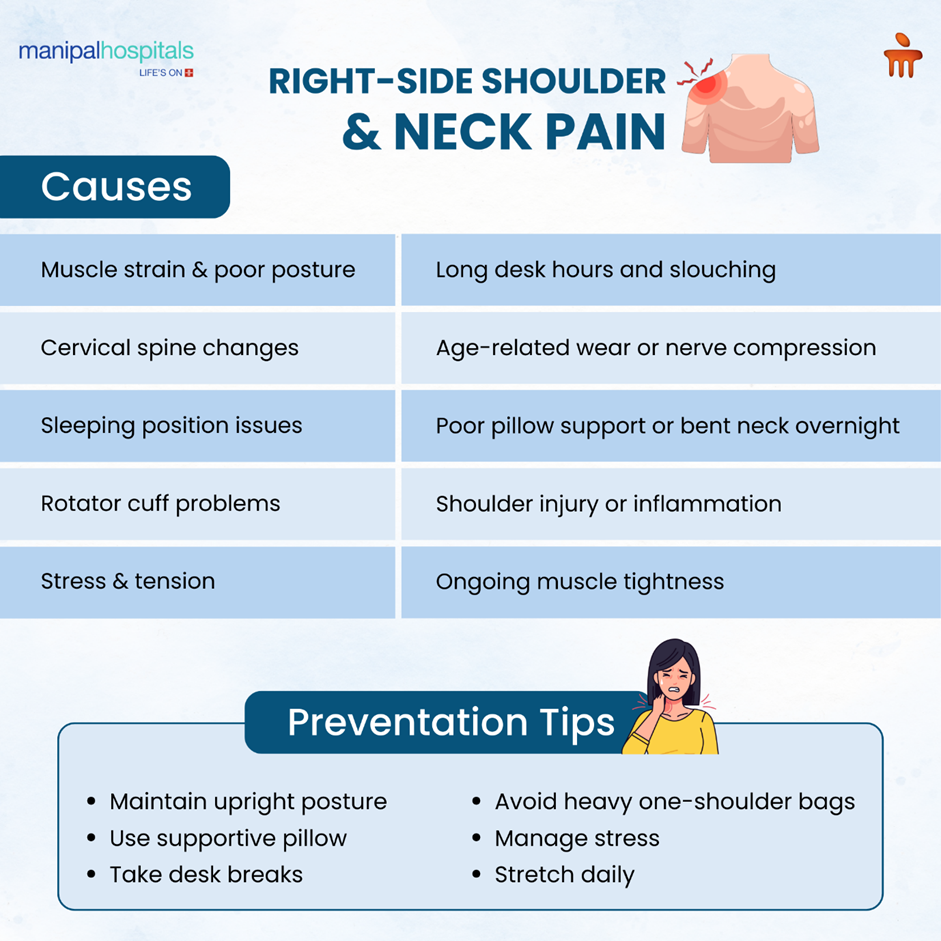
-
Muscle Strain and Poor Posture: Spending long hours at a desk, using your phone a lot, or having poor posture can make the muscles on one side tight and tired. This imbalance often causes pain and stiffness.
-
Cervical Spondylosis: When the bones in your neck (cervical spine) weaken or change, they can press on nearby nerves and cause pain that spreads to your shoulder. Age-related cervical degeneration becomes more common after 40.
-
Sleeping Position Issues: Keeping your neck bent for hours can tire out the muscles, making it hard to move in the morning. It is often usual to have neck and shoulder pain after sleeping.
-
Rotator Cuff Disorders: Rotator cuff problems typically cause shoulder pain that worsens with arm movement. However, because the shoulder and neck share nerve pathways, pain may also be felt in the side of the neck. Thus, if these muscles are injured or inflamed, you might feel pain in your shoulder and neck, especially when lifting things or reaching overhead.
-
Nerve Compression: Cervical radiculopathy happens when a nerve in your neck gets pinched. This can cause pain, tingling, or numbness in your neck, shoulder, and arm.
-
Stress and Muscle Tension: Stress can cause your neck and shoulder muscles to tighten up, even if you don’t notice it. Over time, this tension can lead to ongoing pain in your right shoulder and neck.
Common Symptoms to Watch
The symptoms depend on what is causing them, but they usually include:
-
Pain or stiffness that won't go away.
-
Difficulty moving your neck.
-
Pain that goes from the neck to the shoulder blade.
-
Headaches that start in the neck.
-
Feeling tingly or numb in the arm.
-
Pain worsens after long hours of sitting or computer work.
If you wake up with pain in your neck and shoulder, you might feel stiff in the morning. Usually, it improves as the day goes on, but it can return after long periods of work.
Shoulder and Neck Pain Diagnosis
Orthopaedic specialists for shoulder and neck pain diagnosis use a step-by-step approach to find out the exact cause of shoulder and neck pain.
Clinical Assessment
-
Medical History: The doctor will ask about previous neck injuries, your work life, how you move daily, and other physical activities involved in your routine.
-
Physical Exam: The provider will check your neck and head alignment and see how you move your neck. They will check for any tenderness or signs of strain.
Imaging Tests and Scans
Tests may include the following, depending on the symptoms:
-
X-ray: to check the alignment of the cervical spine.
-
MRI: to find problems with discs or nerves that are being squeezed.
-
Ultrasound: for checking the rotator cuff and soft tissue of the shoulder.
Additional Tests
In severe or rare cases, your doctor may recommend these tests:
-
Blood tests are ordered only if inflammatory or systemic conditions are suspected.
-
Electrodiagnostic Tests: to check the functions of muscles and nerves.
Getting an early diagnosis for shoulder and neck pain helps make sure that serious issues like a herniated disc or pinched nerve are not overlooked.
Shoulder and Neck Pain: Treatment Options
Usually, a combination of medical care, physical therapy, and lifestyle changes works best for shoulder and neck pain.
-
Rest and Activity Modification: Cutting down on repetitive strain and improving your workstation setup can help relieve shoulder and neck pain caused by overused muscles.
-
Physiotherapy and Exercises: Stretching and strengthening exercises improve flexibility and posture.
-
Pain Medications: Doctors prescribe these based on what’s causing your neck and shoulder pain. Long-term usage should be supervised due to side effects.
-
Hot and Cold Therapy: Cold packs can reduce swelling, while hot compresses relax tight muscles.
-
Posture Correction and Ergonomics: Using an ergonomic chair, sitting upright, and adjusting your screen height can help prevent pain from coming back.
-
Advanced Treatments: In severe cases, where nerves are pinched or discs are damaged, advanced treatments like injections or minor surgery may be needed.
-
Relaxation and Lifestyle Changes: Introducing mindfulness and meditation techniques can help manage stress and relieve tension in your body. Quitting smoking is one of the best natural ways to reduce neck pain.
When Should You Be Concerned?
Most of the time, these problems aren’t serious. However, some symptoms mean you should see a doctor right away:
-
Pain that lasts for more than 2–3 weeks.
-
Extreme pain with numbness or weakness.
-
Hard to lift the arm.
-
Pain after an accident or injury.
-
Pain at night that keeps you from sleeping.
If you have shoulder and neck pain, your arm is weak or you feel tingling all the time, it could mean that your nerves are involved.
Prevention Tips
Preventive tips help keep your spine healthy and reduce the risk of future problems.
-
Keep your workstation in an ergonomic position.
-
Use a supportive pillow that keeps the neck in neutral alignment during sleep.
-
Take breaks often when you work at a desk.
-
Perform neck stretching exercises regularly.
-
Avoid carrying heavy bags on one shoulder.
-
Manage stress through relaxation methods.
Following these steps can help manage ongoing right-sided shoulder and neck pain and lower the risk of future flare-ups.
Conclusion
Shoulder pain is a common orthopaedic problem that can happen because of muscle strain, bad posture, problems with the cervical spine, or nerve compression. Consult our top orthopaedic specialists at Manipal Hospital Vijayawada for the shoulder and neck pain diagnosis in Vijayawada and consistent care and return to pain-free daily activities.
FAQ's
Neck and shoulder pain after sleeping can happen if your pillow is too high, you sleep in a bad position, or you sleep on one side all the time.
Muscle strain, cervical spondylosis, stress-related tension, or nerve compression are some of the most common causes. A specialist can figure out what is causing pain the neck and shoulder after doing a clinical evaluation.
When necessary, doctors do a physical exam, check posture, and take pictures. Finding out the exact cause of shoulder and neck pain in Vijayawada is easier with an accurate diagnosis.
Physiotherapy, medications, correcting your work environment, and changing your lifestyle are all possible treatments. The best way to treat shoulder and neck pain depends on what's causing it.
If the pain lasts longer than two weeks, gets worse, or is accompanied by numbness, weakness, or limited arm movement, see a doctor.
Share this article on: