5 Min Read
Have you ever experienced swelling around your eyes or feet? Or even discolouration of urine or higher blood pressure during check-ups. These signs could be something related to a medical condition called glomerulonephritis. The glomerulonephritis symptoms look normal and generally develop slowly. It's tricky to catch the glomerulonephritis causes and symptoms early.
In India, glomerulonephritis accounts for 20–30% of chronic kidney disease cases, with over 115,000 annual end-stage renal disease incidents tied to infections and autoimmune factors. This blog covers insights from a top kidney specialist in Vijayawada to help understand what is glomerulonephritis, what its causes, symptoms, and available treatments are. This content will help you in early diagnosis and improve your kidney health.
Synopsis
- What is Glomerulonephritis?
- Types of Glomerulonephritis
- What are the causes of glomerulonephritis?
- Common Glomerulonephritis Symptoms to Watch For
- Glomerulonephritis Diagnosis
- What Triggers Glomerulonephritis
- Evidence-Based Glomerulonephritis Treatment Options
- Lifestyle Plan You Can Start Today
- When Medical or Specialist Input is Needed
- Long-Term Outlook and Prognosis
- Conclusion
What is Glomerulonephritis?
Glomerulonephritis is a kidney disease that damages the glomeruli, which act as the filters in your kidneys. This restricts waste and fluid removal from your body. The glomeruli inflammation hinders the kidney's function to filter the blood. It leads to toxin build-up and electrolyte imbalance, high blood pressure, and blood in the urine, affecting kidney health.
Types of Glomerulonephritis
Based on the glomerulonephritis symptoms, there are mainly two types of glomerulonephritis – acute or chronic.
-
Acute Glomerulonephritis - A sudden onset of glomeruli inflammation that develops due to an infection or immune reaction. This is a temporary condition and resolves within a few weeks.
-
Chronic Glomerulonephritis - A slow and gradual onset of symptoms that lasts for months or years. It is progressive in nature and leads to long-term kidney damage or kidney failure.
What are the causes of glomerulonephritis?
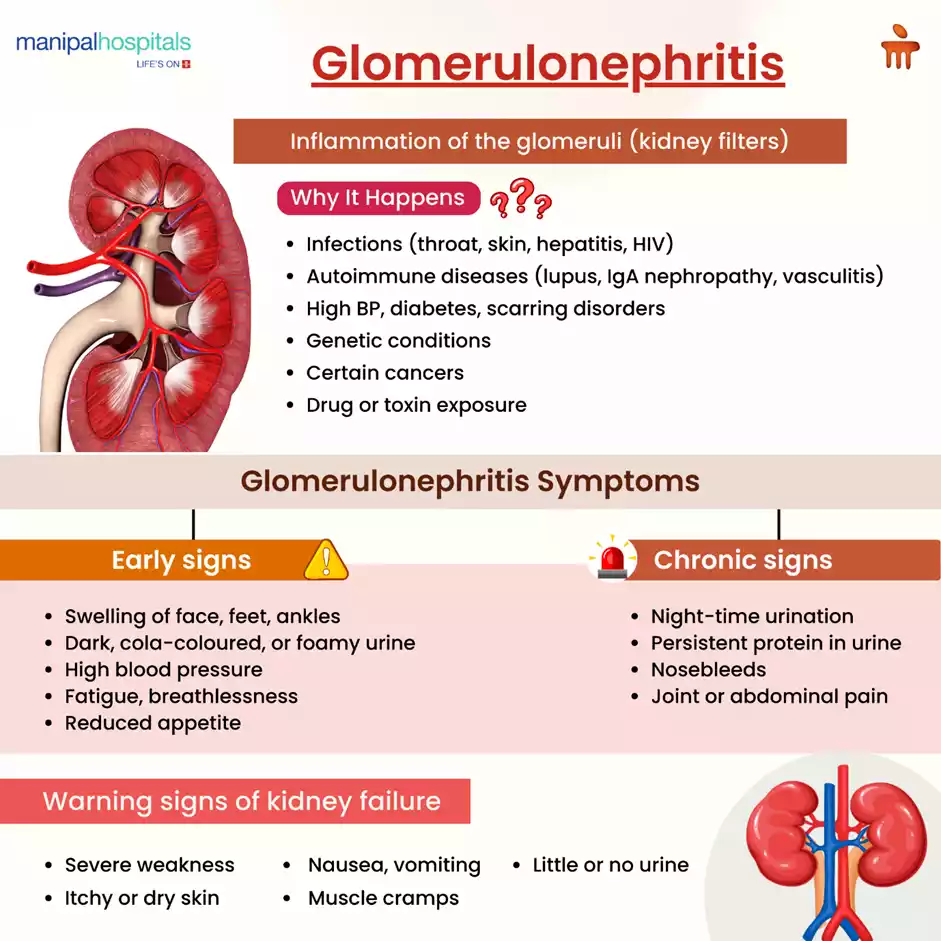
This kidney condition occurs due to infection or an immune reaction. Some common causes of glomerulonephritis include:
-
Infections (post-streptococcal, bacterial, viral, or HIV)
-
Auto-immune (Goodpasture’s syndrome, or IgA nephropathy)
-
Vasculitis (inflammation of blood vessels)
-
Sclerotic conditions (high blood pressure, diabetes, or focal segmental)
-
Hereditary (genetically carried from family members)
-
Certain cancers (multiple myeloma, gastric, lung, or leukaemia)
Common Glomerulonephritis Symptoms to Watch For
Early detection and diagnosis can speed up the recovery process.
Acute glomerulonephritis symptoms include:
-
Swelling of feet and face (Edema)
-
Discolouration of urine/blood in urine (Haematuria)
-
High blood pressure or hypertension
-
Fatigue or light-headedness
-
Shortness of breath
-
Loss of appetite and reduced weight
Chronic glomerulonephritis symptoms include:
-
Excess protein in urine/foamy urine
-
Joint or abdominal pain
Because these signs overlap with many other conditions, blood tests and imaging are essential to confirm the diagnosis. If left untreated, these symptoms may lead to kidney failure.
Symptoms associated with kidney failure:
-
Dry or itchy skin
-
Severe muscle cramps
-
Lack of sleep (insomnia)
-
Fatigue/weakness
-
Vomiting/nausea
-
Difficulty concentrating
-
Changes in urination
Glomerulonephritis Diagnosis
Accurate diagnosis of glomerulonephritis is essential to prevent long-term kidney damage. The following tests help evaluate kidney function, detect inflammation, and determine the underlying cause so treatment can begin at the right stage.
|
Test |
What It Checks |
Why It Matters |
|
Blood tests |
Efficiency of kidney filtration |
Measure creatinine levels in your kidneys in the blood sample |
|
Urine test |
Blood and protein are present in the urine |
Analyses and determines the presence of bacteria or protein in the urine sample |
|
Microscopic glomerular changes |
Removal of kidney tissue for an accurate biopsy report |
|
|
Imaging (X-rays, CT scans, or ultrasounds) |
Size of the kidney |
Determines any blockage present and differentiates between acute and chronic conditions. |
What Triggers Glomerulonephritis
-
Infections like sore throat, skin infections (impetigo), Hepatitis B and C, or bacteria
-
Autoimmune diseases like lupus, IgA nephropathy, or vasculitis
-
Genetic factors like Alport syndrome or inherited factors
-
Overexposure to toxins or anti-inflammatory NSAIDs
Evidence-Based Glomerulonephritis Treatment Options
Effective glomerulonephritis treatment depends on the severity and symptoms. Key, proven strategies include:
-
Manage blood pressure
-
Fluid removal (diuretics)
-
Restrictive intake of salt and fluids
-
Frequent blood and urine tests
-
Treatment of underlying conditions
-
Dietary changes and immunosuppressants
-
Dialysis to remove extra fluid and clean blood
-
Plasmapheresis to filter protein from the blood
Lifestyle Plan You Can Start Today
Small, consistent changes produce measurable kidney benefits within months. A practical, straightforward plan for people with early glomerulonephritis:
-
Reduce sodium and protein intake
-
Increase fibre intake in meals
-
Enhance hydration with adequate water
-
Quit active and passive smoking
-
Include moderate physical activity
-
Maintain a healthy sleep pattern
-
Avoid unnecessary medication and NSAIDs
When Medical or Specialist Input is Needed
Refer to a nephrologist when:
-
Experience sudden swelling in feet, hands, face, or ankles.
-
Sudden reduction in urine output.
-
Dark or discoloured urine or a frothy/foamy consistency.
-
Rapid rise in blood pressure levels or breathing difficulty.
Long-Term Outlook and Prognosis
Accurate and effective treatment for glomerulonephritis depends on the symptoms and the severity of the condition. Some take a few days to recover, and a few others take months or years. Periodic monitoring, urine tests, kidney function tests, and blood pressure checks ensure quick and long-term recovery.
Conclusion
Glomerulonephritis can be life-threatening and serious if not treated on time. Expert care and early treatment can lead to a healthy kidney. Acute glomerulonephritis requires timely medical intervention to prevent kidney damage. Chronic glomerulonephritis is a long-term kidney disease that silently affects the ability of the kidneys to filter.
Knowing the glomerulonephritis causes and spotting the symptoms can lead to an effective recovery. Get expert advice from the best nephrologist at Manipal Hospitals Vijayawada. Visit our Nephrology department today!
FAQ's
Yes, glomerulonephritis is a life-threatening and serious disease if left untreated.
You should consult your healthcare provider in case you witness any glomerulonephritis symptoms like blood in urine, changes in the urine timings, sudden joint pain, or oedema in the face and feet.
No. If the symptoms are treated at the early stage, you can maintain good kidney health. Timely treatment and proper medical intervention can prevent severity.
Common glomerulonephritis symptoms include blood in the urine. Urine decolourisation, swelling in the face and feet, high blood pressure, and fatigue.
Managing underlying conditions and treating infections can help prevent kidney disease. Practical lifestyle changes like staying hydrated, quitting smoking, and maintaining a healthy weight can ensure a healthy kidney.
Share this article on: