6 Min Read
Chronic cough, shortness of breath, and chest congestion refusing to go away? A never-ending cough is overwhelming and disrupts the daily routine of a person. Often, people refer to these symptoms as a ‘smoker’s cough’ and ignore the severity, but it may lead to chronic bronchitis. In India, chronic bronchitis contributes to COPD, affecting over 55 million adults with a prevalence of 4.2%, ranking as a top cause of death amid rising air pollution and smoking rates.
Acute bronchitis is different from chronic bronchitis with reference to the severity. This blog will explain the term, its causes, diagnosis, and treatment options available, leading to a better life. Knowing the difference can help people seek medical assistance when required and prevent the onset of symptoms.
Synopsis
- What Is Bronchitis?
- Acute vs Chronic Bronchitis
- Understanding Chronic Bronchitis
- Chronic Bronchitis Causes
- Diagnosis of Chronic Bronchitis
- Bronchitis Treatment and Purpose
- Everyday Habits That Help Reduce Chronic Bronchitis Symptoms
- Prevention Is Better Than Cure
- When to See a Doctor
- Prepare Yourself Before Meeting the Doctor:
- Conclusion
What Is Bronchitis?
Bronchitis is a condition in which the bronchial tubes become inflamed, causing narrowing of the airways in the lungs. Such swelling causes difficulty breathing in and out, leading to breathing discomfort, chest congestion, and chest tightness. Bronchitis is broadly divided into two types: acute and chronic.
-
Acute bronchitis is a short-term inflammation, mainly caused by seasonal infections.
-
Chronic bronchitis is a long-term inflammation leading to lung damage.
Acute vs Chronic Bronchitis
|
Acute bronchitis symptoms |
Chronic bronchitis symptoms |
|
Persistent cough producing mucus |
Productive cough lasting for months or years |
|
Heavy to tight chest discomfort |
Thick mucus that increases during flare-ups |
|
Low-grade fever to mild chills |
Reduced airflow and difficulty breathing |
|
Shortness of breath during activity |
Repeated respiratory infections and recurrence of symptoms |
|
Fatigue and tiredness |
Wheezing due to narrowing of the airways |
Understanding Chronic Bronchitis
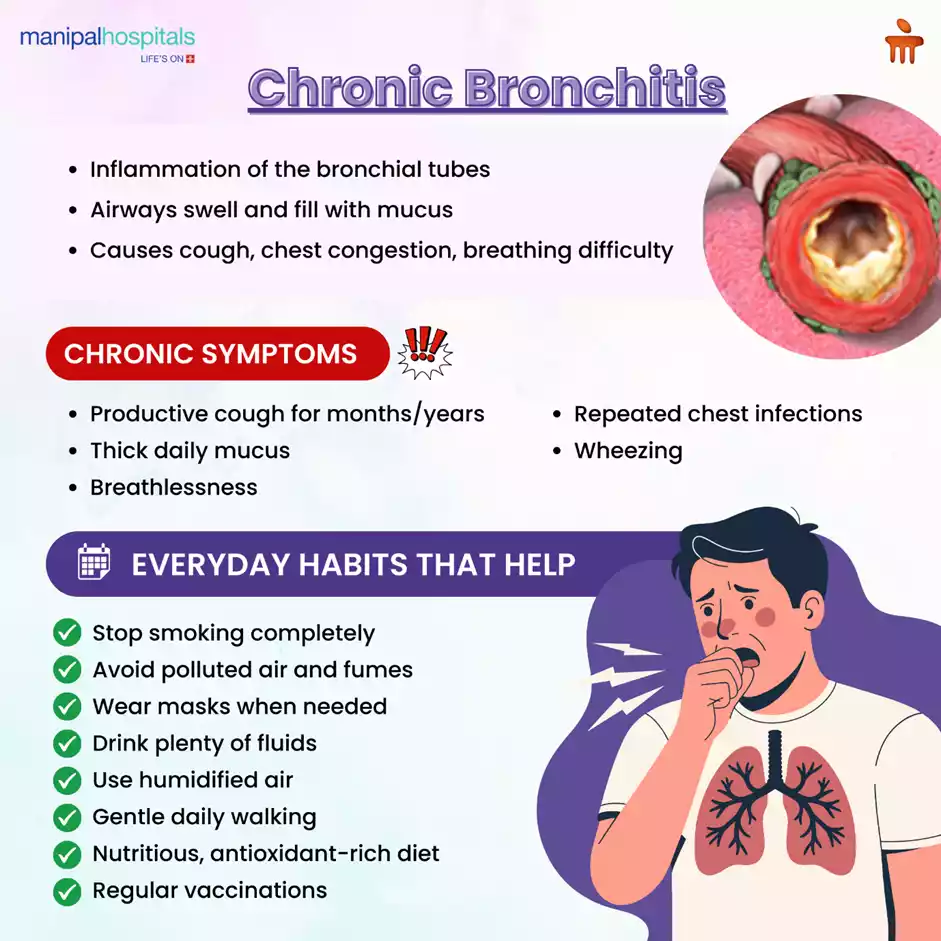
Chronic bronchitis is a long-term inflammation of the lung airways, leading to prolonged cough, wheezing, and shortness of breath. It is also known as Chronic Obstructive Pulmonary Disease (COPD). Along with other infections, smoking is the leading cause of COPD.
Chronic Bronchitis Causes
Long-term exposure to irritants.
-
Prolonged cigarette smoking (active and passive).
-
Overexposure to air pollutants or chemical fumes.
-
Genetic conditions like alpha-1 antitrypsin deficiency (rare).
-
Pre-existing lung conditions, asthma, or respiratory defects.
Diagnosis of Chronic Bronchitis
The diagnosis begins with determining the strength of your lungs and looking at the history and symptoms witnessed. Your medical expert will conduct tests like lung function tests, chest X-rays, CT scans, or blood tests to analyse the overall functioning of your lungs. Some commonly used tests:
-
Chest X-Rays—to determine the presence of pneumonia or lung disorders.
-
Sputum tests—to check if you can be treated with antibiotics.
-
Pulmonary function tests measure how much air your lungs can hold.
-
Basic blood tests are used to record basic parameters to customise drug dosage.
-
Physical exam, review symptoms, and analyse family medical records.
Bronchitis Treatment and Purpose
Bronchitis treatment depends on whether the condition is acute or chronic, the severity of symptoms, and underlying lung health. The below outlines common treatment options, when they are recommended, and how each approach helps relieve symptoms and support recovery.
|
Treatment |
When to Do |
What it Suggests Purpose |
|
Vaccines |
The bronchitis causes are not known, and the conditions persist |
Prevents infection that worsens symptoms. |
|
Medication (cough syrups, inhalers, antibiotics) |
Disturbed sleep due to uncontrollable cough, asthmatic conditions, or infection |
Prevents the onset of symptoms, relaxes airway muscles, and thins mucus. |
|
Mucolytics/Expectorants |
When mucus is thick enough to cough out |
Thins mucus, making breathing easier. |
|
Pulmonary rehabilitation |
When lung function is disrupted due to chronic bronchitis |
Improves exercise tolerance, boosts stamina, and enhances quality of life. |
|
Oxygen therapy |
Blood oxygen levels become very low |
Improves oxygen supply and reduces breathlessness for better sleep. |
|
Smoking cessation programs |
Available at every stage of chronic bronchitis. |
Prevents flare-ups, improves disease response, and aids in the treatment process. |
|
Rest and fluid intake |
At the early stage of acute bronchitis |
Thins mucus reduces airway inflammation and aids in faster healing. |
The primary objective of bronchitis treatment plans is to restrict triggering elements like respiratory infections, air pollutants, cold weather, or poor medication, which worsen the condition.
Everyday Habits That Help Reduce Chronic Bronchitis Symptoms
Self-care measures are the SOS for acute and chronic bronchitis, as they make you feel relaxed for a longer time. Some practical home remedies:
-
Stay Hydrated: Drink more fluids to reduce thickening of the mucus. Better hydration relaxes airway muscles and makes you feel relaxed.
-
Rest Sufficient: Aim for consistent bed and wake times. Good sleep resets the body and the organs. If sleep is short or fragmented, your healing process slows down.
-
Stay Away from Irritants: Quit smoking and stay away from the smoke. Wear a mask to protect against air pollutants that stimulate inflammation. Stay away from household cleaners or paints with strong fumes.
-
Dehumidify: Use humidifiers and air cleaners to keep the air warm and moist. Keep the humidifiers clean and avoid bacterial build-up in the container.
-
Keep Moving: Include basic physical activities without overstraining. Try simple stretching and brisk walking to improve breathing.
-
Eat Healthy: Include dietary fibres and antioxidant-rich fruits and vegetables to strengthen lung tissues. Take in healthy fats like cold-pressed oils, nuts, and seeds in limited amounts.
Prevention Is Better Than Cure
Basic practical steps can help ease the conditions and improve breathing:
-
Avoid active and passive smoking.
-
Stay away from air pollutants.
-
Wear a mask and safety gear.
-
Managing underlying lung conditions.
-
Practice the pursed-lip breathing exercise.
-
Restrict use of deodorants and aerosols.
-
Maintain clean and ventilated rooms.
When to See a Doctor
Seek medical advice when the bronchitis symptoms are persistent and interfere with daily life. See a medical professional if you:
-
Have a persistent cough that keeps coming back.
-
Have shortness of breath or wheezing that disrupts sleep.
-
Have chills or a high fever that lasts more than five days.
-
Witness blood flow along with every cough.
Prepare Yourself Before Meeting the Doctor:
-
List out the symptoms and their timeline.
-
Note down previous medical conditions and infections.
-
List out your regular medicines and routine.
-
Discuss your workspace if you are exposed to fumes.
-
Inform about your smoking habits, if you have any.
-
Carry previous reports, like chest x-rays or lung test reports.
Conclusion
Early diagnosis and sticking to a well-designed bronchitis treatment plan improve quality of life. Understanding the bronchitis causes and making healthy lifestyle choices can make your lungs smile at you. The top lung specialists at Manipal Hospitals Vijayawada care for breathing-related conditions and treat them at their roots. Treating cough and breathing problems at the right time can make a difference for your lungs.
FAQ's
Acute bronchitis symptoms are milder and develop due to any infection, lasting for a few weeks. Chronic bronchitis is a much more severe form that includes airway inflammation. It leads to the thickening of mucus and lasts for months.
Chronic bronchitis cannot be cured completely, as the lung damage caused is permanent. However, you can manage the onset of symptoms with practical lifestyle choices.
No, chronic bronchitis is not contagious. The primary cause of this lung condition is smoking and air pollutants. However, the condition can worsen with flu and infections.
Yes, the best remedy for chronic bronchitis is to quit smoking. It improves the medicine's tolerance and boosts stamina, enhancing the quality of life.
If the symptoms of chronic bronchitis or the cough persist for more than a week, consult a pulmonology specialist. Proper on-time treatment can improve lung health.
Share this article on: