14.png)
 8 Min Read
.webp "Persistent Low-Grade Fever in Adults")
A mild rise in body temperature that lingers for days is definitely a matter of concern. Some people experience this slow, nagging warmth that never feels severe but refuses to fade. This is called persistent low-grade fever in adults. It may appear after a mild infection, inflammation, or other hidden causes that the body is fighting quietly. The majority of the cases are harmless and last for a few days, but when the fever stays without reason, it might indicate that something needs closer attention. Here, we discuss what a low-grade fever means, its causes, when to seek medical help, and how doctors approach diagnosis and care.
Synopsis
What is a Low-Grade and Persistent Fever?
A fever simply means your body temperature is running higher than usual because the body is reacting to something, and most often it is an infection or inflammation. In adults, a low-grade fever usually falls between 99°F and 100.4°F. It’s not high enough to cause shivering or severe weakness, but it can leave you feeling slightly warm, tired, or off balance.
Our body temperature also changes throughout the day.
-
It’s often lowest early in the morning.
-
It rises toward evening, which is why some people notice the fever feels worse at night.
When a mild fever lasts for more than a week or ten days, doctors call it a persistent low-grade fever. At that point, it’s not something to ignore. It might be your body’s way of showing that an infection, inflammation, or another hidden issue is still active and needs attention.
Common Causes of Low-Grade Fever
A low fever that doesn’t seem to go away can leave you wondering what’s going on. Sometimes it’s just your body taking a little longer to recover. Other times, it’s a small signal that something deeper needs attention. Here are some common low-grade fever causes that doctors often look at:
-
Respiratory infections: The most frequent cause is a simple one — a cold, sinus infection, or flu. You might have a stuffy nose, sore throat, or body ache that just hangs around. If you still feel unwell after a week, the infection might not have cleared completely.
-
Urinary tract infections: These can cause a steady low fever, often with burning while urinating or cloudy urine. A basic urine test usually finds the problem.
-
Other infections: Food poisoning, tuberculosis, or even meningitis can start with a mild fever. If your temperature keeps rising or you feel unusually weak or confused, it’s time to get checked.
-
Medication reactions: Sometimes, the medicine itself is the reason. Certain antibiotics and anti-seizure drugs can cause fever that only stops once the medicine is discontinued.
-
Autoimmune and inflammatory conditions: Illnesses like arthritis, lupus, or thyroid problems can keep the body slightly inflamed, which pushes the temperature up a bit.
-
Less common causes: In rare cases, cancers such as lymphoma or leukaemia can cause mild, long-lasting fever. Stress—both emotional and physical—can also make the body temperature rise slightly for short periods.
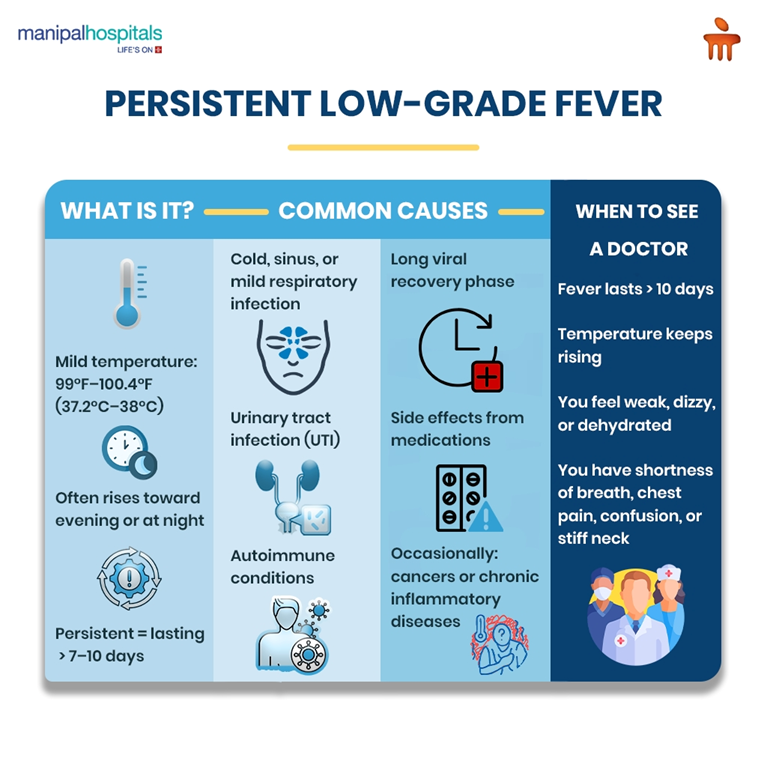
When to see a doctor for persistent low-grade fever?
A mild fever on its own is usually not alarming. But when it doesn’t settle, or new symptoms appear, it’s a sign that something more might be happening. The body sometimes uses fever as a quiet warning that it needs help.
It is recommended to see a doctor for fever if it continues beyond a week to ten days. When it stretches past two weeks, it’s considered persistent, and most doctors will start investigating for infections, autoimmune problems, or other conditions that may not show up right away.
Here are some clear red flags that need attention:
-
Fever that rises instead of improving
-
Shortness of breath or chest discomfort
-
Severe headache, stiff neck, or confusion
-
Dehydration with dry mouth, dark urine, or dizziness
-
Feeling worse despite fluids and rest
Some people find their temperature increasing mainly in the evening. A low-grade fever only at night can sometimes happen because the body’s temperature naturally peaks later in the day. But if night sweats, weight loss, or weakness come along with it, it could point to something like tuberculosis or another infection that needs medical review.
Treating Persistent Low-Grade Fever
When a mild fever stays for days without a clear reason, doctors begin with simple, careful steps. They start by asking about your symptoms, how long the fever has lasted, any recent infections, travel, or medicines you’ve been taking. This conversation gives important clues about where to look next.
During the examination, your doctor will check your throat, lungs, abdomen, and lymph nodes for any signs of infection or inflammation. A few basic tests are usually ordered to guide the diagnosis:
-
Blood test (CBC): To check for infection or raised white blood cells.
-
Urine test: To see if a urinary tract infection might be the cause.
-
Targeted tests: Such as chest X-rays or thyroid tests, depending on what the doctor finds in the first round.
Treatment is based on the actual cause. If the fever is from a viral infection, rest and fluids are often enough. For bacterial infections, antibiotics may be prescribed. When chronic inflammation or autoimmune diseases are involved, specific long-term medicines are needed.
At home, focus on rest, drink plenty of water, and use mild fever reducers like acetaminophen or ibuprofen when necessary. With persistent low-grade fever in adults, the aim is to treat the cause, not just the number on the thermometer.
Conclusion
A low-grade fever can easily be brushed off, but when it stays longer than expected, it’s your body’s way of saying something isn’t quite right. If you’ve been feeling off with a mild fever that won’t go away, visit Manipal Hospital Vijayawada. Our doctors here can examine you properly, order the right tests, and help you understand what’s behind the fever.
Book an appointment today
FAQ's
It refers to a mild fever that stays around 99°F to 100.4°F for more than a week or two. It can be a sign that your body is dealing with an ongoing infection, inflammation, or another hidden cause that needs medical attention.
The usual reasons include respiratory infections like colds or flu, urinary tract infections, thyroid issues, autoimmune diseases, TB and Cancer and sometimes stress. Certain medications or long-standing conditions, such as arthritis, can also cause mild, recurring fever.
Body temperature naturally rises in the evening, which can make a fever feel worse at night. However, if it happens regularly or comes with night sweats, weight loss, or tiredness, it may need to be checked for infections like tuberculosis or hormonal issues.
If the fever continues beyond 10 days, keeps coming back, or is joined by symptoms like chest pain, confusion, or dehydration, it’s best to visit a doctor for further evaluation.
Treatment depends on the cause. Rest and fluids help with viral fevers, antibiotics are used for bacterial infections, and long-term medications are prescribed for autoimmune or inflammatory problems.
Share this article on:


.webp "Prevention and Precaution of HMPV Virus")