7 Min Read
Have you ever felt your heart pumping fast, fluttering, or a pounding sensation in your chest? Such sudden sensations are called heart palpitations. The majority of the palpitations are harmless and go away soon. But there are times when the sensation needs immediate medical assistance. Knowing the symptoms, causes, and warning signs can help make a big difference for your cardiac health. Correct diagnosis at the right time can make the heart smile at you.
Through this blog, the top cardiologist in Vijayawada explains some common and serious causes of heart palpitations and warning signs to watch for. The blog also covers heart palpitation treatment options that are available.
Synopsis
- Understanding Heart Palpitations
- What Causes Heart Palpitations?
- Signs of Heart Palpitations You Should Watch For
- Preparing Your Body
- Common Tests and Heart Palpitations Treatment
- Sleep Study (OSA)
- Risk Factors That Stimulate Heart Palpitations
- What Happens at the Hospital: Assessment and Treatment
- How to Stop Heart Palpitations
- How to Prepare for a Clinical Visit
- Conclusion
Understanding Heart Palpitations
Most people understand heart palpitations as a sudden change in the regular heartbeat rate. The benign ones include a rapid or irregular heartbeat felt in the throat, chest, or neck. If such sensations are followed by unbearable chest pain, dizziness, sweating, shortness of breath, or loss of consciousness, it could indicate serious conditions needing immediate medical assistance.
Sometimes, heart palpitations can occur post-active workouts or even while lying down. The frequent occurrence of the symptoms may require medical evaluation.
What Causes Heart Palpitations?
It is essential to understand the signs and causes of heart palpitations to differentiate harmless triggers and serious onsets.
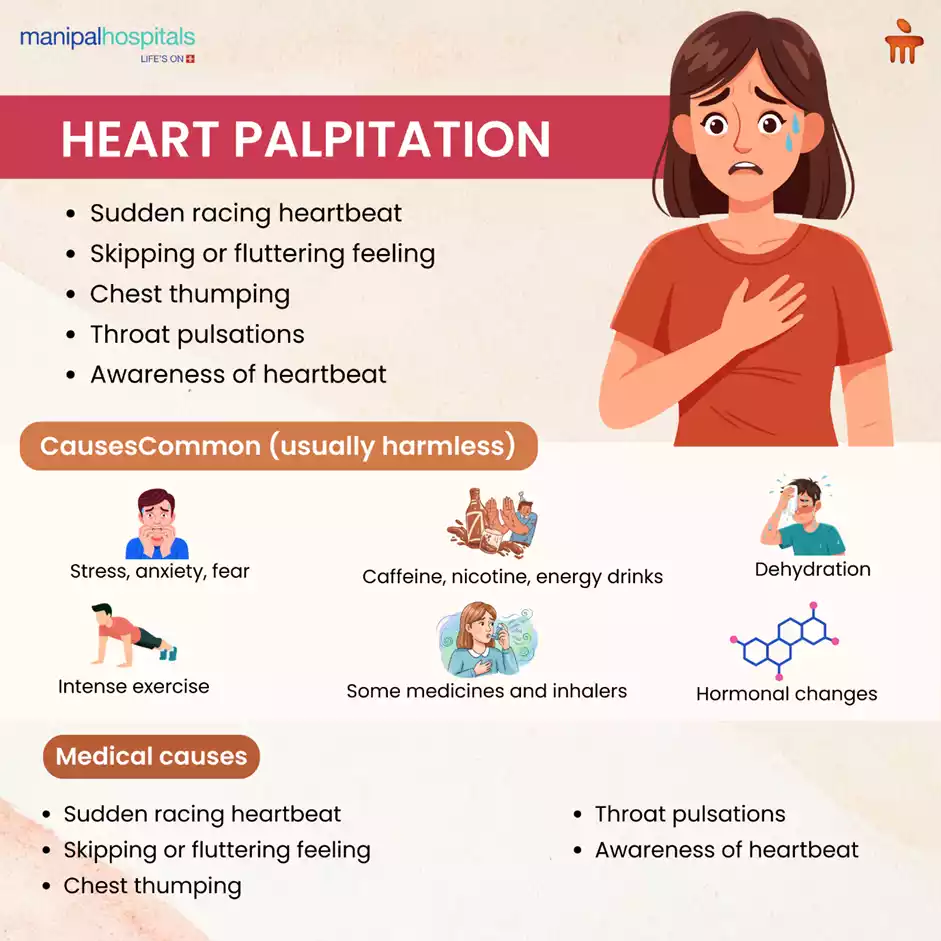
Common Causes of Heart Palpitations:
-
Stress, fear, anxiety, and excitement.
-
Intense workouts, caffeine, or nicotine.
-
Hormonal fluctuations, pregnancy, or thyroid.
-
Drug overdose, asthma inhalers, or other medications.
Severe Medical Causes:
-
Thyroid conditions: hypothyroidism or hyperthyroidism.
-
Blood deficiency (anaemia), or lack of RBCs.
-
Low levels of blood glucose (hypoglycaemia).
-
Low electrolyte levels can interfere with heart signals.
Along with the common causes, there are some other lifestyle causes like stress, caffeine intake, intense workouts, or certain foods. Consult a cardiologist in case the signs become frequent or prolonged.
Signs of Heart Palpitations You Should Watch For
Mild palpitations are harmless and subside with time, whereas some symptoms indicate a serious condition. Seek immediate medical assistance if palpitations are associated with:
-
Shortness of breath.
-
Chest pain or intense pressure.
-
Lightheadedness or fatigue.
-
Repeated palpitations that last a long time.
Prompt evaluation can lead to treatments that reduce the risk of larger conditions.
Preparing Your Body
Generally, heart palpitations are harmless and subside with time, whereas some symptoms need urgent medical attention.
Immediate actions to help manage palpitations:
-
Sit upright or lie down to prevent injury.
-
Take deep breaths to relax your body.
-
Slowly drink a glass of water to hydrate your body.
-
Try the ‘Valsalva manoeuvre’ with the doctor’s advice (this method involves taking a deep breath, closing your mouth and pinching your nose, and then pushing down the breath with force, holding the breath for about 10-15 seconds, and then breathing out through the mouth)
-
Splash fresh, clean water on your face to stimulate the nerves.
Understanding the signs and taking adequate measures to address them leads to healthy cardiac health.
Common Tests and Heart Palpitations Treatment
Recognising the early warning signs of a medical emergency can make a life-saving difference. Heart palpitation diagnosis includes physical examinations, ECGs, echocardiograms, and multiple blood tests.
|
Test |
When To Do It |
What It Suggests |
|
ECG/EKG |
When a person experiences chest pain or shortness of breath, they should consider an ECG or EKG. |
Heart problems can occur even in the absence of any symptoms. |
|
Holter Monitor |
The patient may experience dizziness, fainting, or intermittent heart symptoms. |
Hidden arrhythmias or the effectiveness of medications. |
|
EP Study (Electrophysiology) |
Unexplained fainting, abnormal heartbeats, or before ablation. |
Identifies the source of electric signals to find abnormal pathways. |
|
TMT Test |
The TMT test can detect blockages in heart arteries, irregular heartbeats, or pre-surgery preparations. |
This test demonstrates the health of the heart and tracks the effectiveness of various treatments. |
|
Coronary Angiogram |
It is used to identify any restrictions in blood flow or signs of a heart attack. |
Evaluates cardiac complications. |
|
Coronary Angioplasty |
This procedure is performed during an acute heart attack or a spontaneous artery perforation. |
This procedure manages chest pain and facilitates the restoration of blood flow. |
Sleep Study (OSA)
Heart Palpitations Treatment Plans:
Being a less serious condition, heart palpitations treatment includes lifestyle changes and management of stress. Underlying conditions may require medications or medical procedures.
Lifestyle changes:
-
Managing stress, including deep breathing, yoga, and medications.
-
Hydrating the body with water and other healthy drinks.
-
Including healthy fruits and vegetables to maintain a healthy diet.
-
Splashing cold water or coughing forcefully to reset the heart rhythm.
These changes can help restore heart rate and improve heart health. Your cardiologist may suggest some medical treatments based on the causes of the palpitations. Procedures like pacemaker or ICD implantations and antiarrhythmic drugs help regulate blood flow and alleviate the signs.
Risk Factors That Stimulate Heart Palpitations
Major risk factors include:
-
Unmanageable stress.
-
Hypertension and Diabetes.
-
Hormonal changes.
-
Low electrolyte levels.
-
Caffeine and nicotine.
-
Low blood sugar levels.
-
Certain medications, like inhalers and decongestants.
-
Thyroid or arrhythmias.
Controlling these factors reduces the risk of underlying heart conditions. Regular health checks and discussions with your clinician are essential.
What Happens at the Hospital: Assessment and Treatment
When emergency services arrive or you reach a hospital, the primary objective is to find the root cause and rule out life-threatening conditions through immediate actions. Standard steps include:
-
Assessment of vital signs like heart rate, blood pressure, and oxygen saturation rates.
-
The team will check the detailed medical history and associated symptoms.
-
Blood tests and an ECG to look for heart rhythm.
-
Chest X-ray to look into the functioning of the heart and lungs.
-
If the palpitations are not captured on the initial ECG, the patient will be provided with a portable Holter monitor.
Early hospital care aims to stabilise the patient, regulate blood flow, and plan recovery. Access to a dedicated cardiologist and an experienced team improves outcomes.
How to Stop Heart Palpitations
You can lower the chance of intermittent palpitations by addressing controllable factors. Practical steps:
-
Restrict intake of caffeine and nicotine.
-
Manage stress with yoga and relaxation techniques.
-
Maintain sleep patterns and stay hydrated.
-
Maintain a healthy diet and include mild physical activities.
Prevention often involves small daily lifestyle changes that add up to significant protection.
How to Prepare for a Clinical Visit
Gathering a few items before your appointment speeds diagnosis:
-
A symptom diary noting when the irregularities occur and what eases them.
-
Notes on any stimulants that trigger the palpitations.
-
List of current medicines and any past surgeries or family medical history.
-
Your queries are related to heart palpitations treatment in Vijayawada.
A well-prepared visit focuses time on diagnosis and the most effective upcoming steps.
Conclusion
The irregular heartbeats are often harmless and can be reduced with bare minimal steps. In case such heart palpitation symptoms persist longer or become uncontrollable, consider them warning signs and seek medical assistance. Understanding the causes and triggering elements can prevent serious medical conditions.
Consult the cardiology specialists at Manipal Hospitals Vijayawada for advanced cardiac care. Our team of experts offers comprehensive diagnosis and personalised treatment plans along with 24/7 emergency care to keep your heart safe and steady.
FAQ's
Mild discomfort, chest pain, fatigue, dizziness, or shortness of breath are some symptoms to look for. If you experience any of them, visit the top heart hospital at Manipal Hospitals Vijayawada.
Heart palpitations are often harmless, unless intermittent. They are triggered by stress, caffeine, or stimulants.
On the advent of frequent or prolonged heart palpitation symptoms, you should plan a visit to the top cardiology specialist of Vijayawada.
Basic lifestyle changes and a healthy diet can keep your heart healthy and sound. To create personalised diet plans or manage lifestyle habits, you can visit the cardiology specialist at Manipal Hospitals Vijayawada.
Common causes include stress, intense workouts, dehydration, anxiety, or hormonal changes, which do not require medical attention. Other conditions include anaemia, thyroid problems, low blood sugar, electrolyte imbalances, or underlying heart conditions.
Share this article on:


15.png)