7 Min Read
Feeling short of breath can be unsettling. It may appear suddenly or grow slowly over time. Sometimes, you might think it’s only tiredness or a lack of fitness. But when breathing itself becomes hard, it often points to something more. Understanding difficulty breathing and what might be behind it can help you know when to seek help. Breathing is something we rarely think about until it turns into an effort.
Synopsis
Understanding Difficulty Breathing
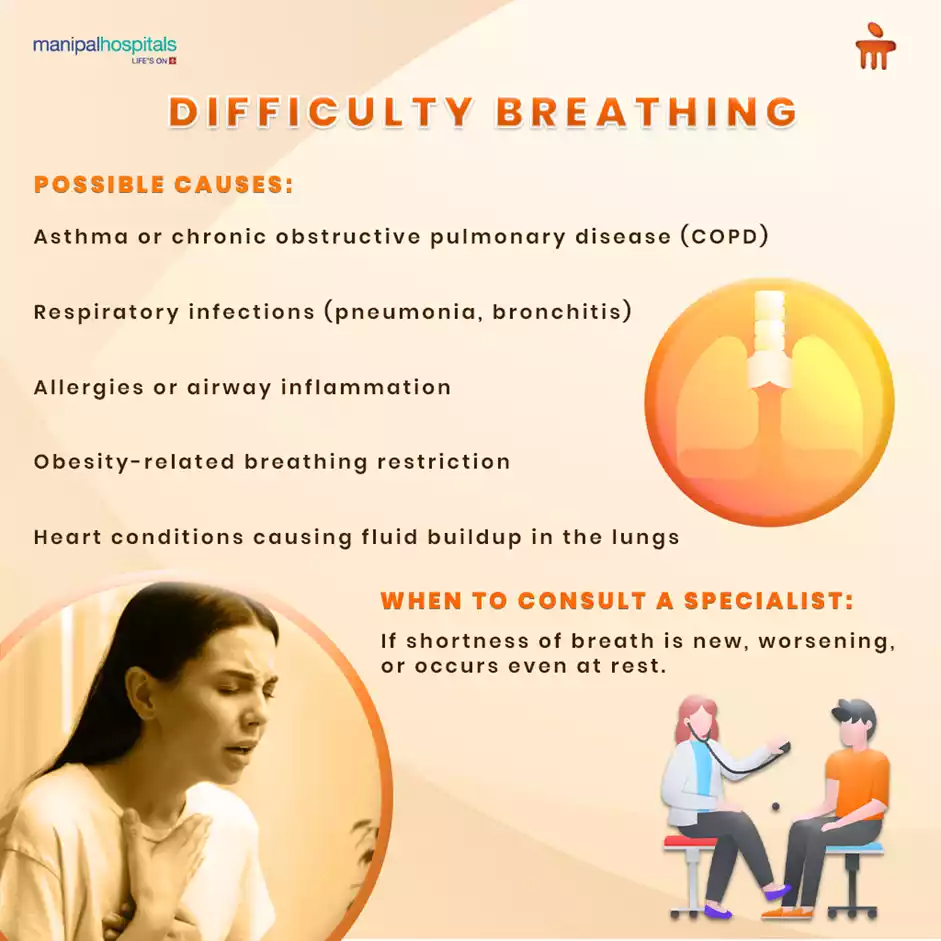
Difficulty breathing is not a condition on its own. It is a sign that your lungs, heart, or even the muscles in your chest might not be getting enough oxygen. You may feel a sense of tightness in your chest, breathe faster than usual, or feel dizzy. For some, it happens only while being active. For others, it appears even at rest.
Breathlessness can come from short-term issues like an allergy or long-term conditions such as chronic respiratory disease. Whatever the reason, recognising the signs early can make a real difference.
Asthma
Asthma is one of the most frequent causes of shortness of breath. It happens when the airways become swollen and narrow, making it hard for air to pass through. People often describe it as feeling like a band around their chest. Episodes may start because of changes in weather, exposure to dust, or physical activity. During an attack, breathing can turn wheezy or shallow. In some, it stays mild. In others, it can be frightening. When these symptoms occur often or disturb your sleep, it’s time to visit a specialist. Asthma cannot be completely cured, but proper treatment can bring relief. Knowing your triggers and following the advice of a doctor helps keep it under control.
Chronic Obstructive Pulmonary Disease (COPD)
Another key reason behind difficulty breathing is COPD. It is a long-term condition that includes chronic bronchitis and emphysema. Over time, the lungs lose their elasticity, and air stays trapped inside. People living with COPD often find daily tasks like walking or climbing stairs tiring. They may cough, bring up mucus, and find it hard to take deep breaths. Smoking is the main cause, but long exposure to air pollution or dust also contributes. Though COPD cannot be fully reversed, treatment can ease symptoms and slow its progress. A pulmonologist can suggest therapies that help the lungs work better and improve overall comfort.
Respiratory Issues
Respiratory infections can temporarily cause difficulty breathing. Illnesses such as pneumonia, bronchitis, or even a strong viral infection may inflame the airways. You might feel chest congestion, fever, and fatigue along with breathlessness. While mild infections recover with rest, severe ones need medical care. If you keep coughing or still feel breathless after recovery, it might mean the lungs are still irritated and need a review. Sometimes, changes or scarring in the airways can also lead to reduced airflow. This might not be obvious right away, but if breathing stays hard after an illness, it’s better to get checked.
Obesity
Carrying extra weight can affect how freely your lungs expand. When the diaphragm and chest wall must work harder, difficulty breathing can become more noticeable. It may appear when you move quickly or when you lie down. Obesity also increases the chance of sleep apnoea, where breathing briefly stops during sleep. People often feel tired the next day without knowing why. It’s not discussed often, but weight can play a big role in breathlessness. Even tiny changes in your body weight can make it easier for your lungs to breathe. Many people can see why balance in daily life is important for effortless breathing once they understand this link.
Allergies and Heart Conditions
Allergies can cause inflammation in the airways and bring on shortness of breath. When you come in contact with triggers like pollen, pet dander, or dust, your body reacts. The swelling in the nasal passages or bronchial tubes can make every breath feel heavier. Heart problems can also appear as difficulty breathing. When the heart struggles to pump blood properly, fluid may collect in the lungs. This is often mistaken for a lung condition. Some people find it hard to breathe when they lie flat or get winded while climbing stairs.
The heart and lungs work closely together. If one is under stress, the other feels it. Only a detailed check-up with a pulmonologist or cardiologist can identify where the issue truly lies.
Myths vs Realities
-
Myth 1: Shortness of breath happens naturally as people get older.
-
Reality: Getting older can change the way your body feels, but constant or new breathlessness is not normal. It can be linked to asthma, heart trouble, or lung disease that needs care.
-
-
Myth 2: If I do not smoke, my lungs will always stay healthy.
-
Reality: Smoking harms the lungs, but it is not the only reason behind breathing trouble. Pollution, dust at work, infections, or even family history can also lead to difficulty breathing.
-
-
Myth 3: Breathlessness always means something is wrong with the lungs.
-
Reality: Not necessarily. The heart, allergies, or being overweight can also make breathing hard. A medical check-up helps find the real cause.
-
-
Myth 4: Using inhalers or breathing medicines makes people weak or dependent.
-
Reality: That idea is mistaken. Inhalers, when used correctly, help manage symptoms and make breathing easier. They do not cause dependence.
-
-
Myth 5: Taking rest is enough to fix breathing problems.
-
Reality: Rest helps only in mild cases, like tiredness or the flu. If breathlessness keeps returning, it’s time to speak to a doctor.
-
When to See a Pulmonologist
Knowing when to see a pulmonologist can stop a mild issue from growing serious. If you feel breathless often, even when resting, or if your chest feels tight, it’s time to talk to a specialist.
Other warning signs include:
-
Frequent coughing or wheezing
-
Mucus that looks bloody
-
Trouble breathing at night
-
Fatigue or dizziness without a reason
A pulmonologist can test how your lungs work, find the cause, and plan treatment. Tests like breathing checks, scans, or allergy tests may help identify the reason faster.
Ignoring difficulty breathing can strain your heart, reduce oxygen supply, and affect daily life. If your breathing feels heavy or uneven, don’t wait for it to pass.
Conclusion
When you can't breathe, your body is telling you that something needs to be fixed. It could be mild or a sign of a long-term problem. No matter what, getting it checked out early can stop problems from growing worse and help you breathe normally again.
Our team of pulmonologists at Manipal Hospitals Vijayawada focuses on meticulous diagnosis and supportive care. We try to bring back comfort and ease of breathing for people with asthma, COPD, or another lung condition. If you’re struggling to catch your breath, don’t delay. Book a consultation with our pulmonologist and take your first step towards better breathing.
FAQ's
Yes, anxiety or stress can cause difficulty in breathing, often making it faster and shallower. The stress response may also trigger chest tightness and a feeling of air hunger or breathlessness.
No, asthma can start in adulthood and is not limited to childhood. Adults can develop asthma due to exposure to triggers, and it may go undiagnosed until symptoms noticeably appear later in life.
You should see a pulmonologist if you frequently feel breathless, experience breathing difficulties that disturb your sleep, or cannot pinpoint the cause of your symptoms, especially if they worsen with time.
Yes, certain heart problems—especially a weak heart—can lead to fluid build-up in the lungs that makes breathing more challenging, sometimes showing up as persistent shortness of breath or chest pain.
Pulmonologists generally recommend specialised tests such as breathing function tests (spirometry), imaging like X-rays or CT scans, and may order blood tests to accurately check how your lungs are functioning.
Share this article on: