_Anil_Ayekpam.webp "Dr. Anil Ayekpam | Best Surgical Oncologist in Rangapani, Siliguri | Manipal Hospitals")
 7 Min Read
In the age of information, differentiating fact from fiction has become more crucial than ever. This gets especially challenging when it comes to health. ‘Cancer’ is a complex and often misunderstood disease. The widespread myths and misconceptions about cancer often cause unnecessary fear or delay in treatment. Knowing the cancer facts can not only alleviate anxiety but also help in making informed decisions about prevention, screening, and treatment. This blog debunks some of the most common cancer myths and focuses on the essential cancer facts to guide you towards a healthier and more informed life. This journey through cancer myths and facts is designed to alleviate unnecessary social stigma and equip you with knowledge that truly matters.
What are the common cancer myths?
Despite scientific evidence, many misconceptions about cancer persist. Let us embark on a journey of cancer myths and facts to debunk the wrong beliefs that make ‘cancer’ a dreaded disease and replace them with solid facts.
Myth 1: Cancer is always a death sentence.
Fact: This is one of the most damaging cancer myths. Many cancers are now highly treatable, and in some cases, even curable if detected early. Globally, the 5-year survival rate for all cancers (combined) has risen dramatically. This trend emphasises the significant role of early diagnosis and effective treatment strategies.
Myth 2: Sugar feeds cancer, so people with cancer should avoid it entirely.
Fact: While cancer cells consume more glucose, this does not mean sugar directly causes cancer or that eliminating it can cure cancer. All cells need glucose to thrive. A diet high in added sugars contributes to weight gain and obesity, which are risk factors for several cancers, but sugar itself is not a direct ‘food’ for cancer.
Myth 3: Cancer is contagious.
Fact: No, cancer is not contagious at all. You cannot ‘catch’ cancer from a cancer patient. Cancer develops due to abnormal cell growth within an individual's body. While certain infections from specific viruses and bacteria (e.g., HPV, H. pylori) can increase cancer risk and are transmissible, the cancer itself is not.
Myth 4: Herbal remedies and alternative treatments can cure cancer without conventional medicine.
Fact: This dangerous misconception about cancer can have serious consequences. While some complementary therapies manage symptoms, there is no scientific evidence that herbal remedies alone can cure cancer. Relying solely on unproven methods causes a delay in receiving effective, evidence-based treatments and significantly reduces survival chances.
Myth 5: A positive attitude is all you need to beat cancer.
Fact: While a positive attitude improves quality of life and helps coping, it is not a cure. Cancer is a physical disease requiring the right medical intervention on time. While mental well-being is vital, effective treatment based on scientific evidence remains the cornerstone.
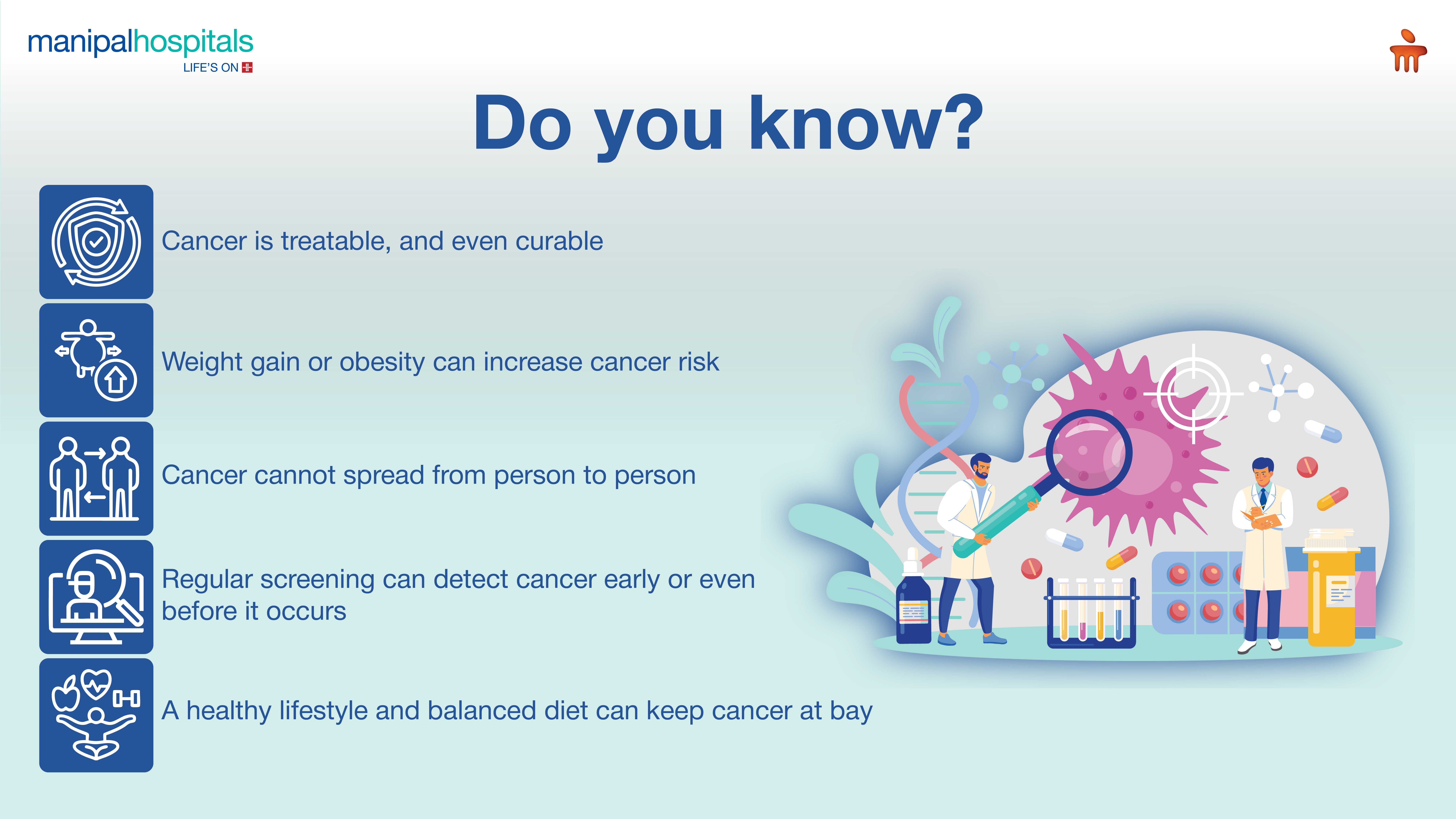
Cancer prevention and management
Beyond debunking cancer myths, adopting a proactive approach to your health is paramount. Here are some essential precautionary steps to prevent or manage cancer from aggravating:
-
Prioritise regular screenings- Early detection significantly improves treatment outcomes as seen with colon cancer and mammograms.
-
Adopt a healthy lifestyle- Maintaining a balanced diet rich in fruits, vegetables, and whole grains, and engaging in regular physical activity can reduce cancer risk.
-
Quit smoking and limit alcohol- Smoking is the leading preventable cause of cancer, and excessive alcohol consumption is a known risk factor.
-
Protect your skin from the sun- Using sunscreen, wearing protective clothing, and seeking shade from sun rays can reduce skin cancer risk.
-
Know your family history- Discussing your family's medical history with your doctor is crucial, as some cancers have a hereditary component.
-
Do not ignore warning signs- Reporting persistent body changes (e.g., unexplained weight loss, new lumps) to your doctor immediately is important. Early detection based on these can be life-saving.
-
Avoid self-medication or relying on unproven ways- Consulting a qualified medical professional for diagnosis and treatment is always the best option.
-
Never neglect mental health- Seeking support from counsellors or support groups for emotional challenges during cancer can make a huge difference in the journey of a cancer patient.
Consult our expert oncologist at Manipal Hospitals Rangapani for accurate guidance, early screening, and advanced cancer care tailored to your needs.
Conclusion
Knowledge is power, especially when it comes to your health. By understanding the truth and dispelling misconceptions about cancer, you can make informed choices that contribute to a better prognosis and a healthier life. If you are experiencing any concerning symptoms or wish to discuss cancer prevention and screening, the dedicated team of oncologists at Manipal Hospitals Rangapani are here to provide comprehensive, compassionate care and the right guidance. At Manipal Hospitals, we believe in empowering our community with accurate facts and reliable information.
FAQ's
While chronic stress impacts overall health, there is no definitive scientific evidence that stress directly causes cancer. However, it can lead to unhealthy coping mechanisms that are risk factors.
Not all lumps indicate cancer; many are benign and harmless. However, any newly noticed lump or changes in an existing one should be promptly assessed by a doctor to accurately determine the cause and rule out serious conditions.
While significant progress has been made, there isn't a single ‘cure’ for all cancers. Treatment approaches vary. For many, complete remission is possible, especially with early detection.
The risk of cancer spreading due to a biopsy is extremely low. Medical procedures are performed with great care. The benefits of an accurate diagnosis far outweigh this minimal theoretical risk, providing crucial cancer facts for treatment planning.
Not necessarily. While some cancers have a hereditary component, most are not directly inherited. A family history means an increased risk but does not guarantee disease development. It's important for personalised screening recommendations.
Share this article on: