7 Min Read
Cholesterol is a waxy, fat-like substance that's essential for your body to build healthy cells. However, when you have too much of it in your blood, it can create significant health risks. This condition, known as high cholesterol or hyperlipidemia, is often called a "silent" threat because it typically presents with no symptoms in its early stages. Despite its prevalence, with studies indicating that nearly 79% of Indians have some form of lipid abnormality, high cholesterol is a highly manageable condition.
With the right knowledge and proactive care, you can effectively control your cholesterol levels and safeguard your heart health. This guide from Manipal Hospitals Ranchi will walk you through the essential aspects of high cholesterol, including its causes and risks, as well as effective management strategies.
Synopsis
- What is Cholesterol and Why Does it Matter?
- The Different Types of Cholesterol
- The Silent Warning Signs and Risks of High Cholesterol
- What Causes High Cholesterol?
- Key Risk Factors
- Managing and Treating High Cholesterol Effectively
- Lifestyle Modifications: Your First Line of Defence
- Medical Intervention
- Care Essentials: Do's and Don'ts for Cholesterol Management
- Conclusion
What is Cholesterol and Why Does it Matter?
Your liver produces all the cholesterol your body needs. You also get cholesterol from the foods you eat, such as meat, poultry, and dairy products. Cholesterol travels through your bloodstream in small packages called lipoproteins. Understanding the types of lipoproteins is key to understanding your heart health.
The Different Types of Cholesterol
-
Low-Density Lipoprotein (LDL): Often called the "bad" cholesterol, high LDL levels can lead to the buildup of plaque in your arteries, a condition known as atherosclerosis. This narrows the arteries and increases your risk for a heart attack, stroke, and peripheral artery disease.
-
High-Density Lipoprotein (HDL): Known as the "good" cholesterol, HDL acts as a scavenger, carrying excess cholesterol from other parts of your body back to your liver, which then removes it from your body. Higher levels of HDL are protective against heart disease.
-
Triglycerides: This is another type of fat in your blood that your body uses for energy. High levels of triglycerides, combined with high LDL or low HDL, can also increase your risk for heart disease.
The Silent Warning Signs and Risks of High Cholesterol
High cholesterol itself does not cause symptoms. That's why it is so dangerous. Many people are unaware they have it until they experience a major cardiovascular event. However, the damage it causes can lead to symptoms of underlying conditions, such as:
-
Angina (Chest Pain): Caused by reduced blood flow to the heart due to plaque buildup in the coronary arteries.
-
Heart Attack: Occurs when blood flow to a part of the heart is blocked completely, often by a clot that forms on a ruptured plaque.
-
Stroke: Happens when a blood vessel that feeds the brain gets blocked, due to plaque buildup or a resulting clot.
The only definitive way to know if you have high cholesterol is through a simple blood test called a lipid panel or lipid profile. This test measures your total cholesterol, LDL, HDL, and triglyceride levels.
What Causes High Cholesterol?
A combination of lifestyle choices and genetic factors can contribute to unhealthy cholesterol levels. Understanding these factors is the first step toward prevention and management.
Key Risk Factors
-
Unhealthy Diet: Consuming high amounts of saturated fats (found in red meat and full-fat dairy) and trans fats (found in many fried and processed foods) can raise your LDL cholesterol.
-
Lack of Physical Activity: A sedentary lifestyle lowers your "good" HDL cholesterol, making it harder for your body to clear LDL from your arteries.
-
Smoking: Smoking damages the walls of your blood vessels, making them more prone to accumulating fatty deposits. It also lowers HDL cholesterol levels.
-
Obesity: Having a body mass index (BMI) of 30 or greater puts you at a higher risk of high cholesterol.
-
Genetics: Sometimes, high cholesterol runs in families. This condition, called familial hypercholesterolemia, can cause very high LDL levels from a young age.
-
Age: Your body's chemistry changes as you age, increasing the risk of high cholesterol.
-
Diabetes: High blood sugar contributes to higher LDL cholesterol and lower HDL cholesterol.
Managing and Treating High Cholesterol Effectively
The good news is that you have significant power to manage your cholesterol. Over 80% of individuals can see a marked improvement in their cholesterol profiles through dedicated lifestyle changes. Management is a partnership between you and your healthcare provider.
Lifestyle Modifications: Your First Line of Defence
Making heart-healthy changes is crucial. Studies show that consistent lifestyle adjustments can lower LDL cholesterol by 5-10% or even more.
-
Heart-Healthy Diet: Focus on fruits, vegetables, whole grains, and lean proteins. Reduce your intake of saturated and trans fats.
-
Regular Exercise: Aim for at least 150 minutes of moderate-intensity aerobic exercise per week. Just 30 minutes of activity five days a week can boost your "good" HDL cholesterol by up to 5% in two months.
-
Maintain a Healthy Weight: Losing even a small amount of weight (5-10% of your body weight) can significantly lower cholesterol levels.
-
Quit Smoking: Quitting smoking can improve your HDL cholesterol level and drastically reduce your overall cardiovascular risk.
Medical Intervention
If lifestyle changes aren't enough to reach your cholesterol goals, your doctor may recommend medication. These medications work in various ways to lower LDL, lower triglycerides, or raise HDL. Your cardiologist will determine the best course of action based on your individual risk profile.
Care Essentials: Do's and Don'ts for Cholesterol Management
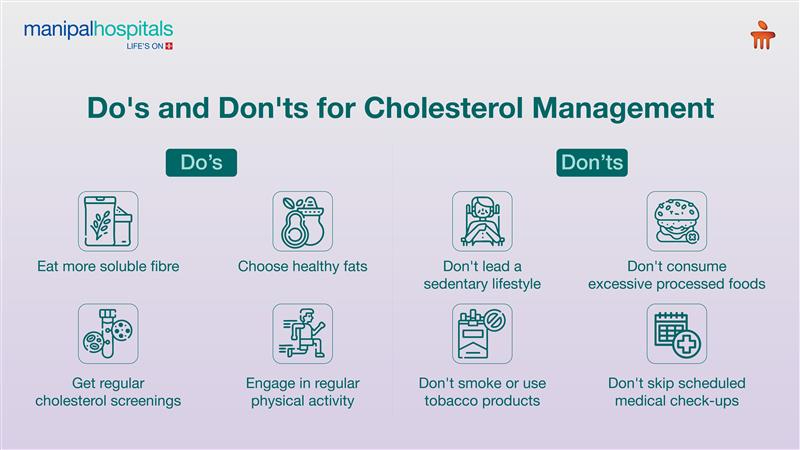
Do's
-
Do eat more soluble fibre (oats, apples, prunes, beans).
-
Do choose healthy fats like those in avocados, nuts, and olive oil.
-
Do get regular cholesterol screenings as recommended by your doctor.
-
Do engage in regular physical activity.
-
Do consult your doctor to create a personalised management plan.
Don'ts
-
Don't consume excessive processed foods, fried foods, and sugary drinks.
-
Don't lead a sedentary lifestyle.
-
Don't ignore your doctor's advice regarding medication or lifestyle changes.
-
Don't smoke or use tobacco products.
-
Don't skip your scheduled medical check-ups.
Conclusion
Controlling high cholesterol is a vital step towards a long and healthy life. By understanding the risks and taking proactive steps, you can protect your heart and overall well-being.
If you are concerned about your cholesterol levels or have risk factors for heart disease, it's crucial to seek timely medical advice. Book an appointment with our expert cardiologists at Manipal Hospitals today.
FAQ's
Adults should have their cholesterol checked every 4-6 years. However, if you have risk factors like a family history of heart disease, diabetes, or obesity, your doctor may recommend more frequent testing.
Yes. While obesity is a risk factor, genetics, diet, and physical activity levels play a huge role. A person can be thin and still have unhealthy cholesterol levels.
No. HDL cholesterol is considered "good" because it helps remove excess cholesterol from your body. Your body also needs some cholesterol to function properly. The goal is to maintain a healthy balance.
You can significantly lower high cholesterol levels and reduce your risk of heart disease through sustained lifestyle changes and, if needed, medication. While the term "reversed" can be misleading, the condition is highly manageable.
Yes, especially if there is a family history (familial hypercholesterolemia). Healthy lifestyle habits are important for children, and screening may be recommended for those at high risk.
Share this article on: